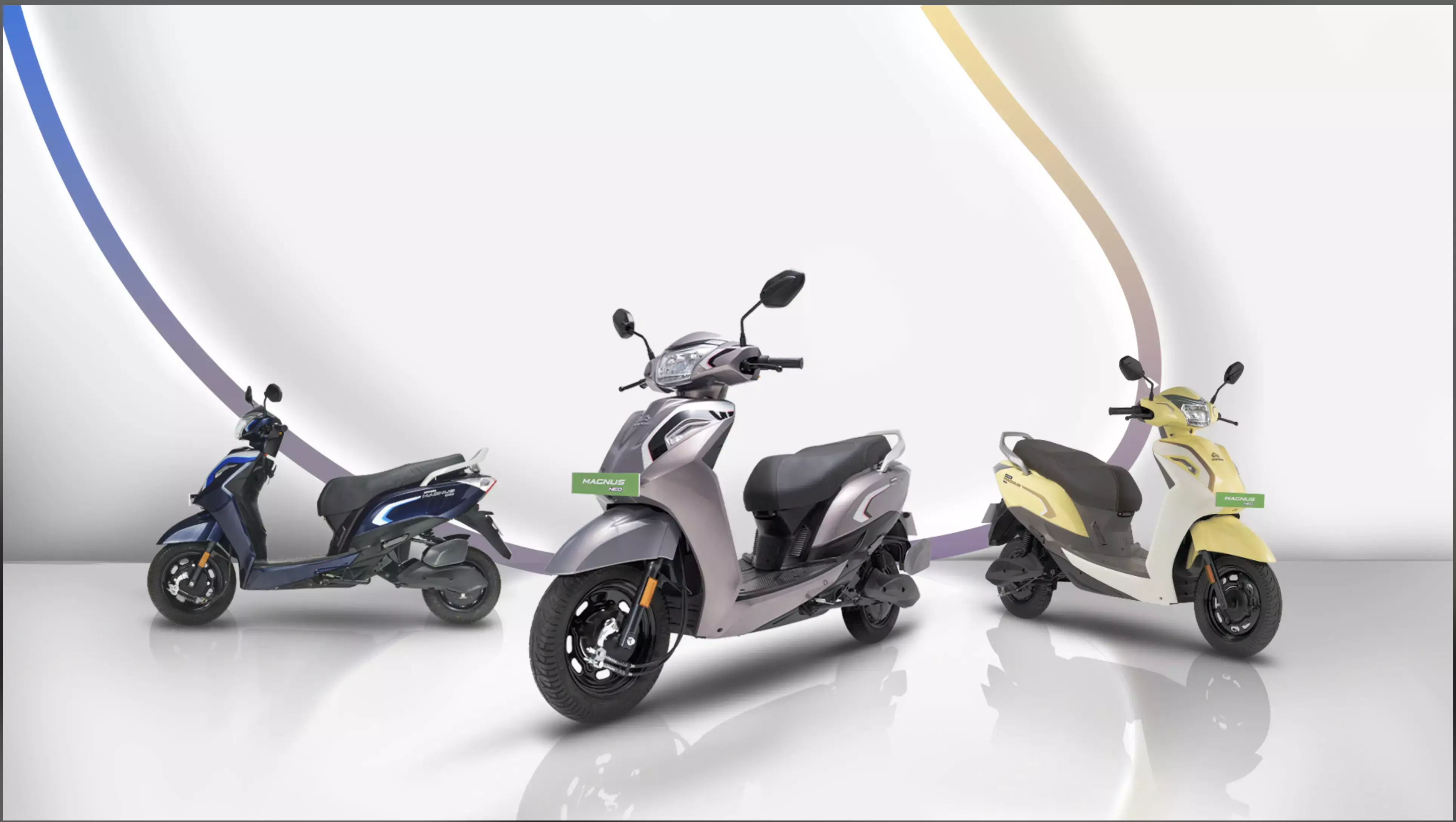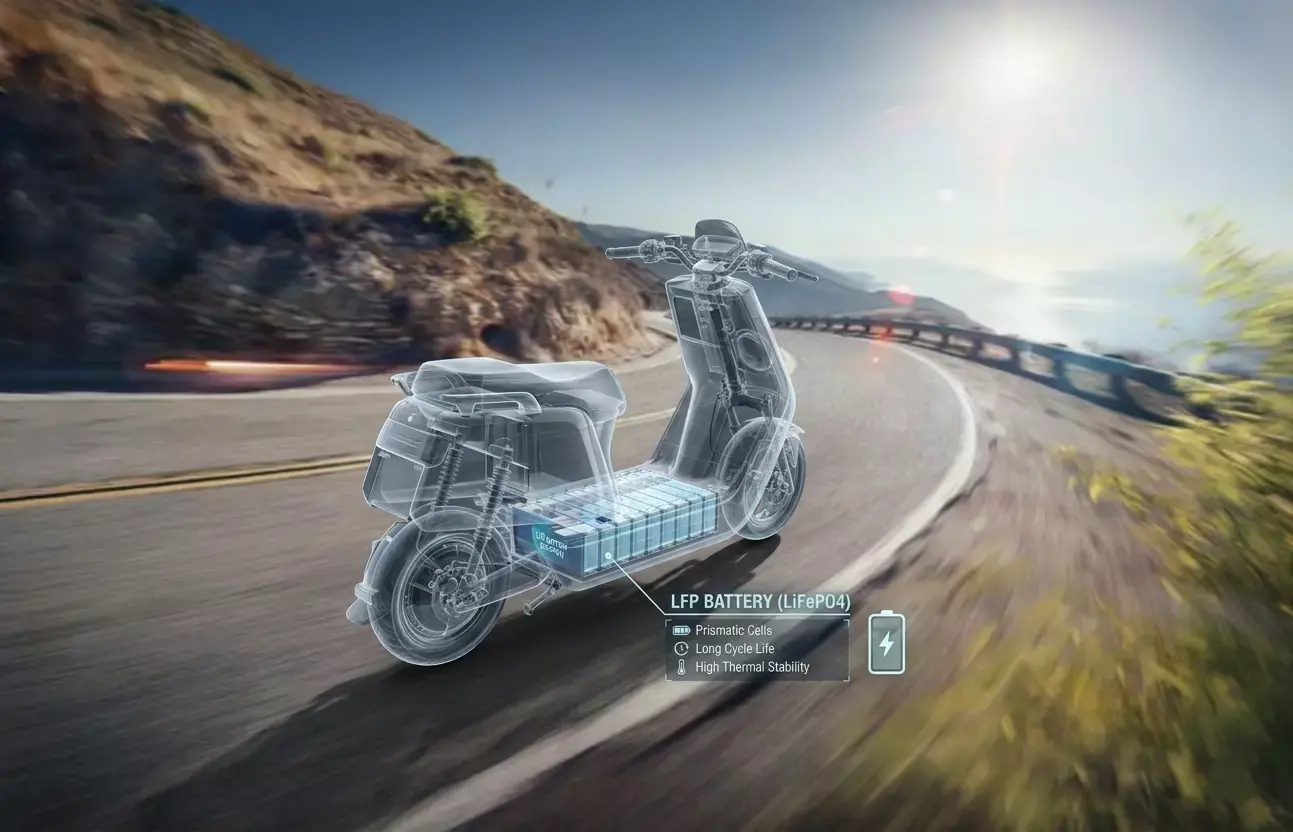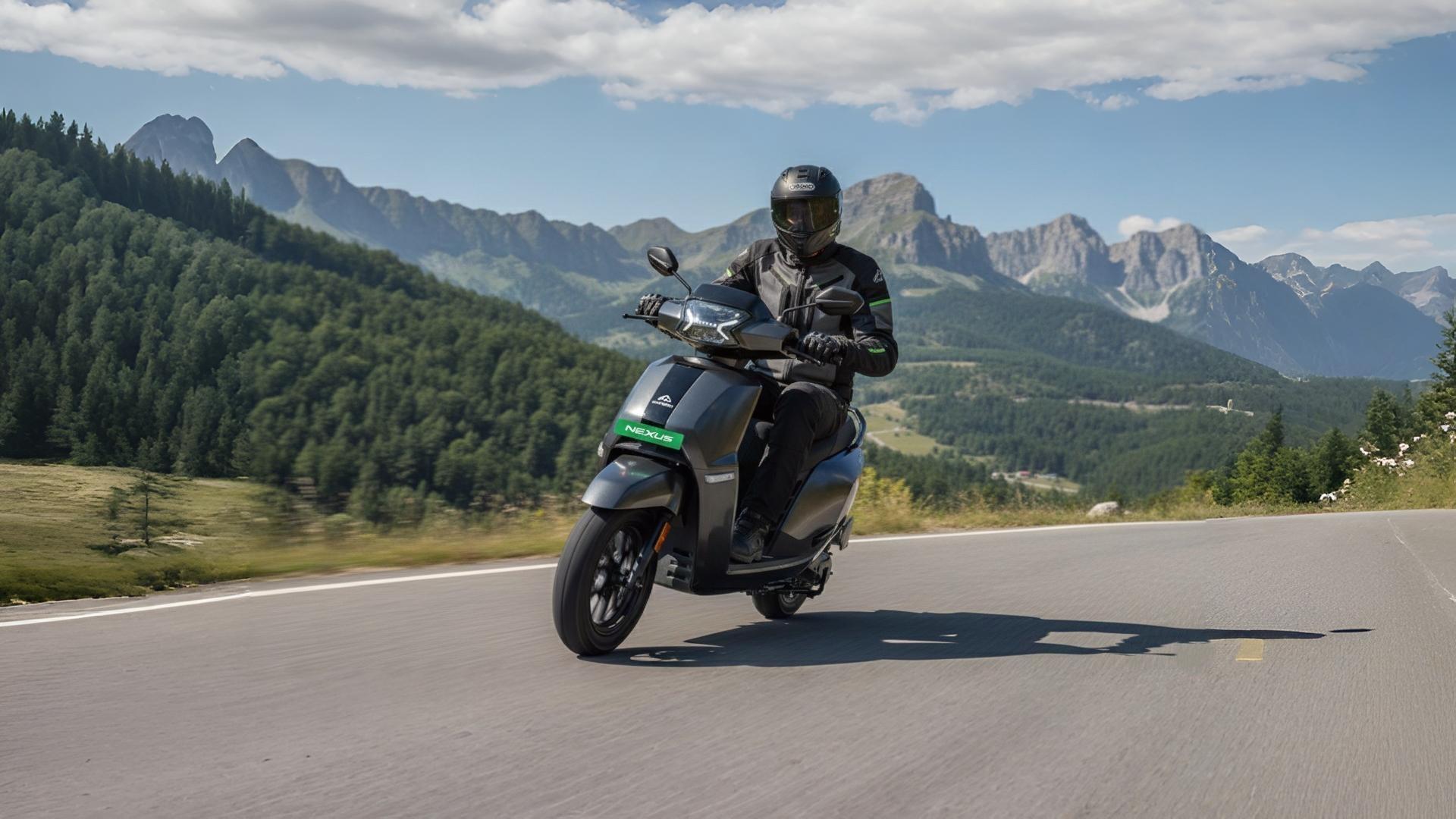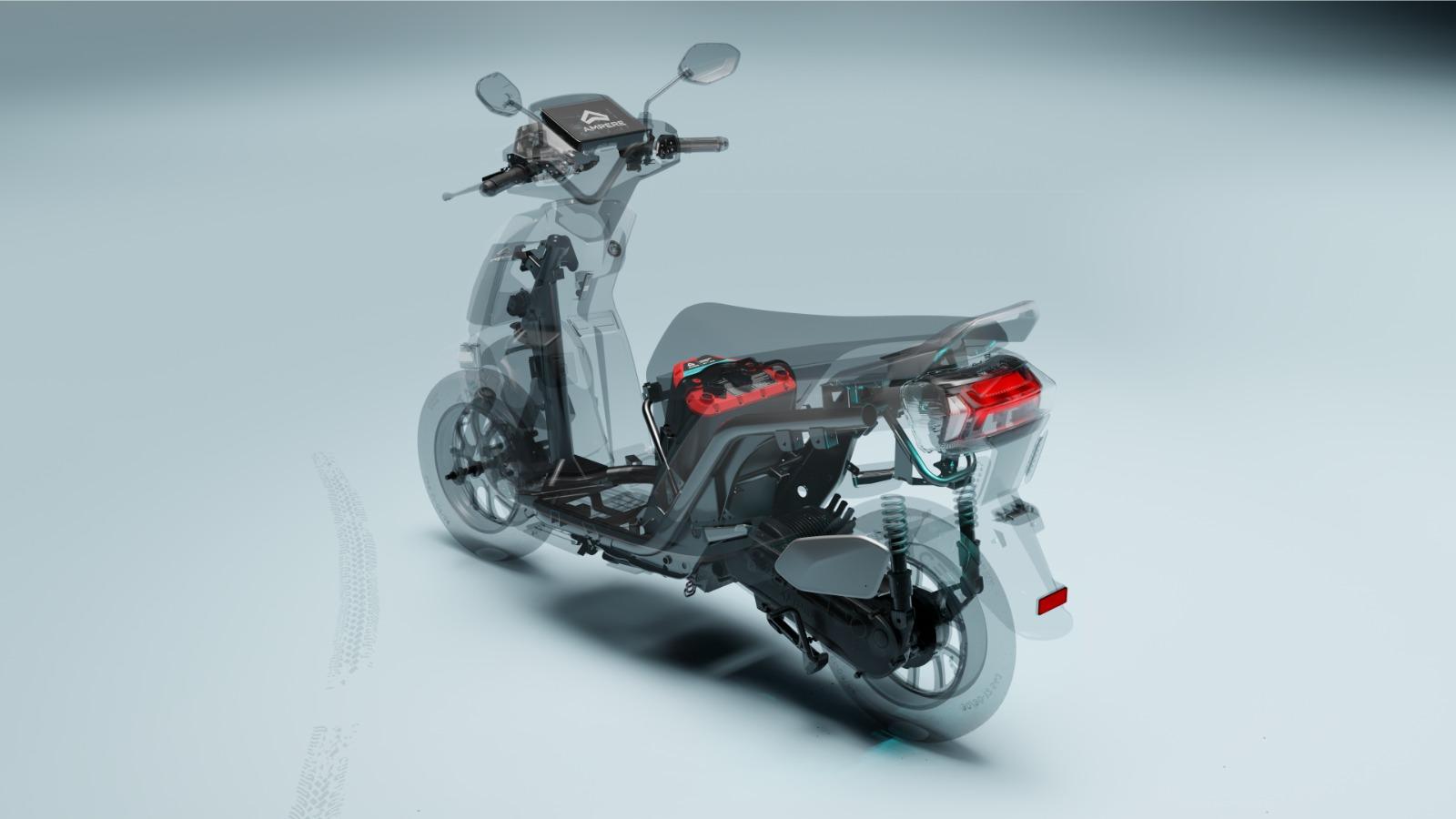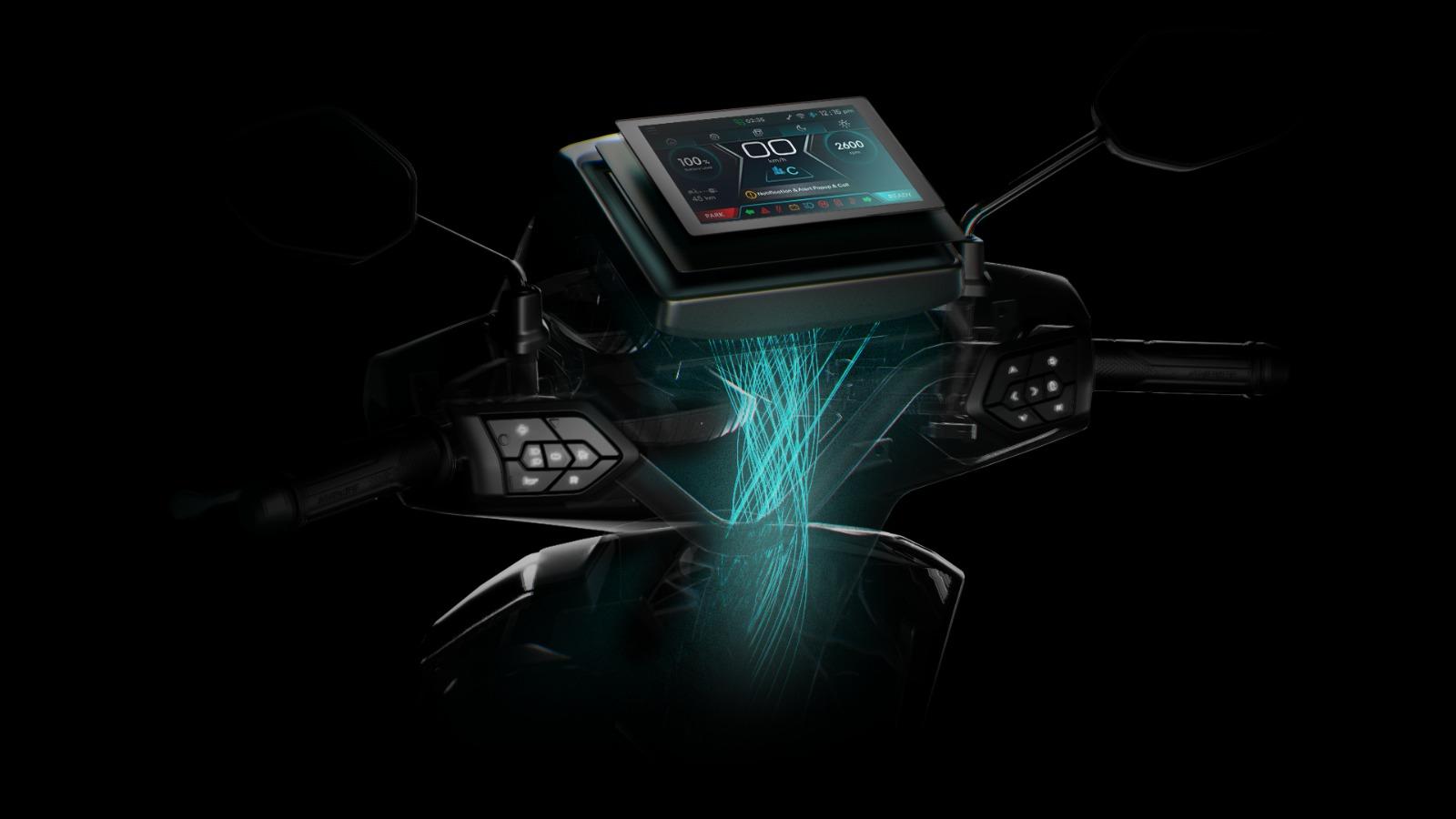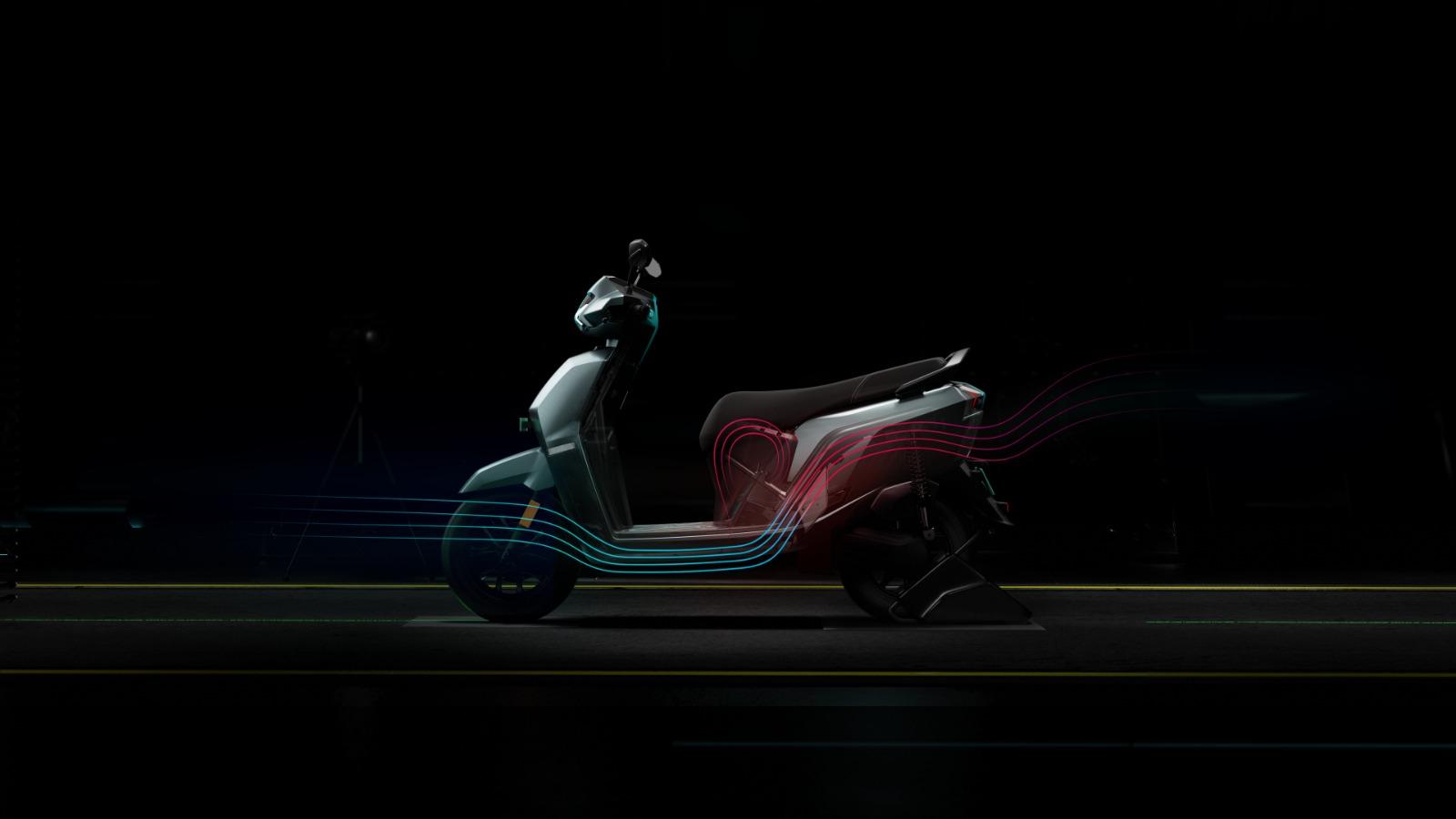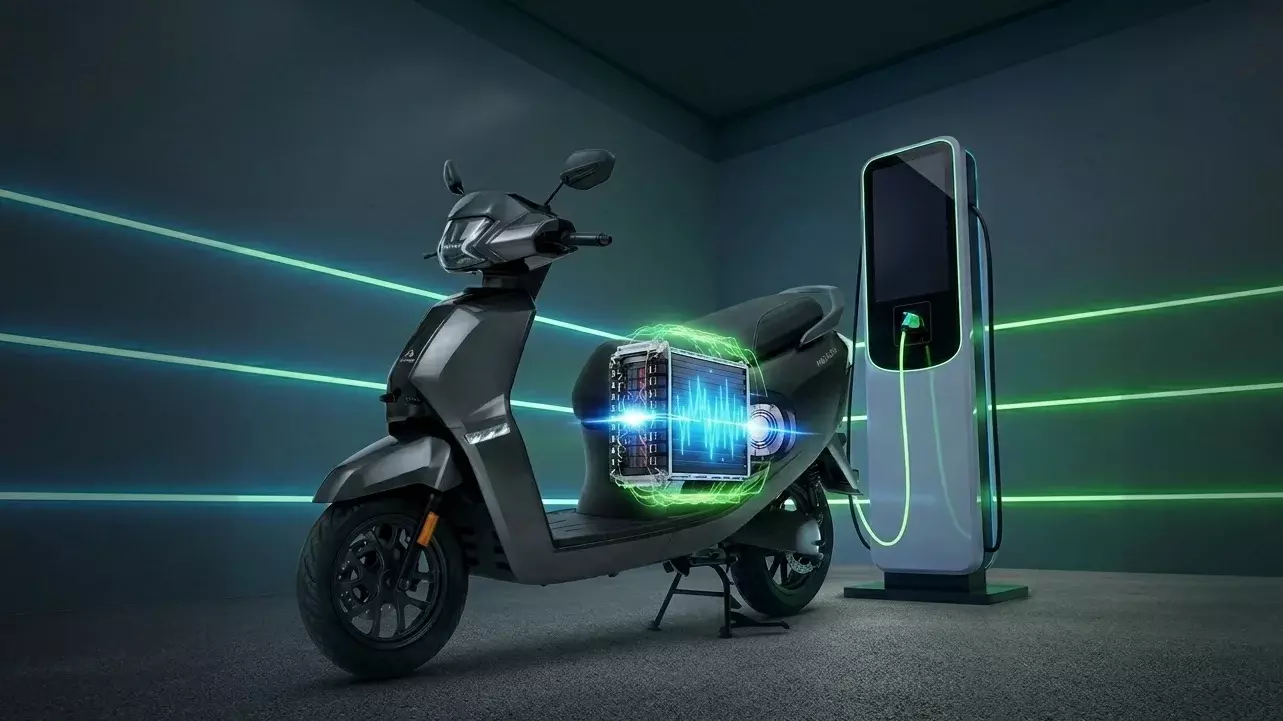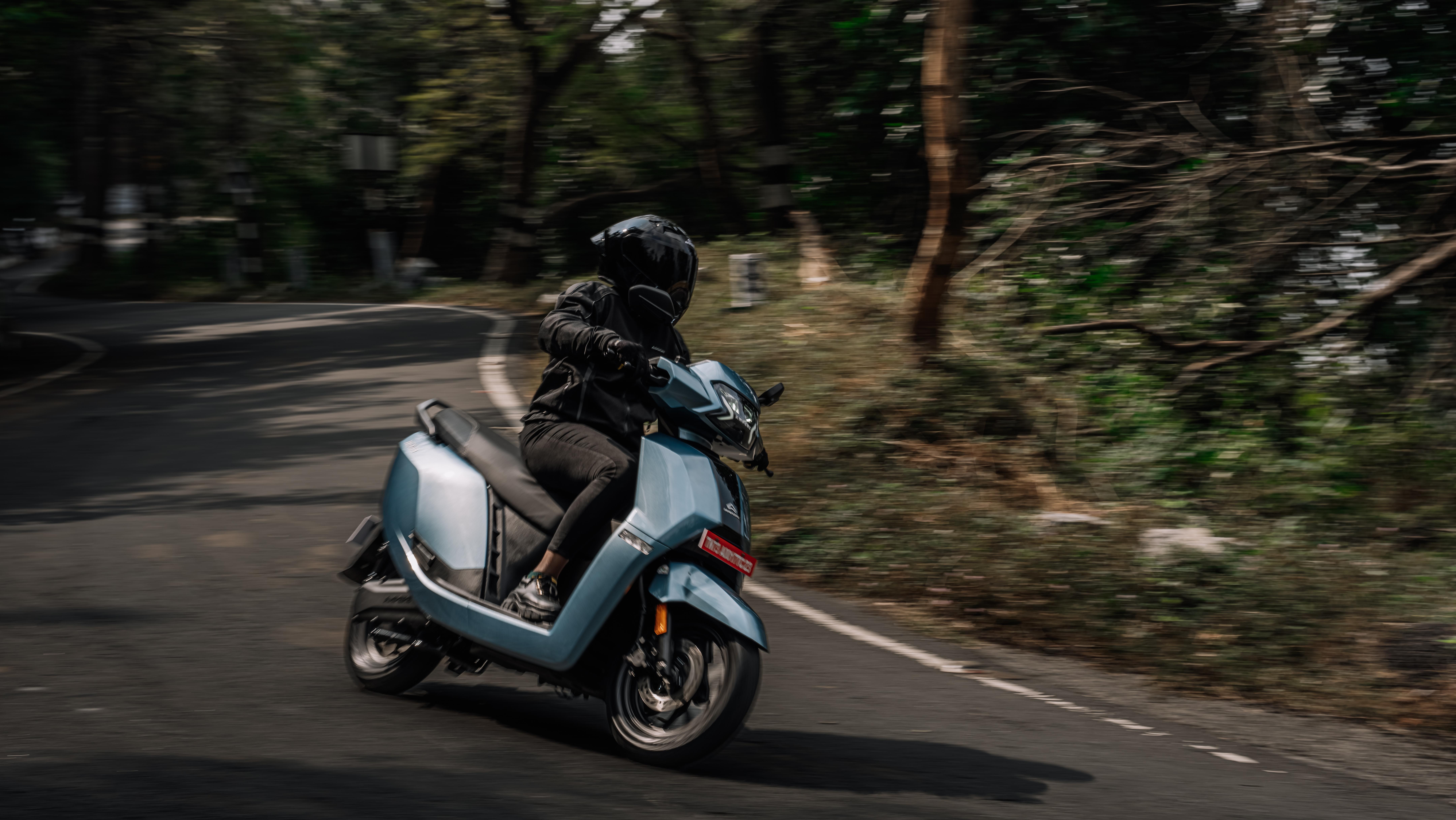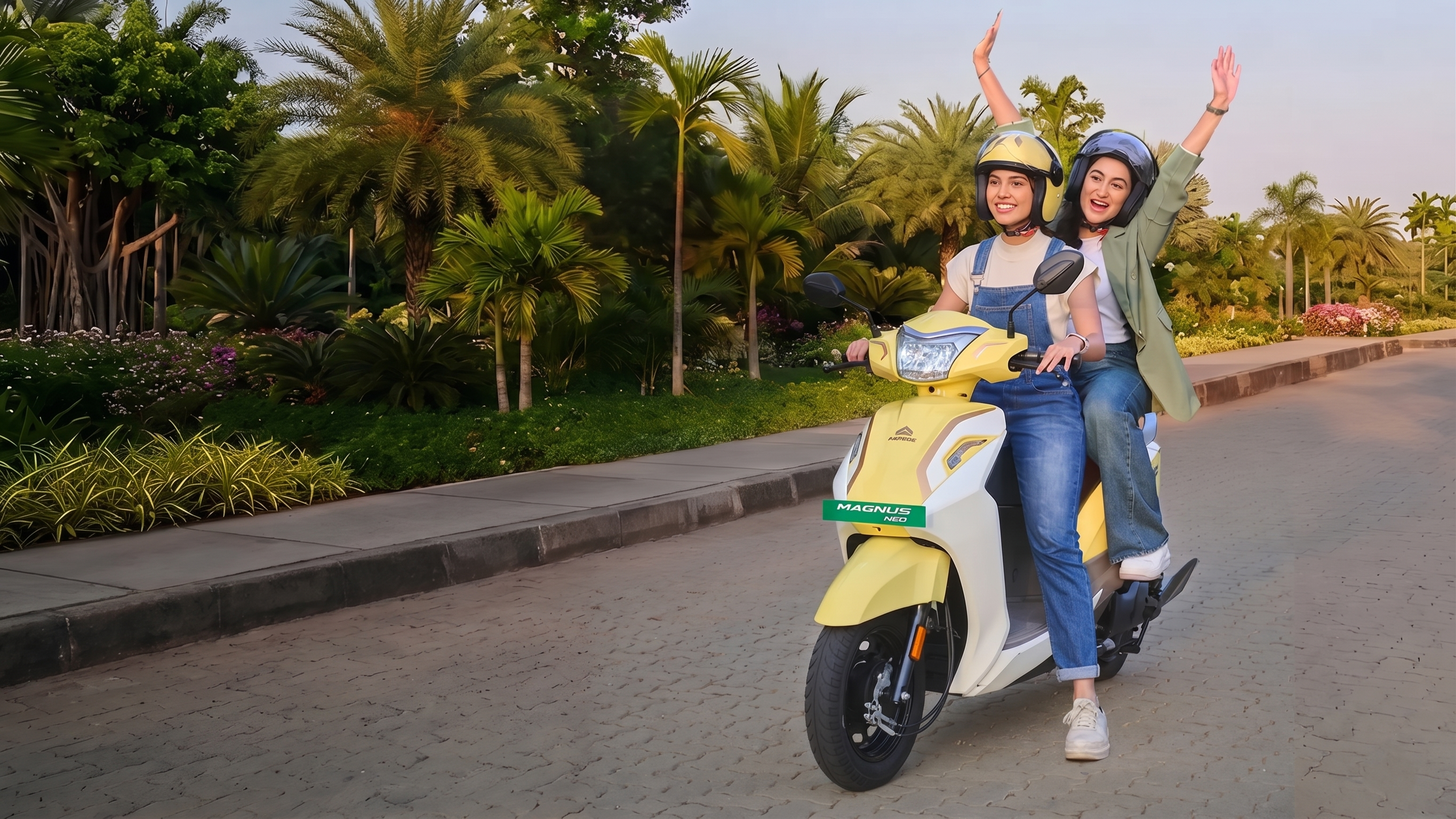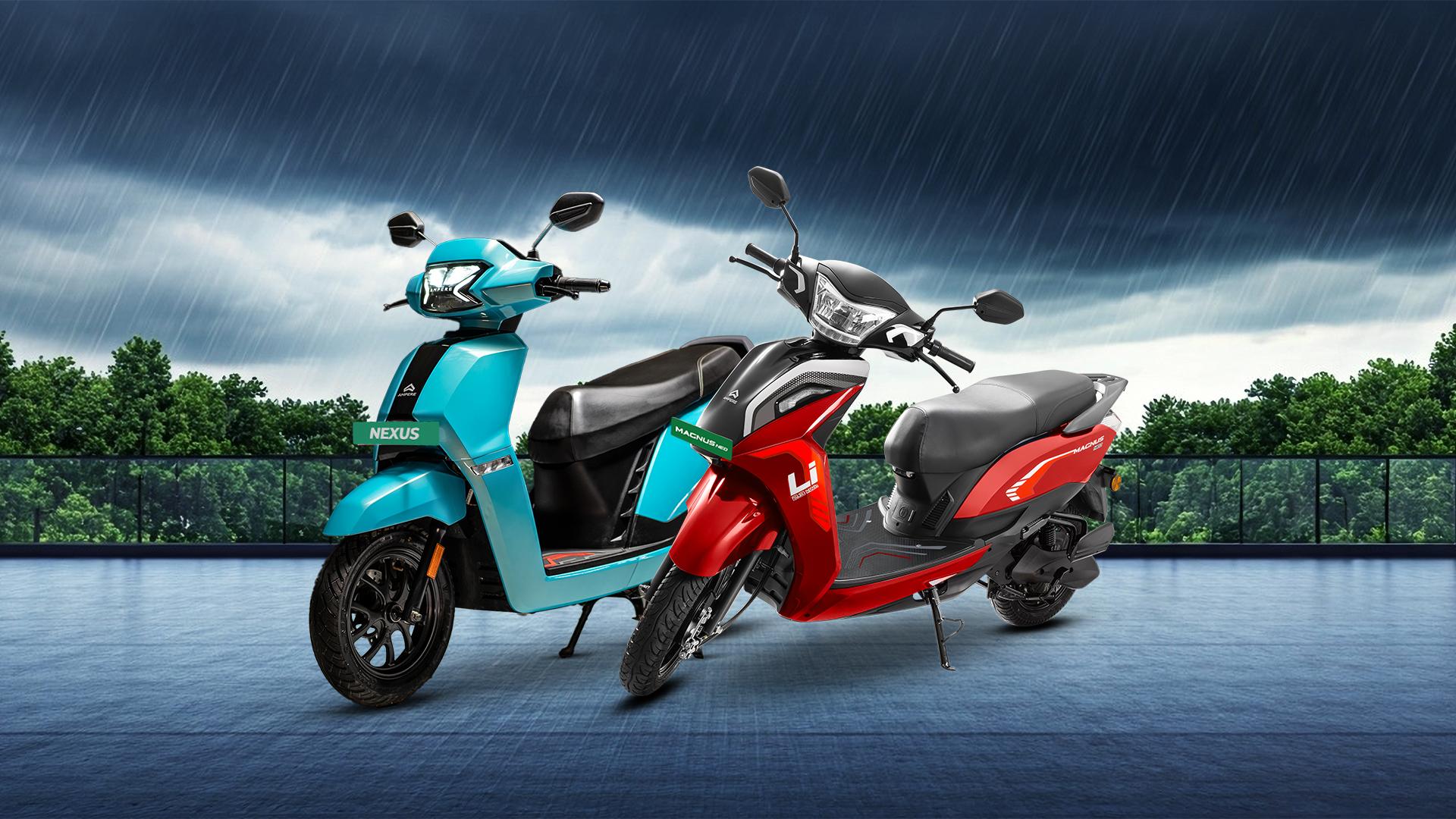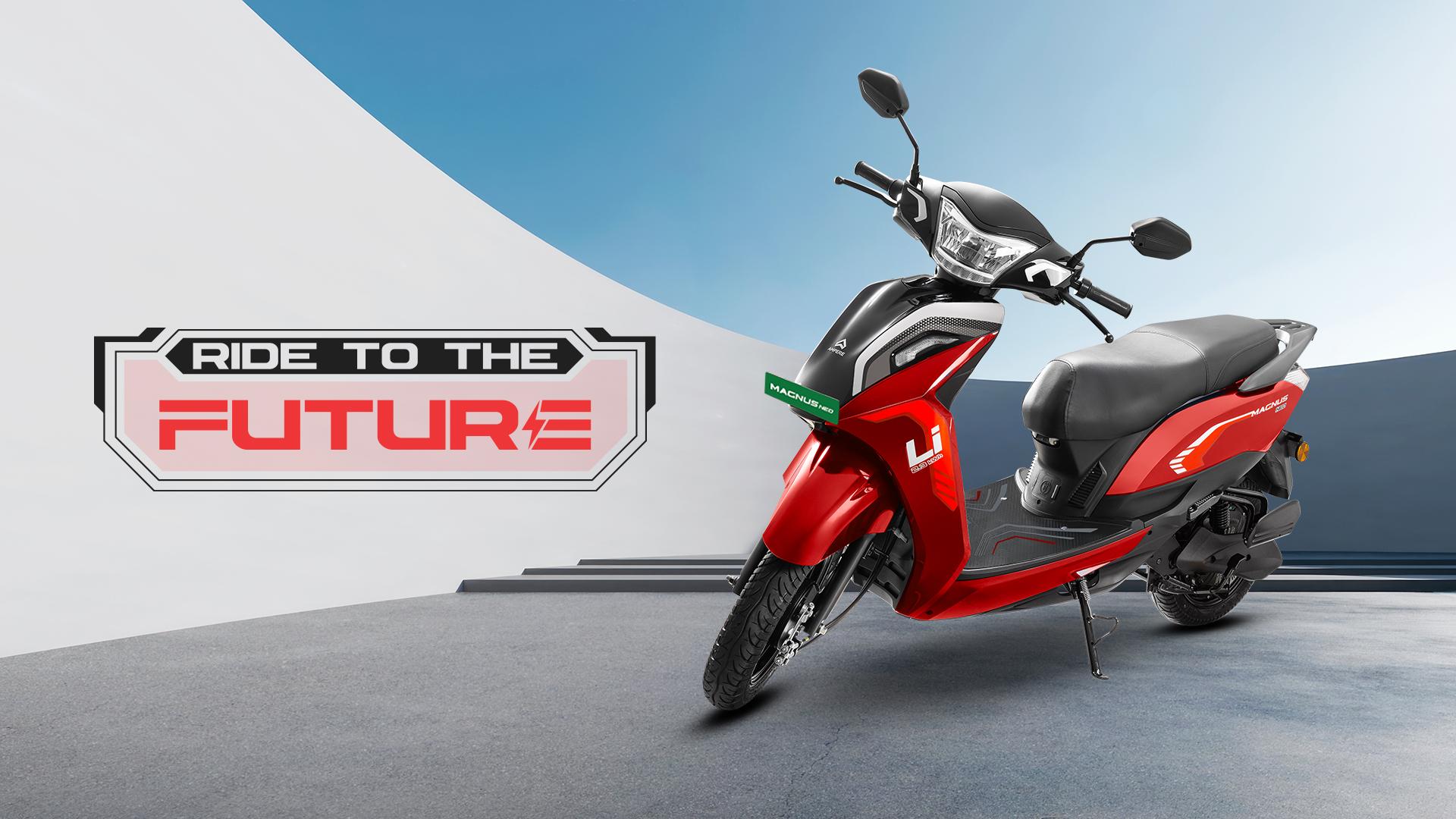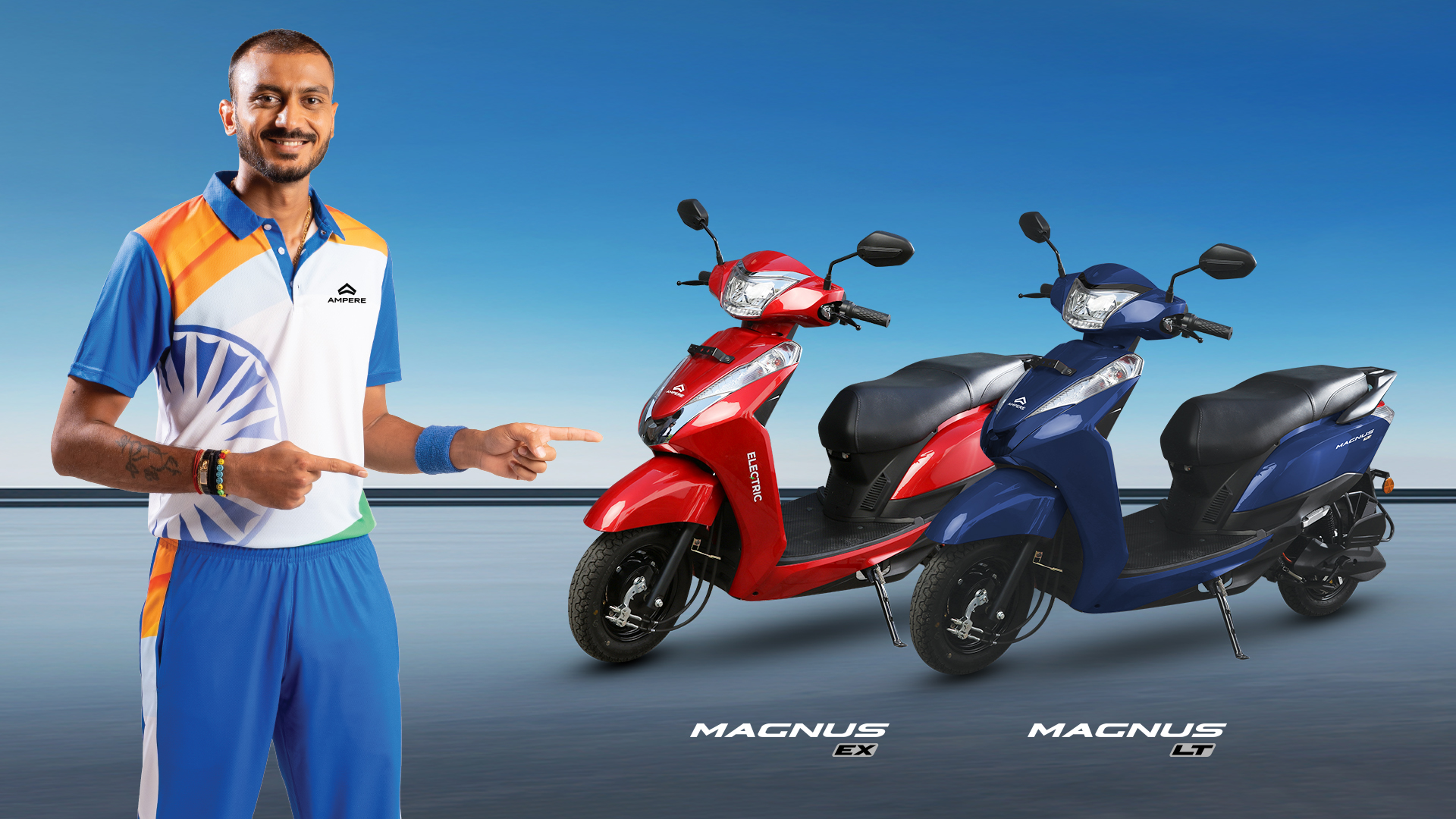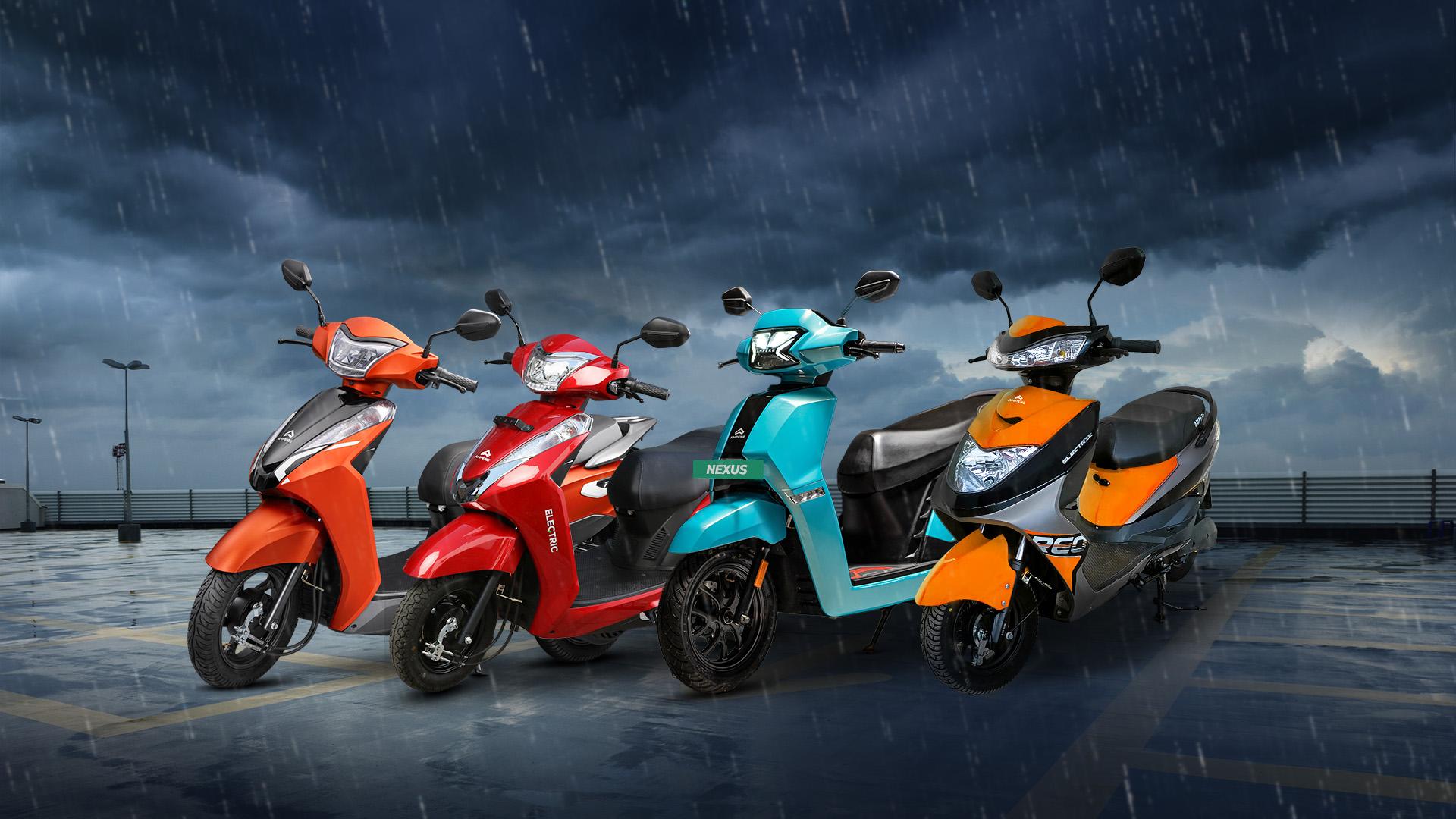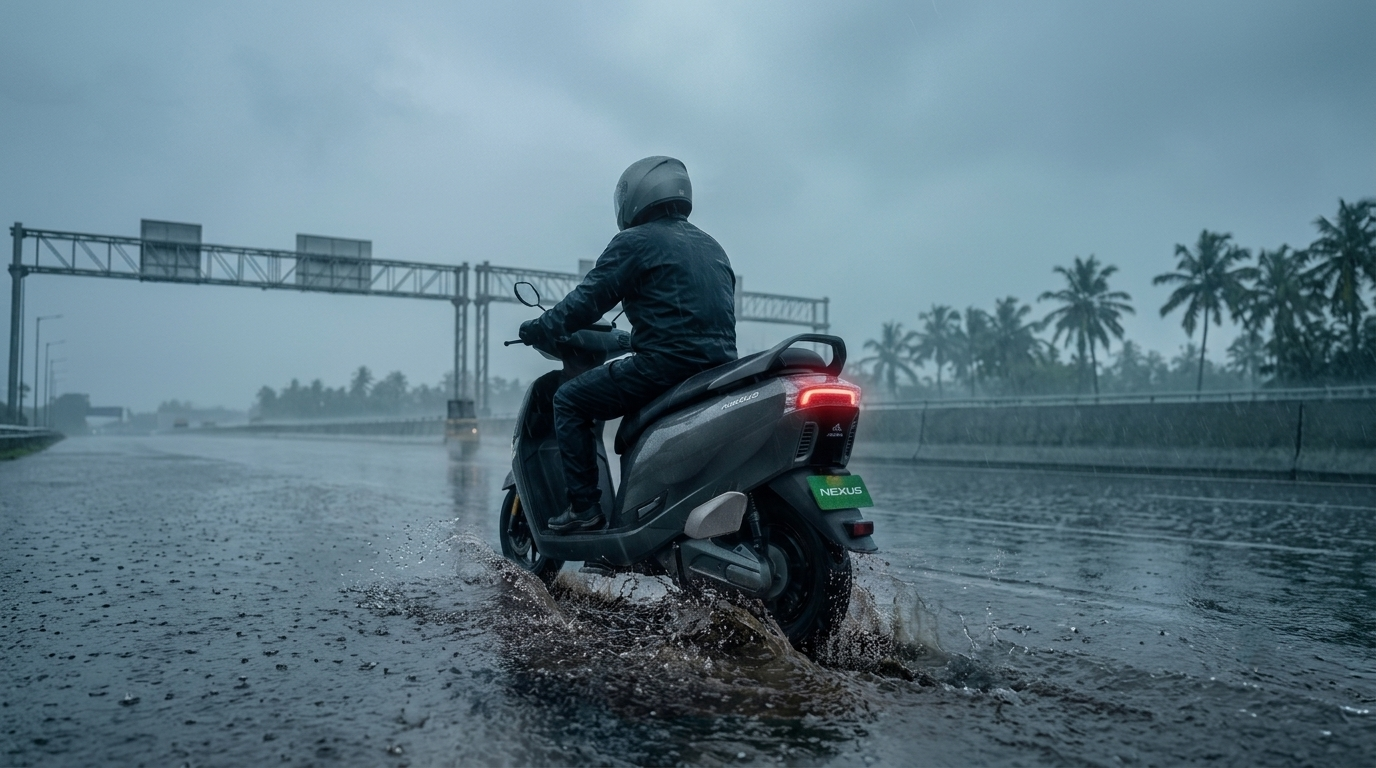
Ampere electric scooters handle Indian monsoons safely because their LFP battery packs and motor assemblies are built for the country's wet riding conditions. The Magnus Neo, Magnus Grand, and Magnus G Max all feature water-resistant battery casings, CBS braking for wet-road stability, and 165 mm ground clearance that handles typical urban flooding. The Nexus adds disc braking with CBS and approximately 170 mm clearance for more demanding monsoon routes.
What Makes an Electric Scooter Monsoon-Ready?
Before comparing models, it helps to understand what actually matters when rain arrives. Four factors determine how well any scooter — petrol or electric — handles Indian monsoon conditions.
Ground clearance determines whether your scooter wades through a waterlogged underpass or scrapes bottom at the entry. For context, most Mumbai and Bengaluru underpasses flood to 100–150 mm during heavy rains. A scooter with 135 mm clearance is at its limit; one with 165–170 mm has a meaningful safety buffer.
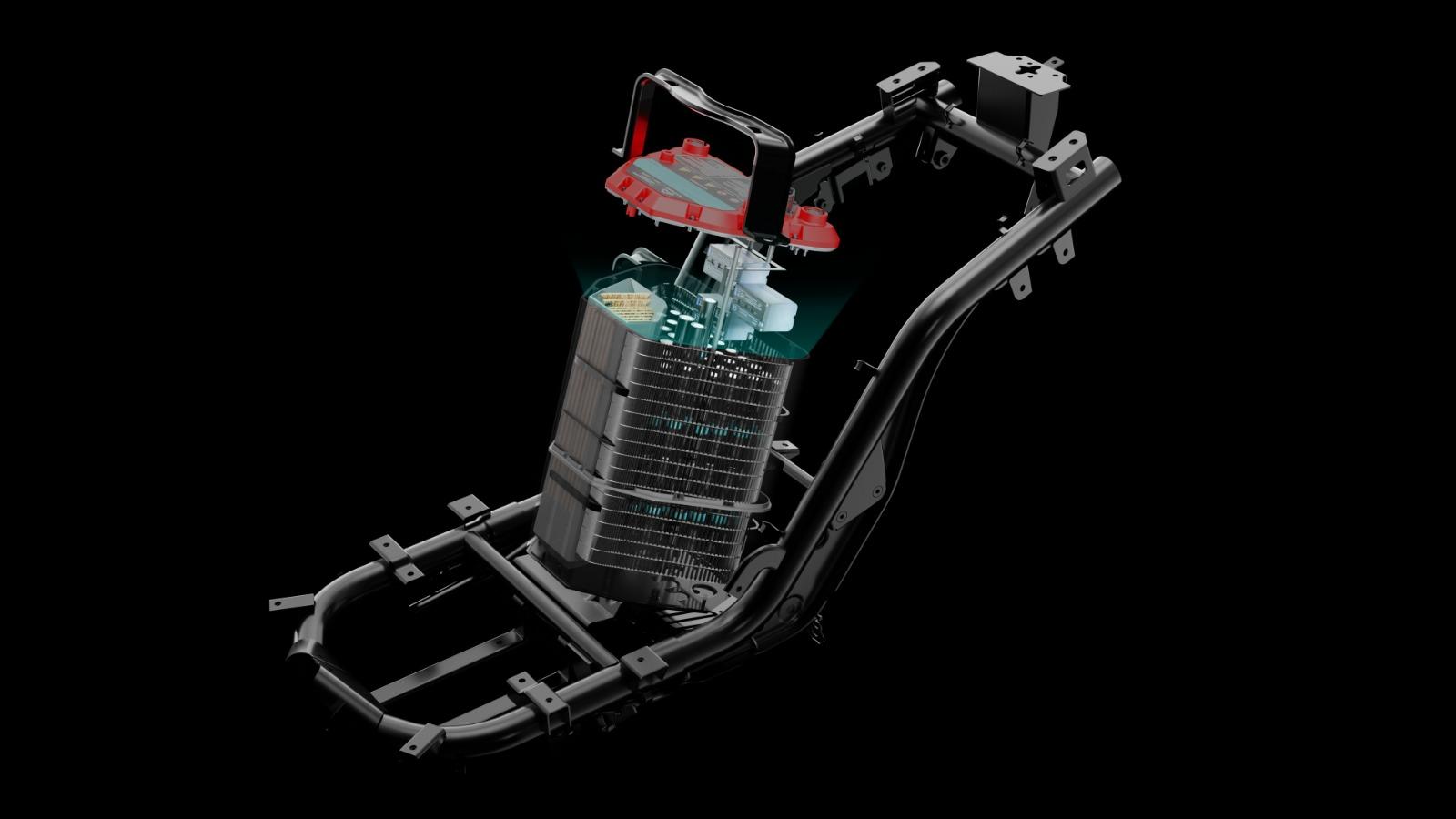
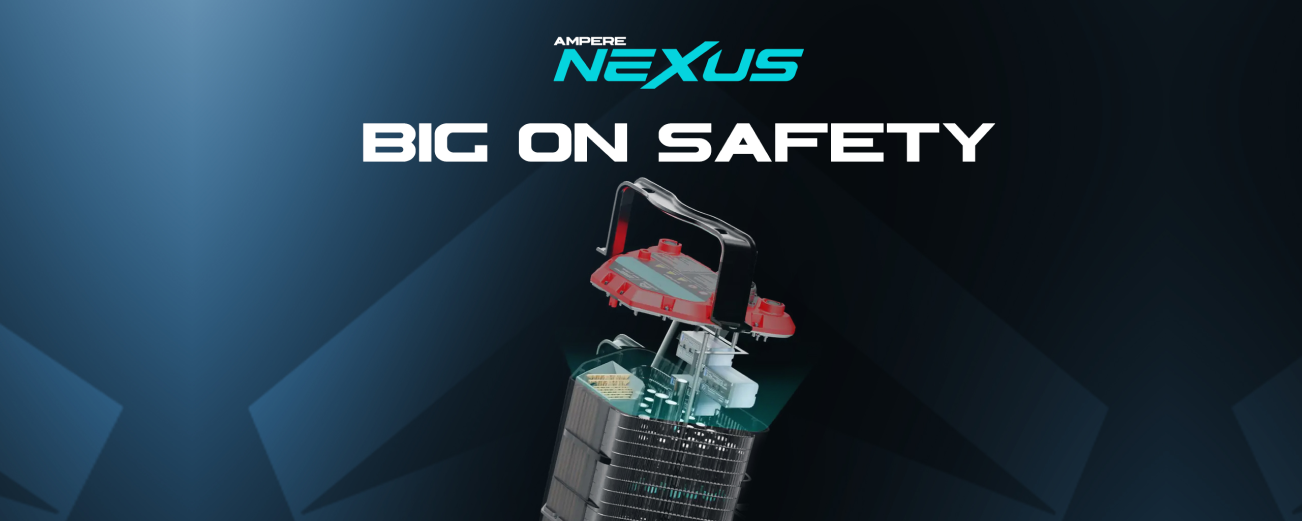
Water resistance at the battery, motor, and electrical connectors determines whether the scooter's electronics survive monsoon exposure. This is the specific concern unique to electric scooters that petrol riders do not face. Reputable manufacturers design their battery packs and connector housings to withstand rain, road spray, and shallow water crossings. Ampere's production scooters are designed for these conditions as standard.
Braking stability on wet roads is the safety-critical factor most riders think about first. CBS — Combined Braking System — automatically distributes braking force between the front and rear wheels when the rear brake is applied with moderate pressure. This prevents the rear wheel from locking on slippery asphalt, which is the most common cause of monsoon riding accidents. Every Ampere mid-range and flagship model includes CBS.
Tyre grip on wet surfaces depends on tyre compound and tread pattern. Ampere's factory-fitted tyres are suited to Indian road conditions including wet asphalt. Checking tyre tread depth before monsoon begins — and replacing tyres at or before the wear indicator — is the single most impactful rider-managed safety step for wet weather.
Ampere Models for Monsoon Riding: How They Compare
| Specification | Reo 80 | Magnus Neo | Magnus Grand | Magnus G Max | Nexus |
|---|---|---|---|---|---|
| Ex-Showroom Price | ₹59,900 | ₹86,999 | ₹89,999 | ₹94,999 | ₹1,09,900+ |
| Ground Clearance | 135 mm | ~160 mm | 165 mm | 165 mm | ~170 mm |
| Front Brake | Disc + CBS | Drum + CBS | Drum + CBS | Drum + CBS | Disc + CBS |
| Battery Type | LFP | LFP | LFP | LFP | LFP |
| Battery Capacity | 1.44 kWh | 2.3 kWh | 2.3 kWh | 3.0 kWh | 3.0 kWh |
| Top Speed | 25 km/h | 65 km/h | 65 km/h | 65 km/h | 93 km/h |
| Monsoon Suitability | Light urban | Good | Good | Very Good | Best |
The Reo 80 is the weakest monsoon performer in the Ampere range purely on ground clearance — 135 mm is adequate for light rain on smooth roads but approaches its limit in moderate flooding. Its 25 km/h cap also means it is not suited for arterial roads.
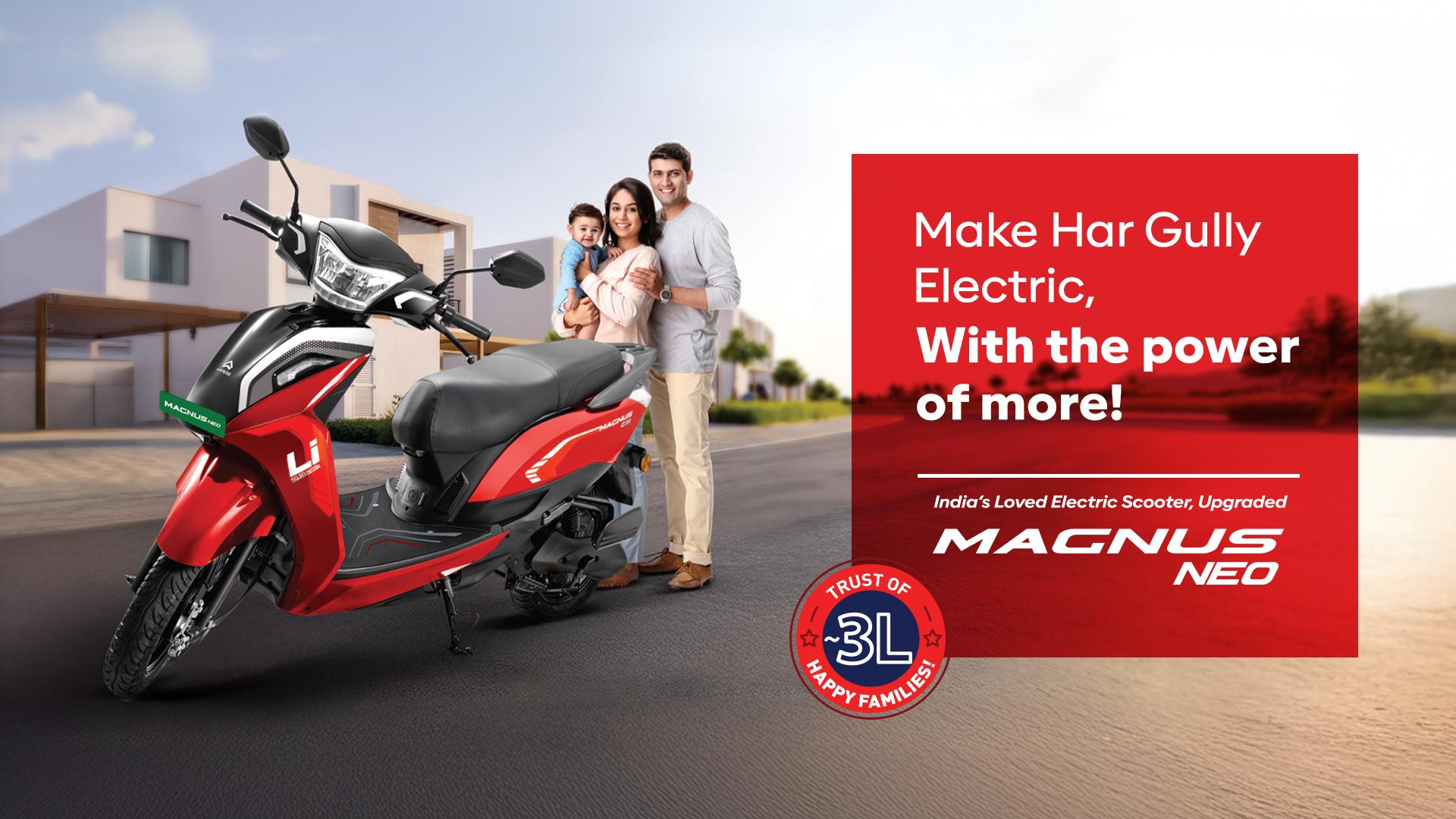
The Magnus Neo and Magnus Grand are solid monsoon scooters for most urban riders. The 160–165 mm clearance handles typical city waterlogging comfortably. Drum + CBS braking provides reliable wet-road stopping without the complexity of hydraulic disc systems that require more careful maintenance in wet conditions. Both carry the full LFP battery warranty of 5 years / 75,000 km.
The Magnus G Max at 165 mm clearance and 3.0 kWh LFP battery is arguably the best balance in the Ampere range for monsoon commuting — more range buffer means fewer charging decisions in unpredictable weather, and the Eco / City / Sport / Reverse mode set gives riders full control over power delivery on slippery surfaces.
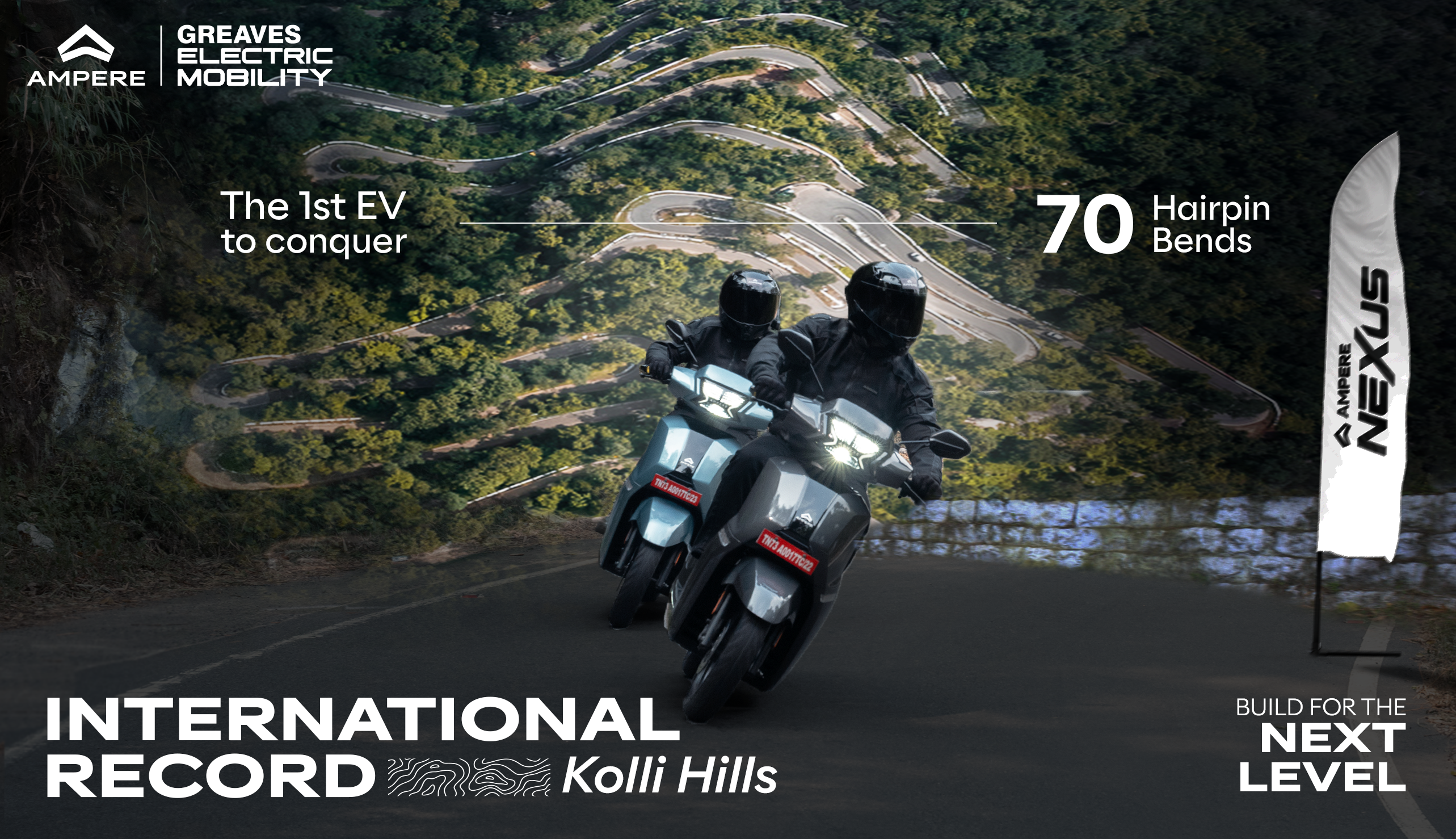
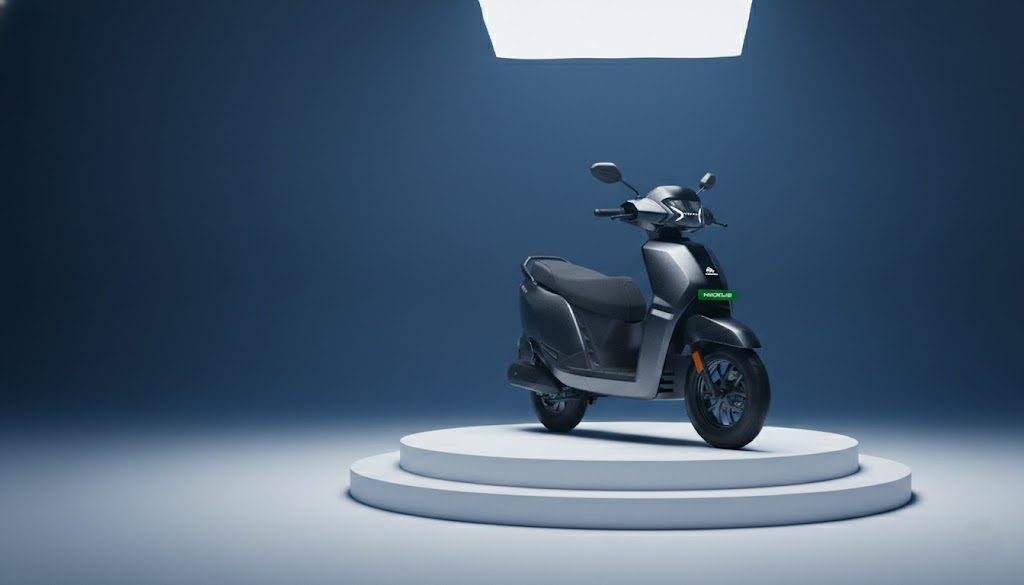
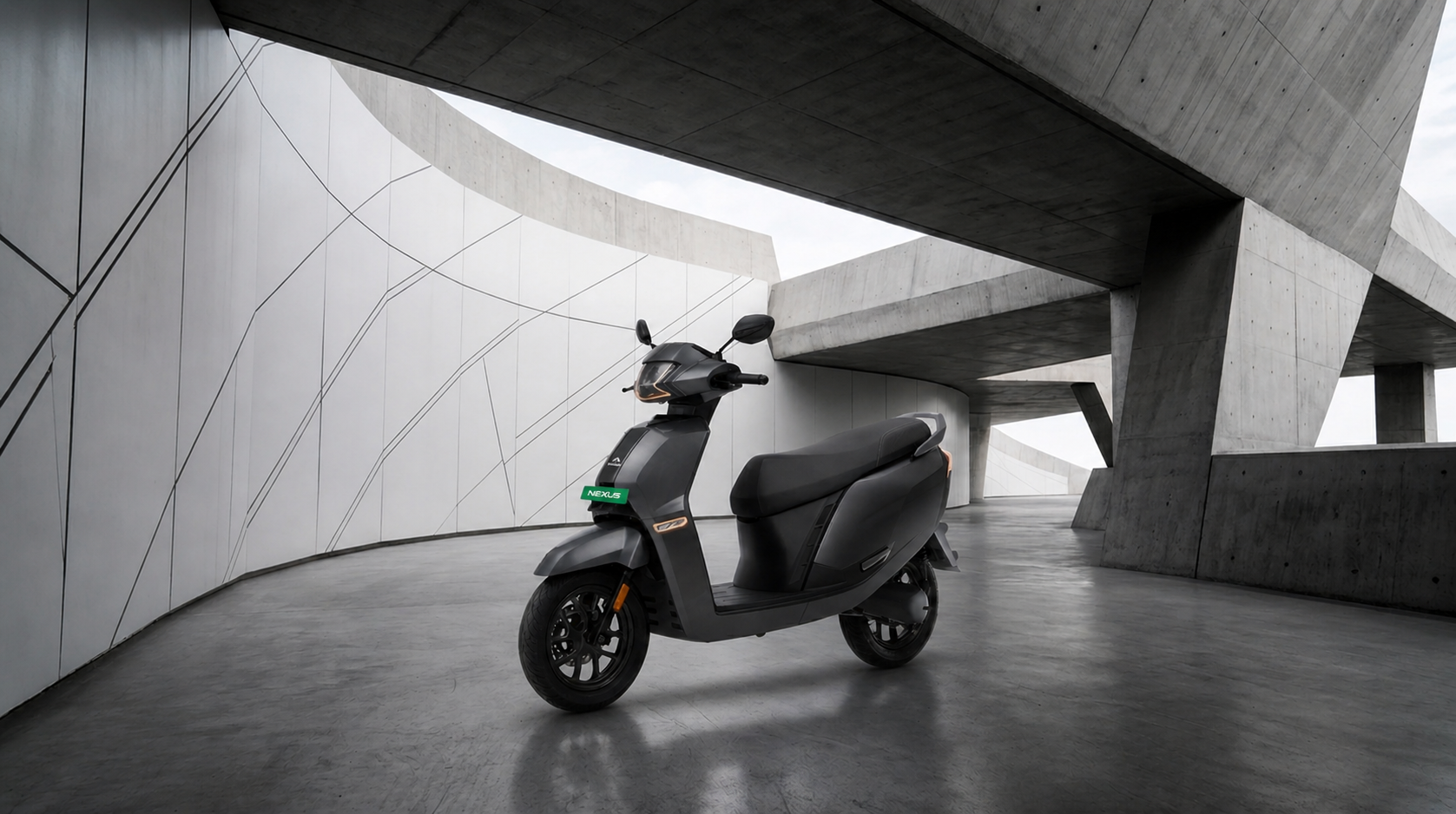
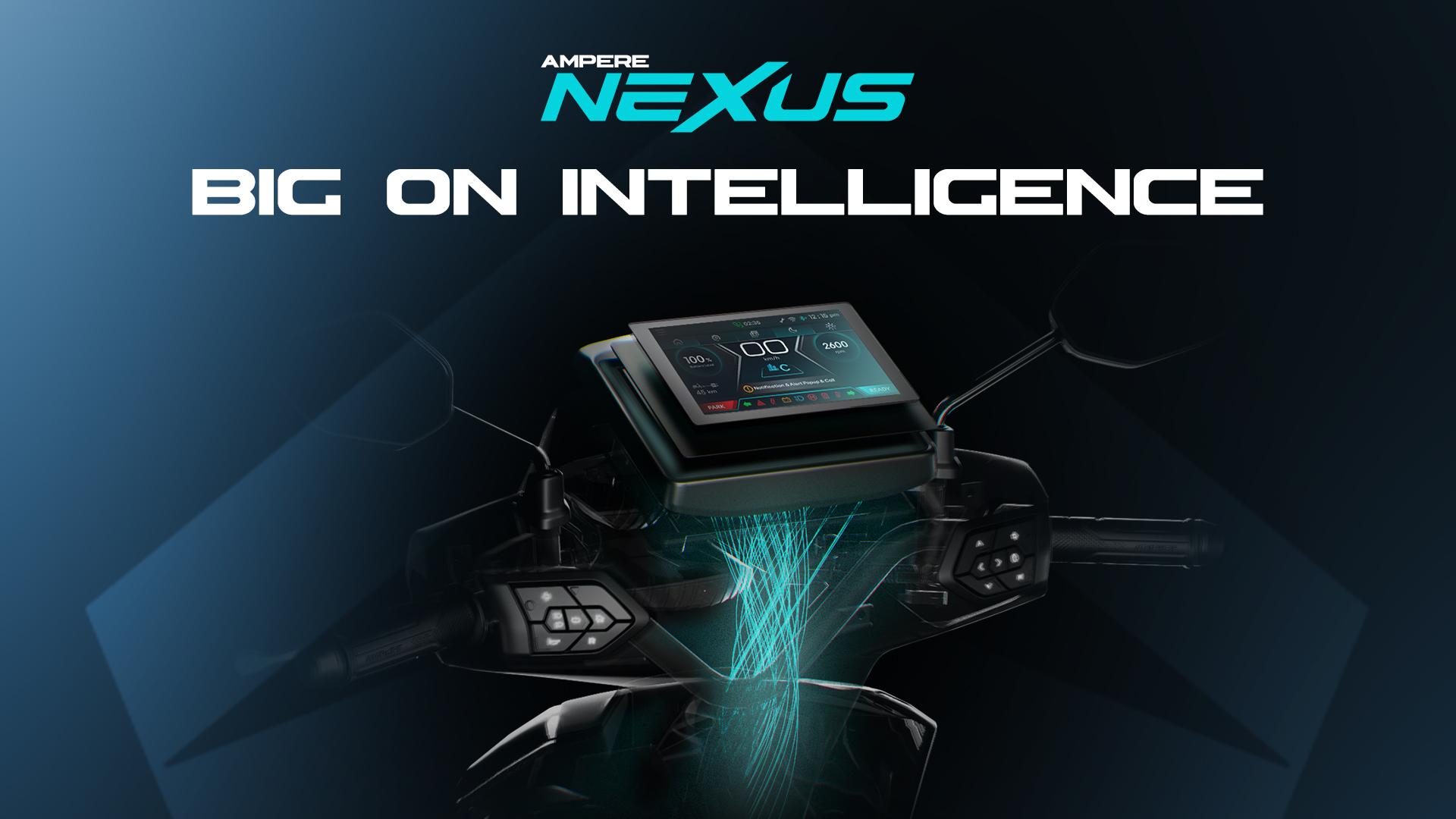
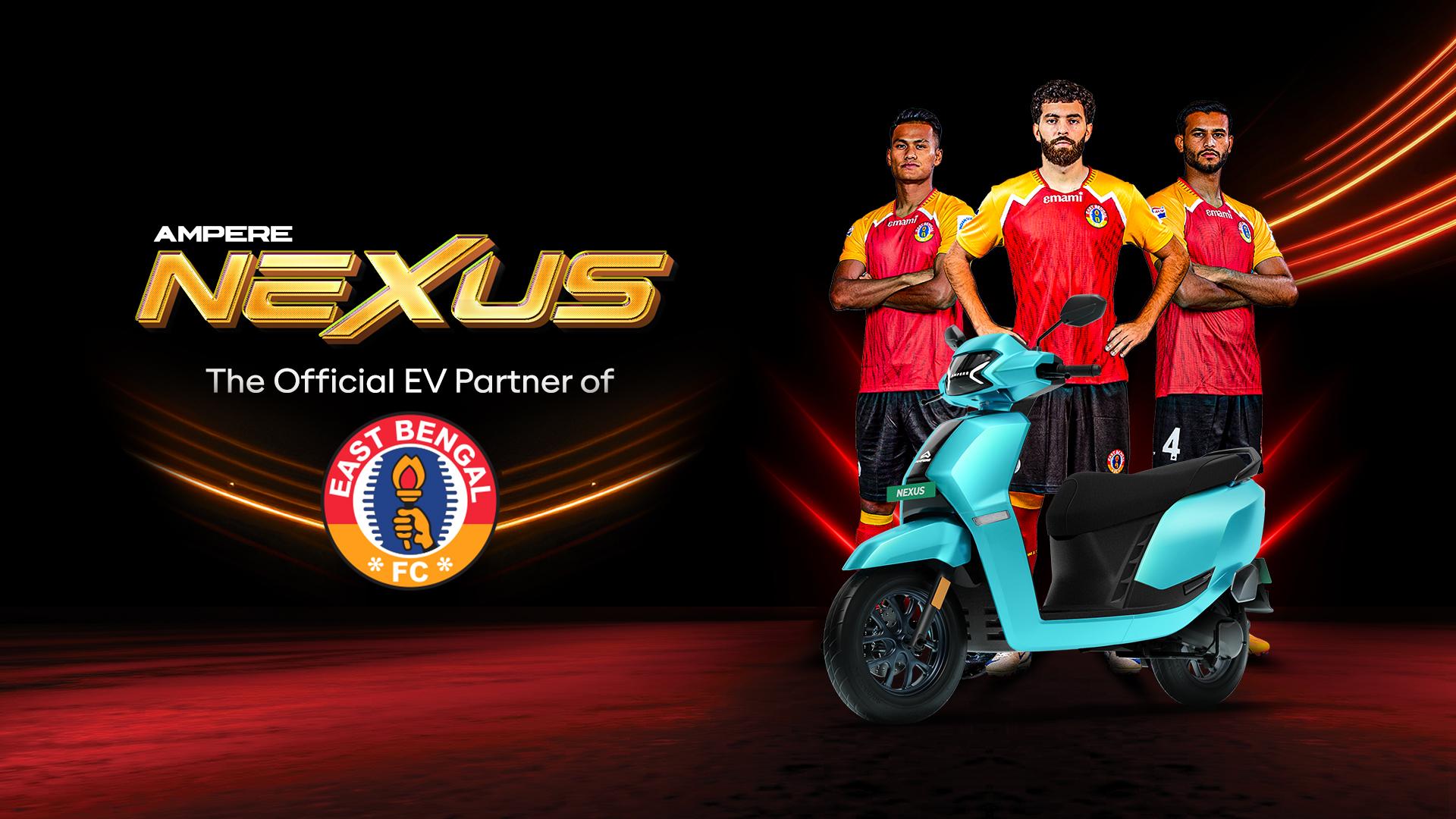
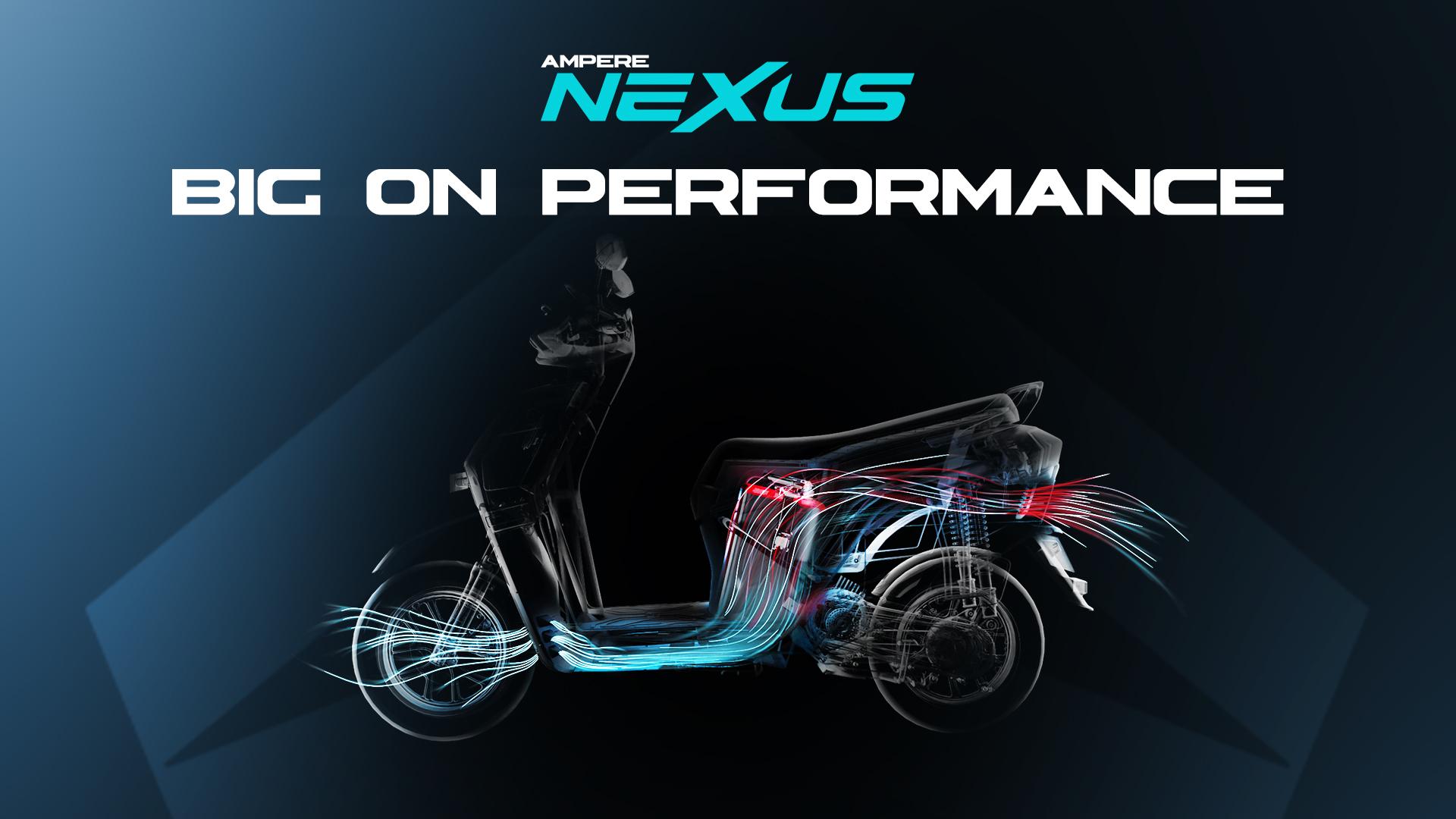
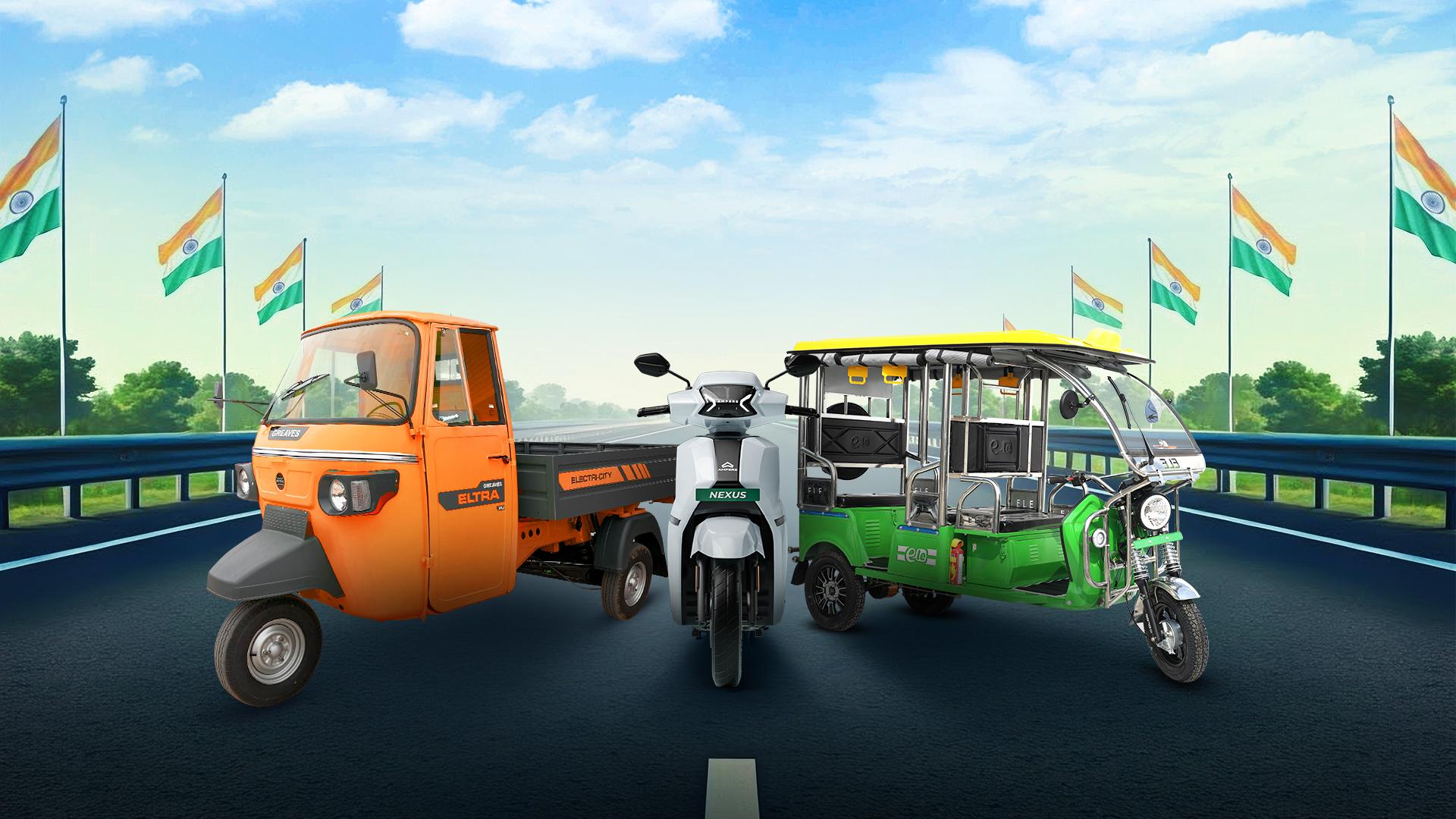
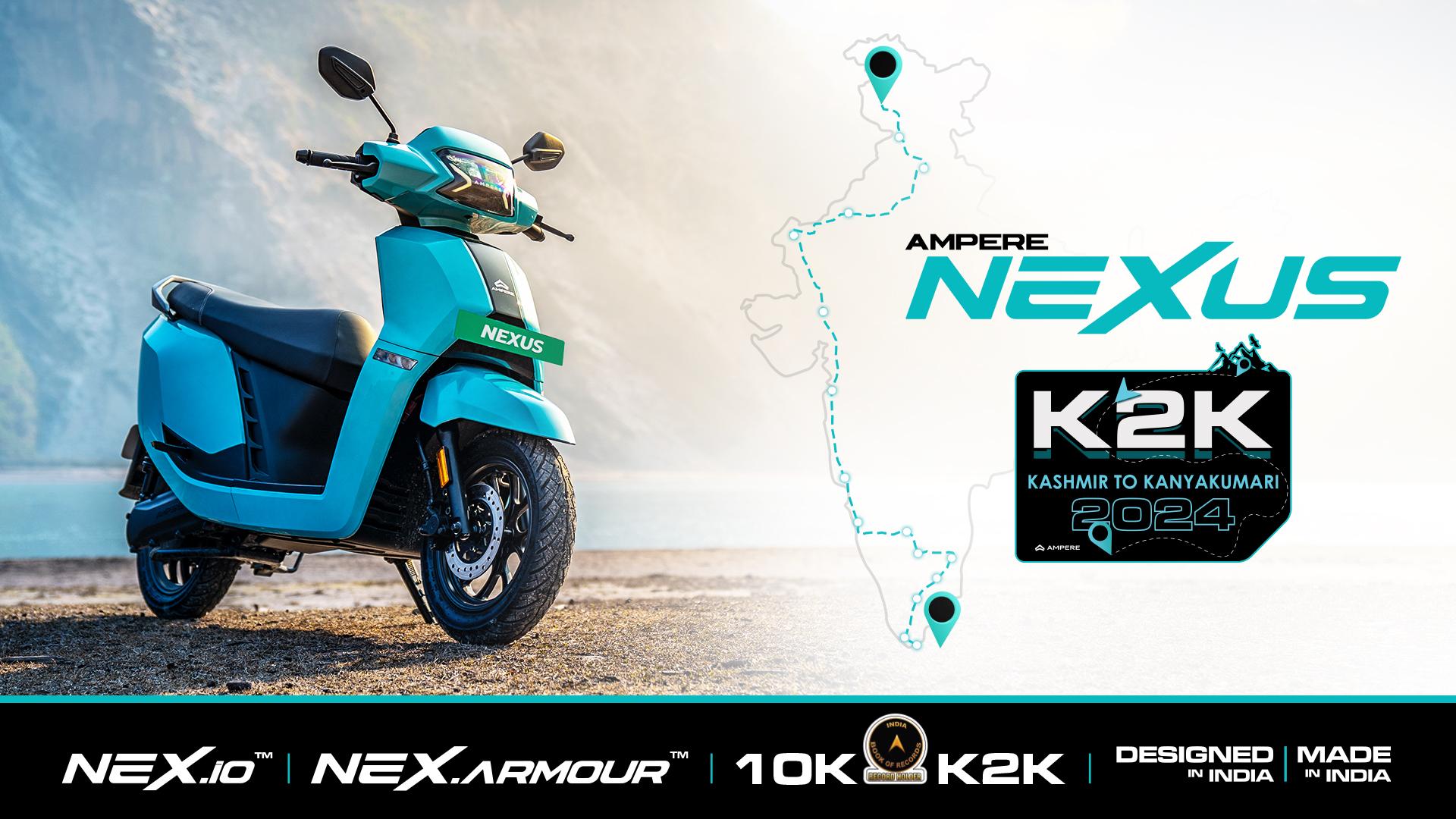
The Nexus is the most capable monsoon scooter in the Ampere lineup. Its ~170 mm ground clearance, disc + CBS front braking, 93 km/h top speed, and 3.3-hour charging time (the fastest in the range) make it the right choice for riders who commute on arterial roads, encounter deeper flooding, or need the flexibility of quick top-up charging between heavy rain intervals.
How Ampere Compares to Competitors for Monsoon Use
Ather 450X offers IPX7 water-resistant battery components — one of the most specific waterproofing claims in the segment. Its 170 mm ground clearance and disc brakes with CBS make it a strong monsoon performer, but at ₹1.47 lakh it targets a premium bracket. Ather's AtherStack software includes rain-detection riding adjustments in some variants.
TVS iQube at 165 mm ground clearance with drum and disc brake options depending on variant is competent in monsoon conditions. Its SmartXonnect platform includes weather alerts, though the core riding safety is in the hardware rather than the software.
Bajaj Chetak has a lower ground clearance in some variants — check the specific variant you are evaluating. Its all-metal body construction is corrosion-resistant, which is a genuine long-term advantage in coastal and high-humidity cities like Chennai and Kochi.
Ola S1 Pro's ground clearance and waterproofing specs have improved from early generations, but its service network reputation — particularly relevant when monsoon-related issues arise — is something to factor in.
For riders on tight budgets, Ampere's Magnus Grand at ₹89,999 delivers better monsoon credentials (165 mm clearance, CBS, LFP battery) than most competitors at the same price point.
Monsoon Riding Practices That Matter More Than the Scooter
The best monsoon scooter still requires sensible riding. Slow down progressively before wet patches — braking distance increases by 30–40% on wet asphalt regardless of how good the CBS system is. Apply the rear brake gently to allow CBS to engage smoothly rather than grabbing it hard, which can momentarily lock the rear before CBS reacts.
Avoid riding through water whose depth you cannot see. Urban flooding hides potholes, open drains, and debris. The 165 mm ground clearance of your Magnus Grand is a guide for water depth, not a guarantee against what lies beneath it.
After riding through heavy rain, park in a sheltered area and allow the scooter to dry externally before charging. Wipe the charging port dry before connecting the charger. This is not because Ampere's connectors are fragile — they are designed for Indian conditions — but because a dry connection is always safer and extends connector life.
Do the pre-monsoon professional service visit. Ask for a specific check of battery casing seals, wiring connector integrity, and brake pad depth. These are the three items most affected by monsoon exposure over a full season. Ampere's 420+ service touchpoints mean this is accessible in most cities before the rains hit.
Monsoon-Specific Charging Tips
Charge from a sheltered, dry socket whenever possible. If your parking is exposed to rain, consider a waterproof socket cover — inexpensive and available at any electrical hardware shop. Do not charge immediately after riding through heavy rain — give the scooter 15–20 minutes in a dry area first. Use the original Ampere charger, not third-party adapters, which may have lower moisture protection ratings. These habits extend connector life and prevent the moisture-related electrical faults that are the most common monsoon-season EV service issues.
Frequently Asked Questions
Can I ride my Ampere scooter in heavy rain?
Yes. Ampere scooters are designed for Indian monsoon conditions. Ride at reduced speeds, apply brakes progressively, and avoid unknown depth water. Heavy rain itself does not damage the scooter — it is standing water at depths exceeding ground clearance that creates risk.
Which Ampere model has the best ground clearance for Mumbai floods?
The Nexus at approximately 170 mm offers the most clearance in the Ampere range. For most Mumbai flooding scenarios on arterial roads (typically 80–140 mm), the Magnus Grand and G Max at 165 mm are adequate. The Silk Board underpass or Hindmata circle-level flooding (200 mm+) should be avoided entirely on any two-wheeler.
Does monsoon riding void the Ampere warranty?
No. Normal monsoon riding — rain, wet roads, shallow water crossings within ground clearance limits — is within the designed operating conditions of Ampere scooters. Using the scooter in conditions that clearly exceed its design limits (deep flooding, submersion) is a different matter. The 5-year / 75,000 km battery warranty on Magnus Neo, Grand, G Max, and Nexus applies to normal riding conditions.
Should I get disc or drum brakes for monsoon riding?
CBS is more important than disc vs drum for monsoon safety. A drum + CBS system (Magnus Neo, Grand, G Max) provides reliable wet-road braking for urban speeds. Disc + CBS (Reo 80, Nexus) adds stronger initial bite and more consistent feel in varied conditions. For riders on highways or at higher speeds, disc + CBS on the Nexus is the better choice.
Do I need to waterproof anything on my Ampere scooter before monsoon?
No modifications are required — the scooter is designed for monsoon conditions as delivered. The pre-monsoon service check at an Ampere service centre is the recommended preparation: it verifies that seals and connectors are in good condition before sustained rain exposure begins.
The Verdict: Which Ampere Scooter for Monsoon India?
For most urban riders commuting 20–40 km daily through typical Indian city monsoon conditions, the Magnus Grand at ₹89,999 is the strongest overall choice — 165 mm clearance, CBS, LFP battery warranty, 118 km IDC range, and a ₹2,000 premium over the Magnus Neo that brings it slightly better build credentials for the money.
For riders who need maximum confidence in the worst conditions — deeper flooding, longer commutes, arterial road riding — the Nexus at ₹1,09,900+ is worth the premium: the highest clearance, disc + CBS, fastest charging, and the most range buffer in the Ampere lineup.
For students and light-duty urban riders who stay on well-drained roads, the Magnus Neo at ₹86,999 handles ordinary monsoon commuting without compromise.
The Reo 80 is the only Ampere model that warrants caution in serious monsoon conditions — its 135 mm clearance and 25 km/h cap mean it is best suited to light rain on flat, well-drained roads.
Book a test ride at your nearest Ampere showroom before monsoon begins — so your first ride in the rain is a confident one, not an experiment.