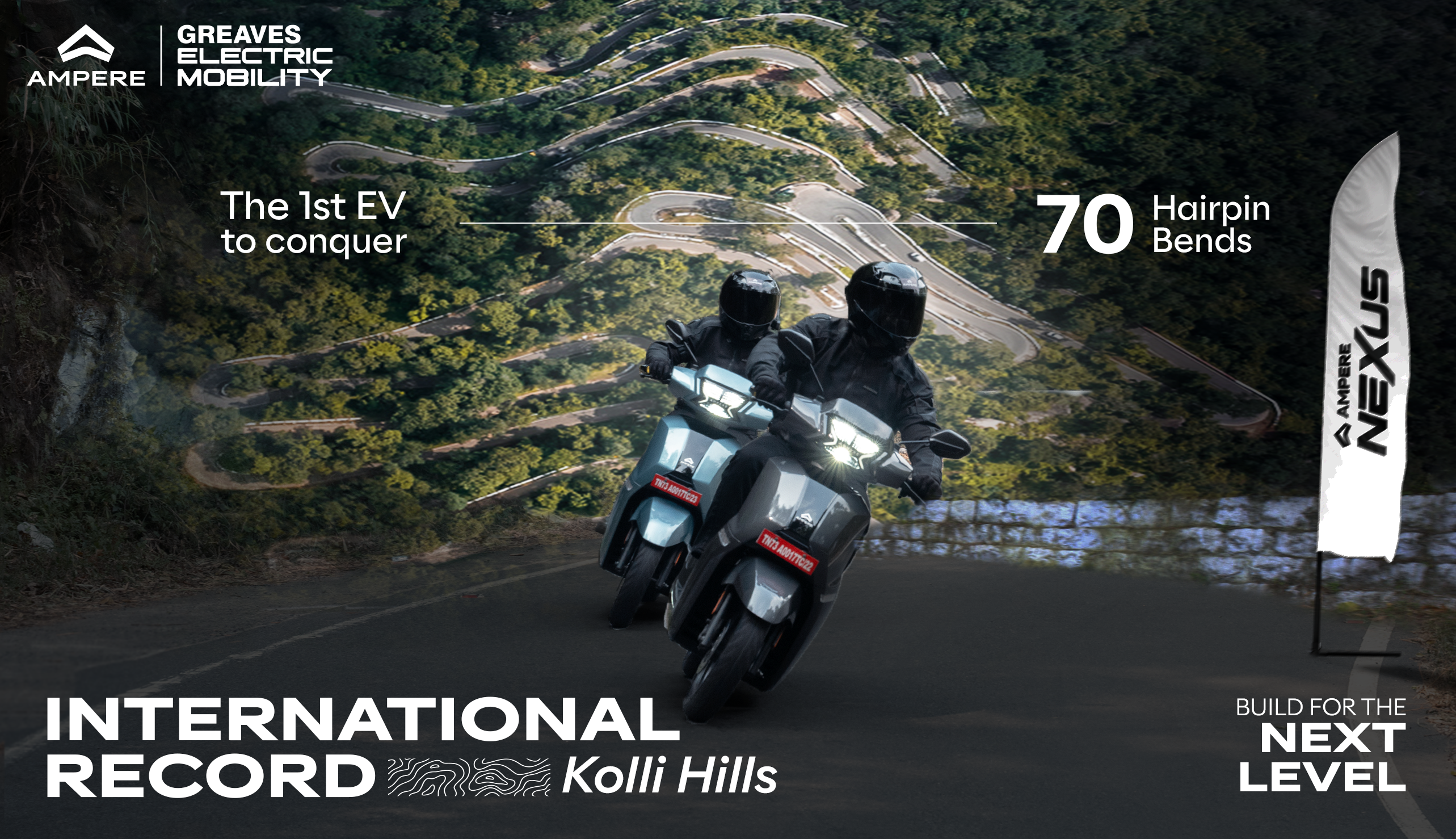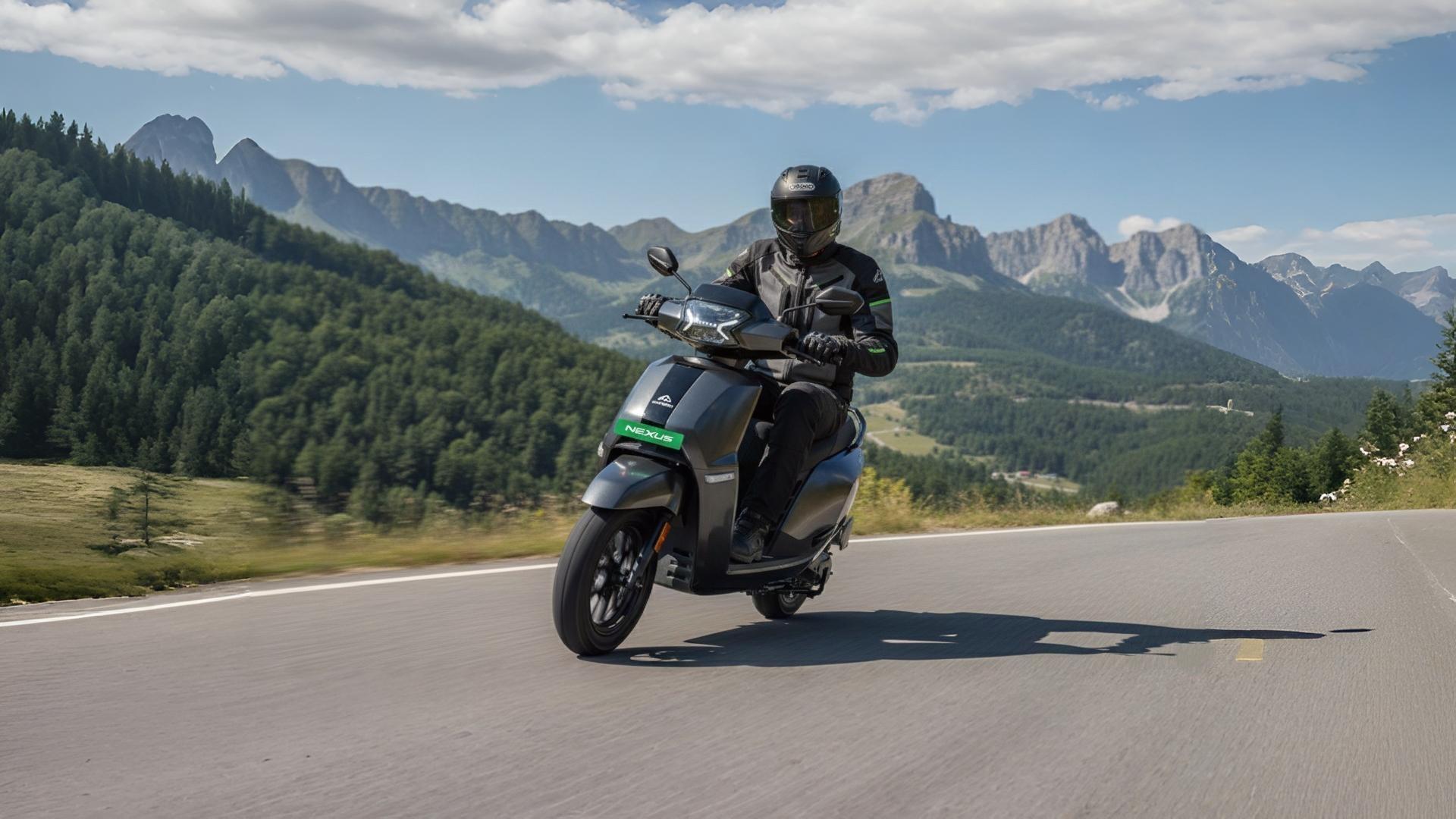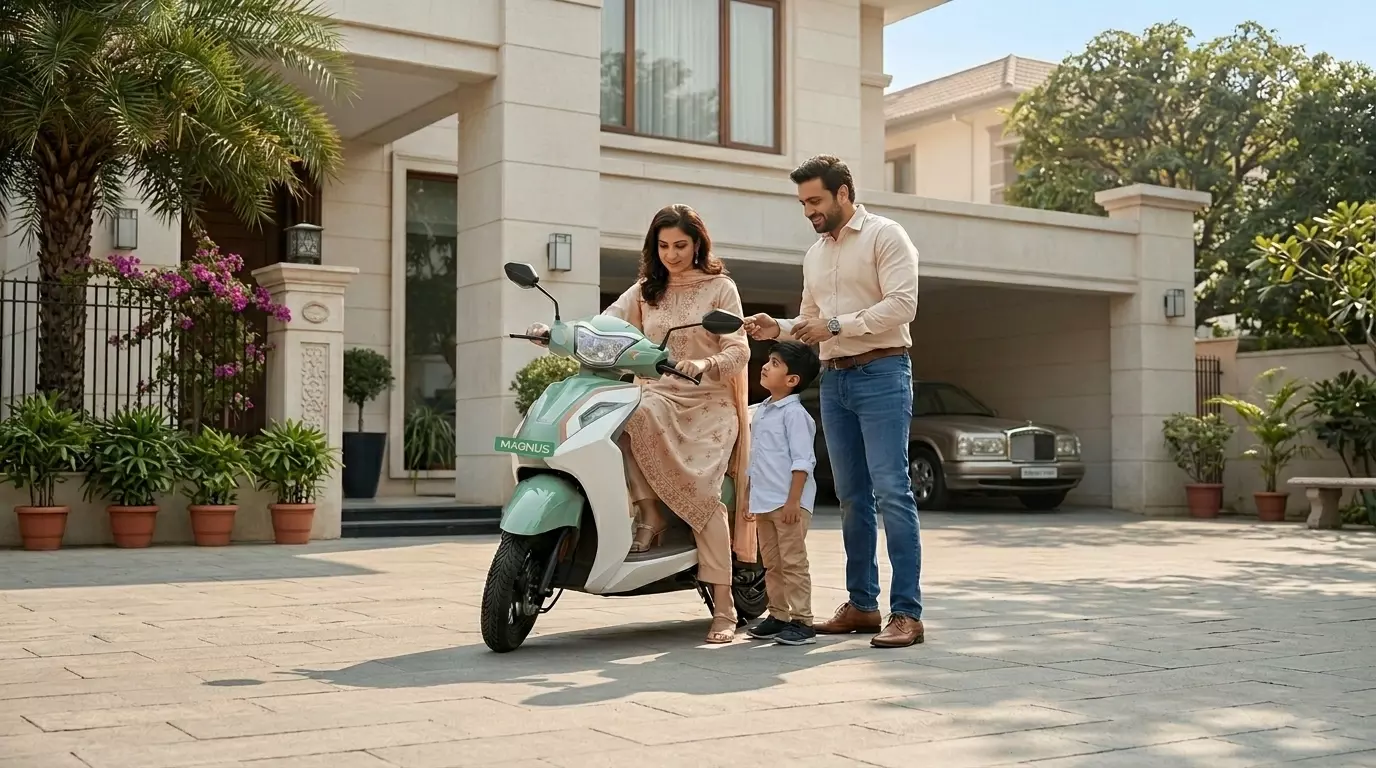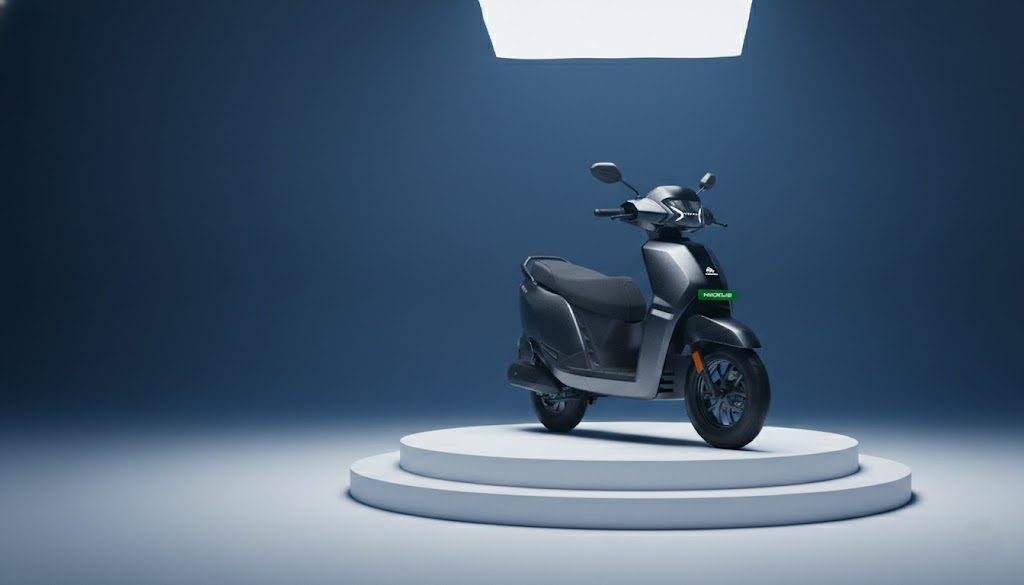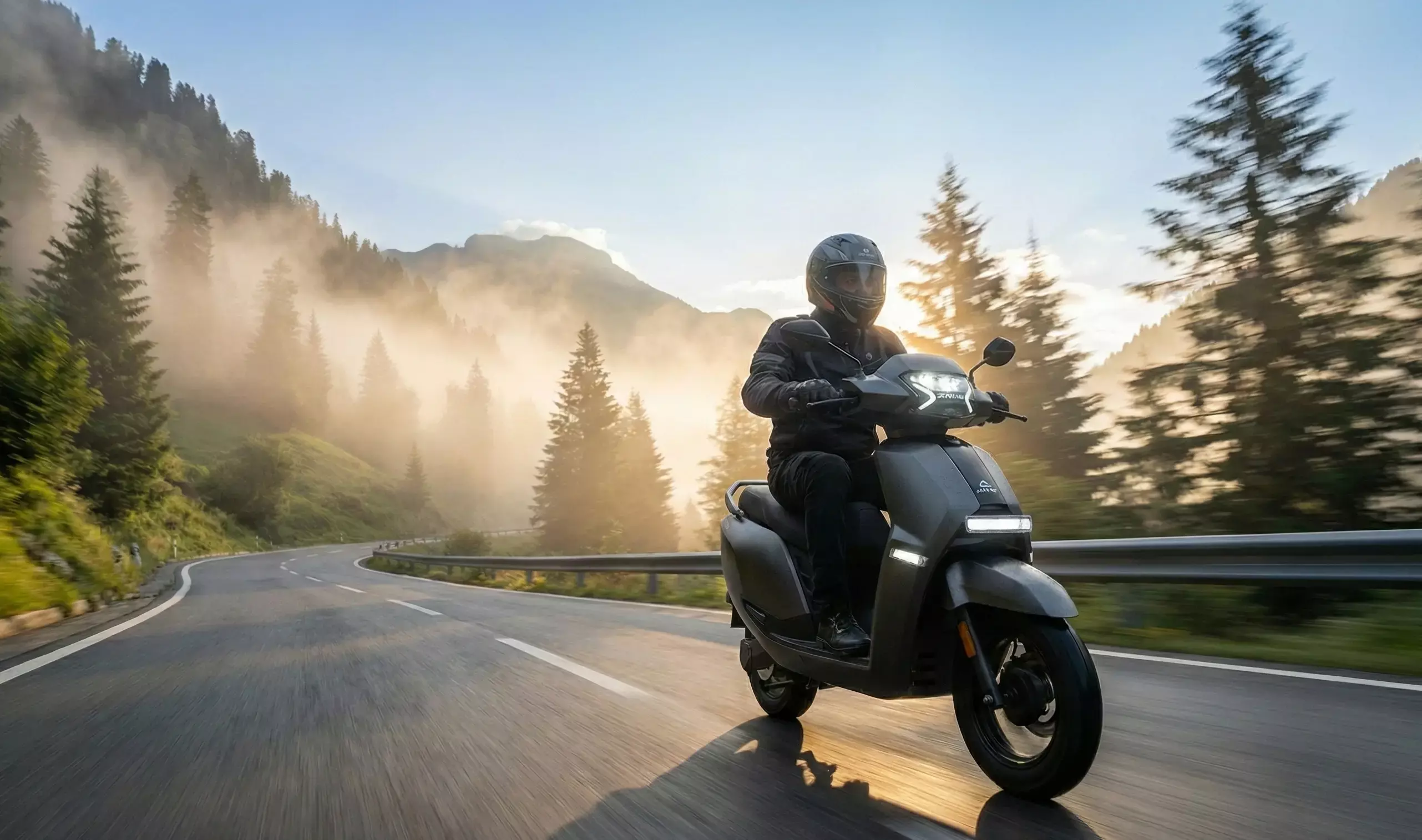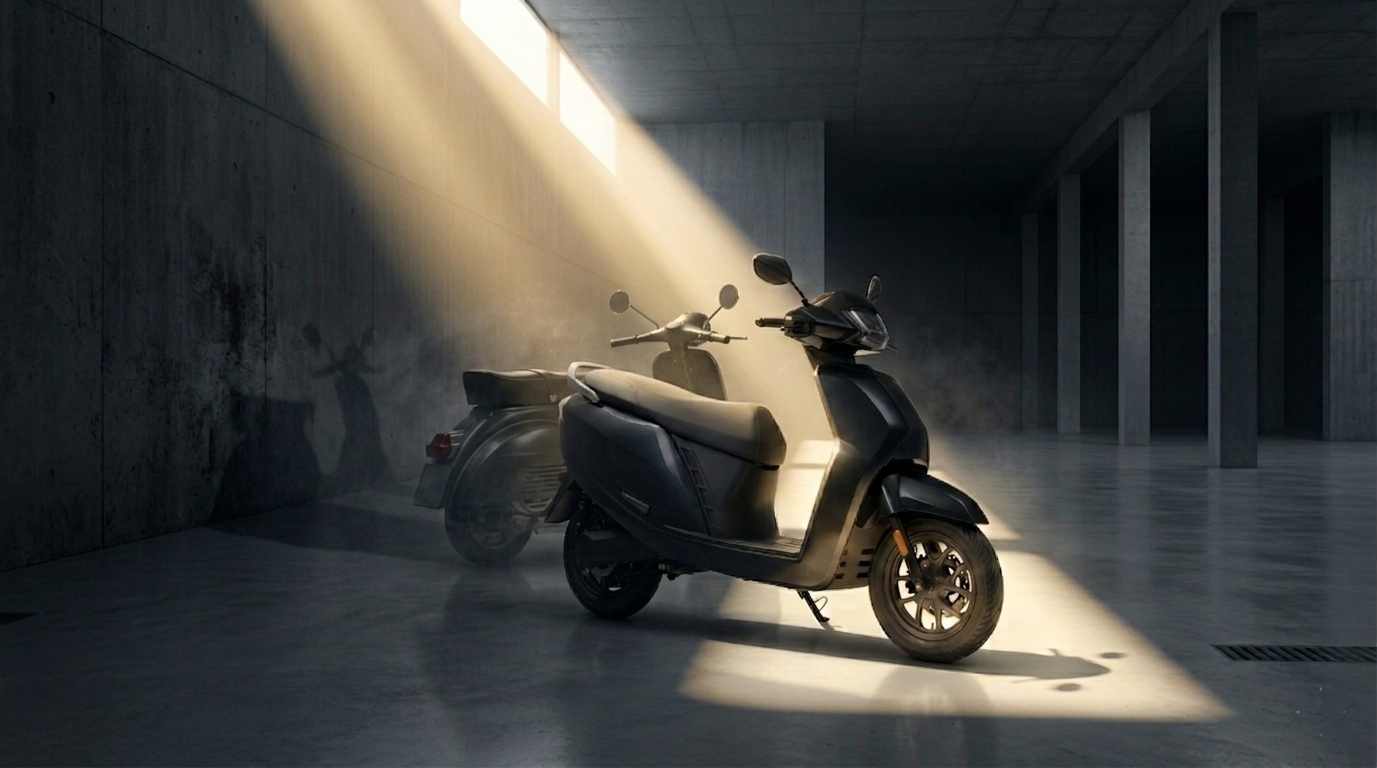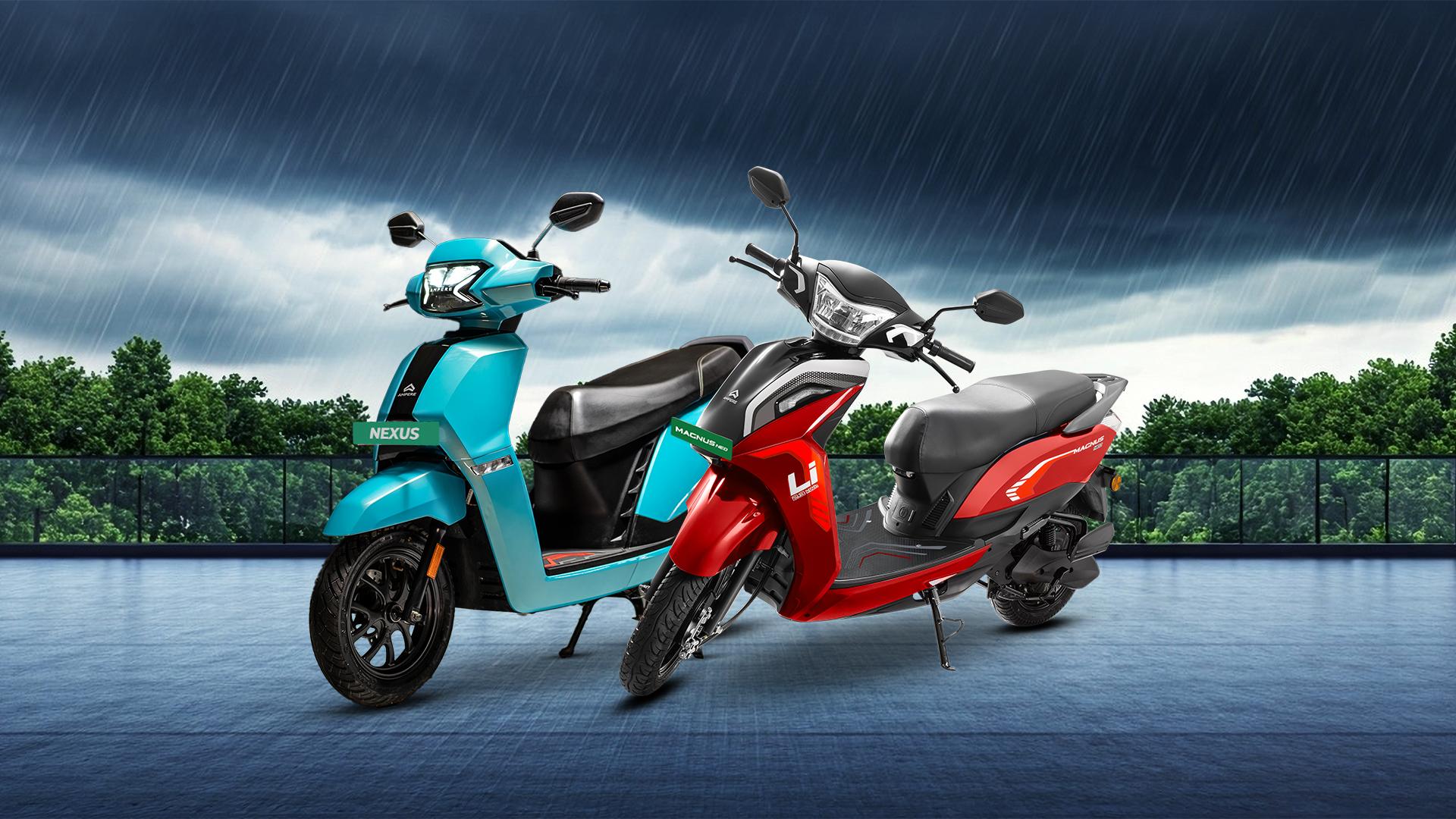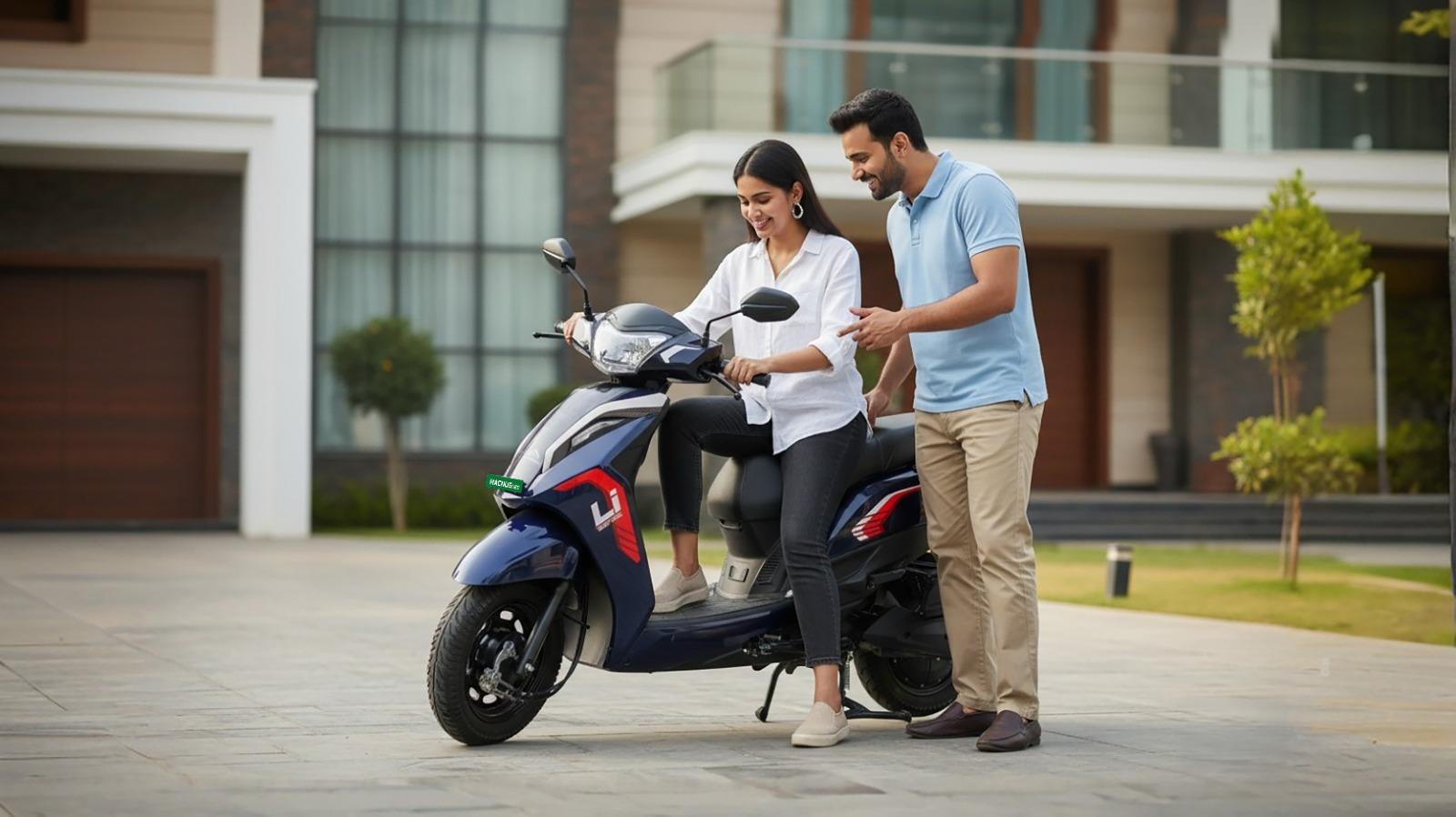
India sold over 1.4 million electric two-wheelers in FY2026, and a significant proportion of those buyers were first-time EV owners. If you are considering joining them, you likely have a list of practical questions: How do I charge it? What maintenance does it need? How far can I actually go on a single charge? This guide answers every beginner question about owning an Ampere electric scooter.
Step 1: Choosing the Right Ampere Model for Your Needs
| Daily Commute | Recommended Model | IDC Range | Price (Ex-Showroom) | Licence Required |
|---|---|---|---|---|
| Up to 20 km/day | Reo 80 | 80 km | ₹59,900 | No |
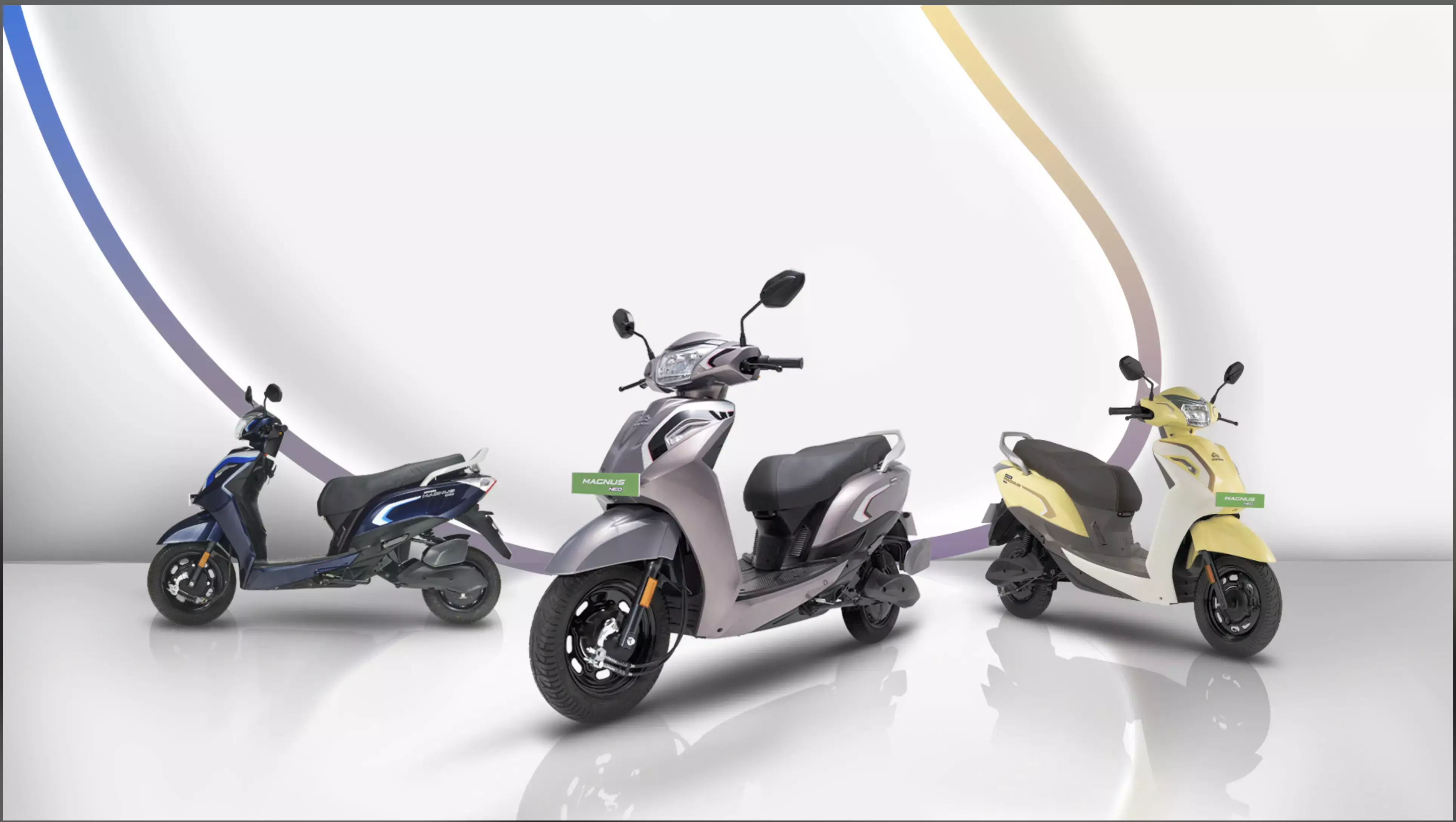
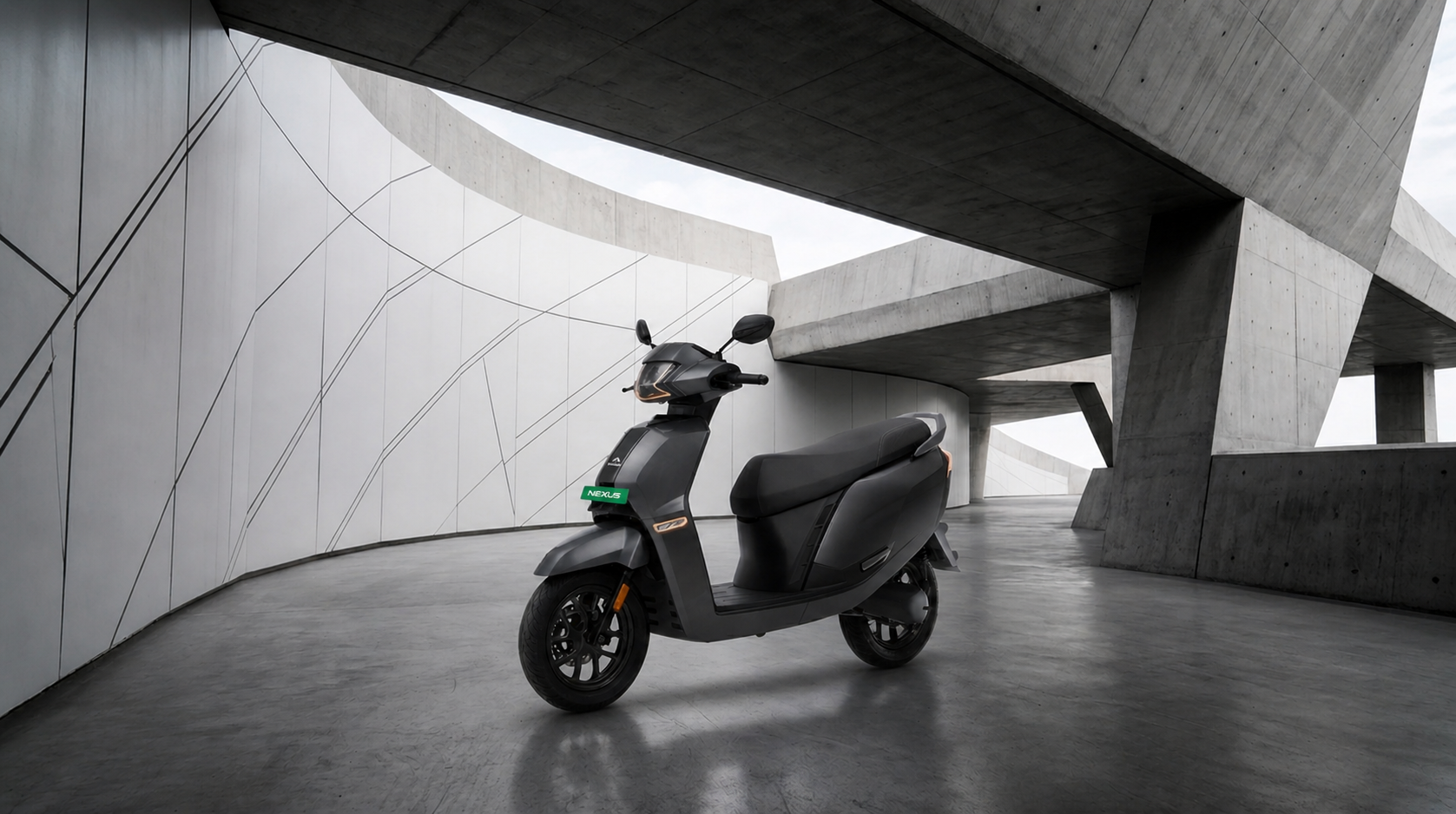
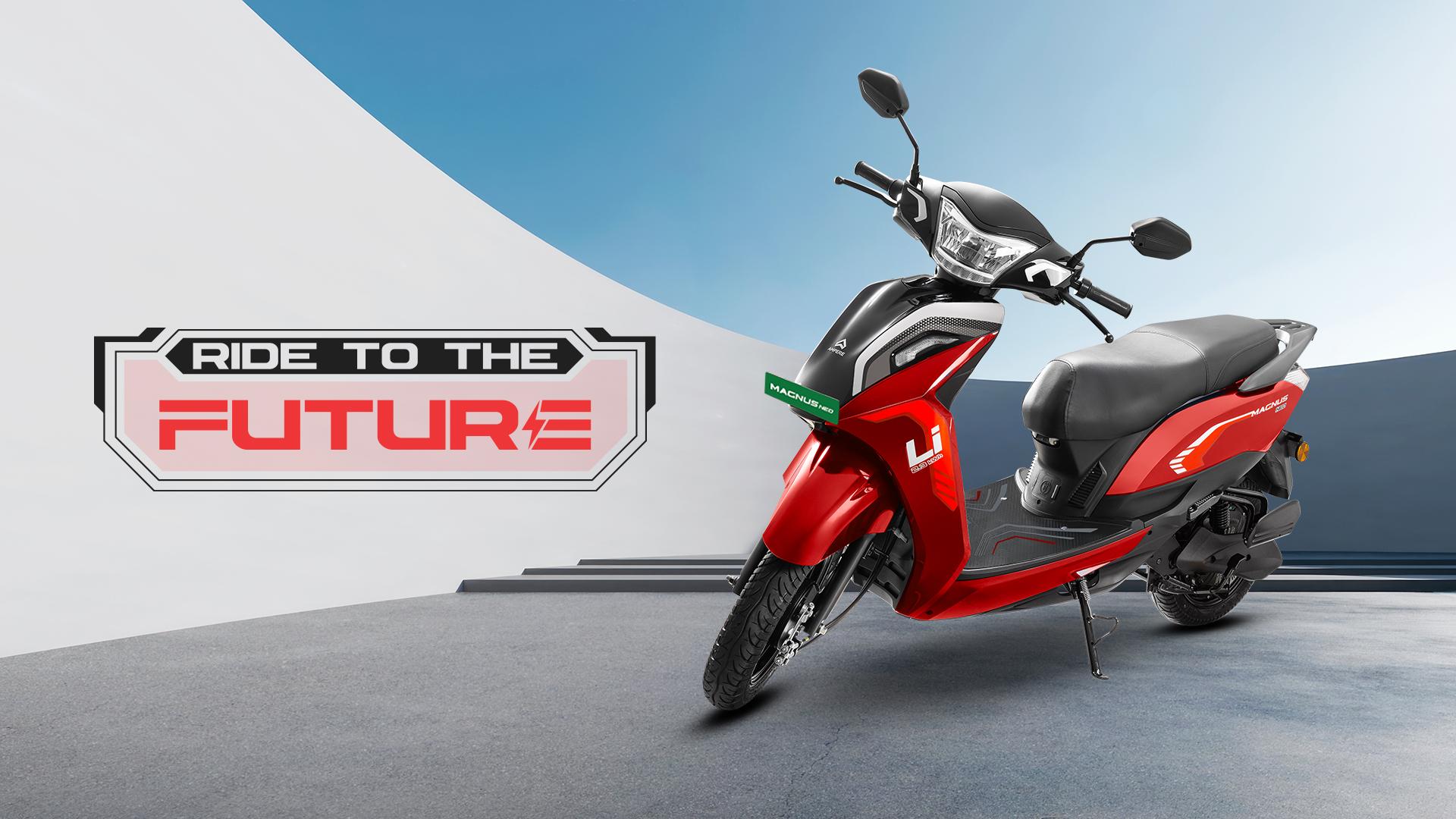
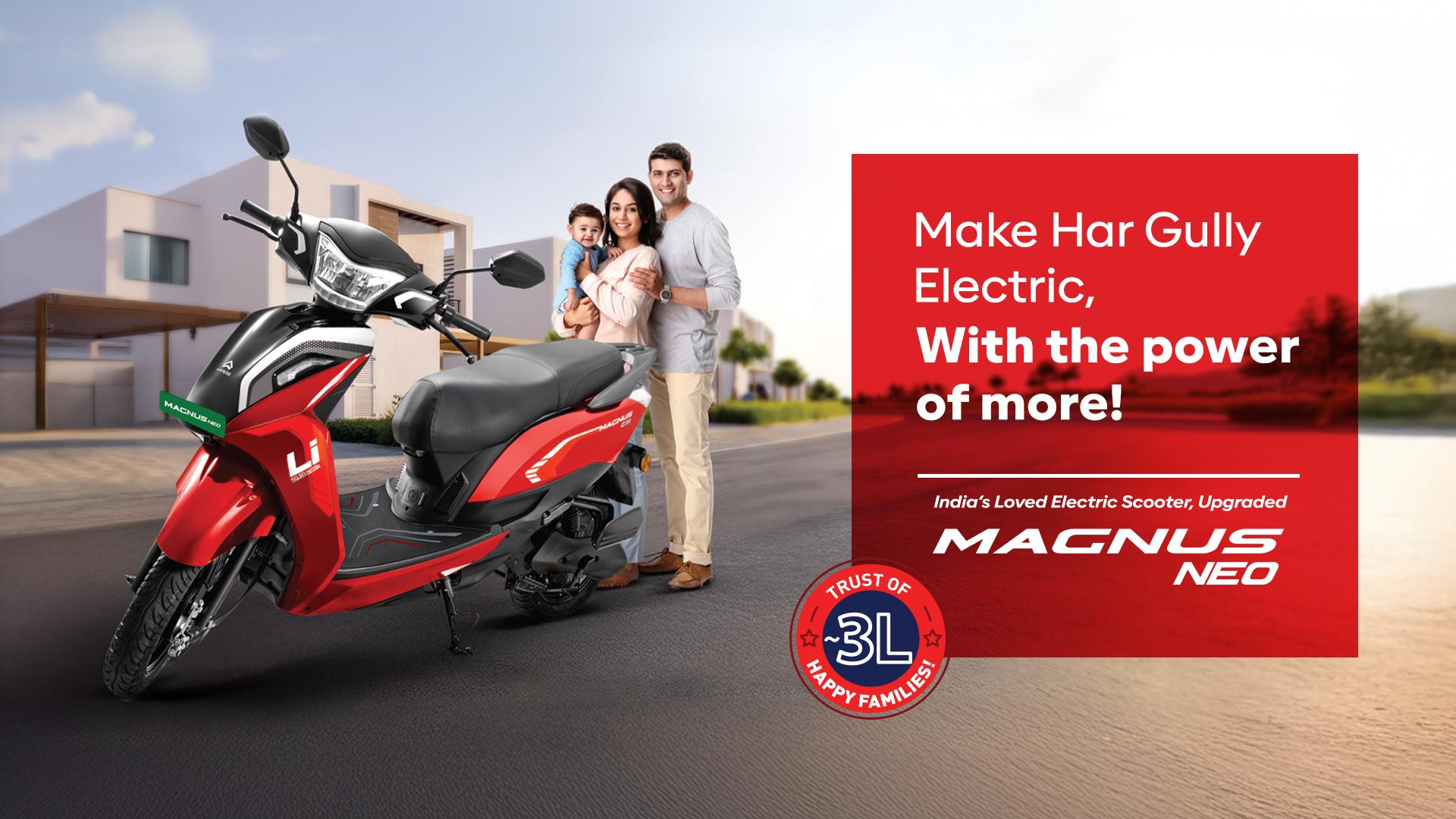
| 20–35 km/day | Magnus Neo | 118 km | ₹86,999 | Yes |
| 30–50 km/day | Magnus Grand | 118 km | ₹89,999 | Yes |
| 50–65 km/day | Magnus G Max | 142 km | ₹94,999 | Yes |
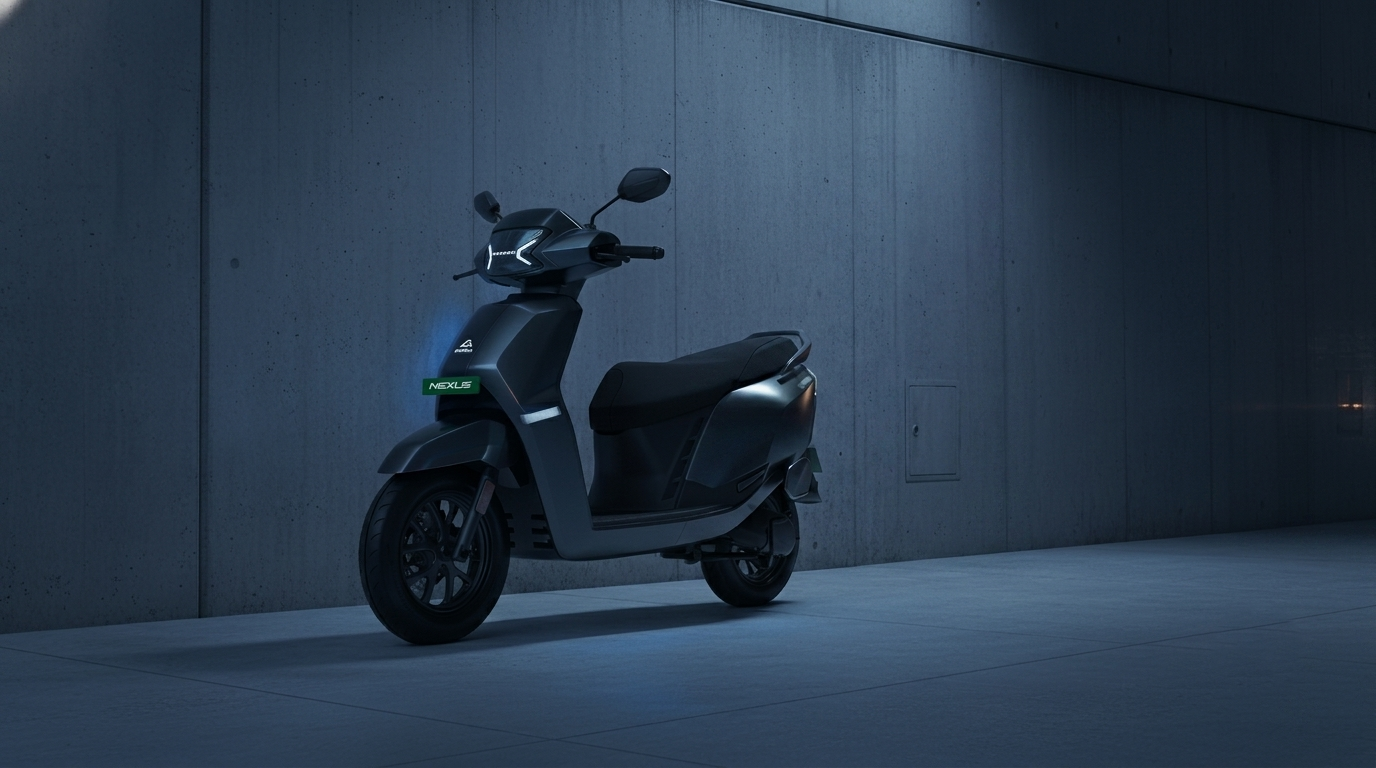
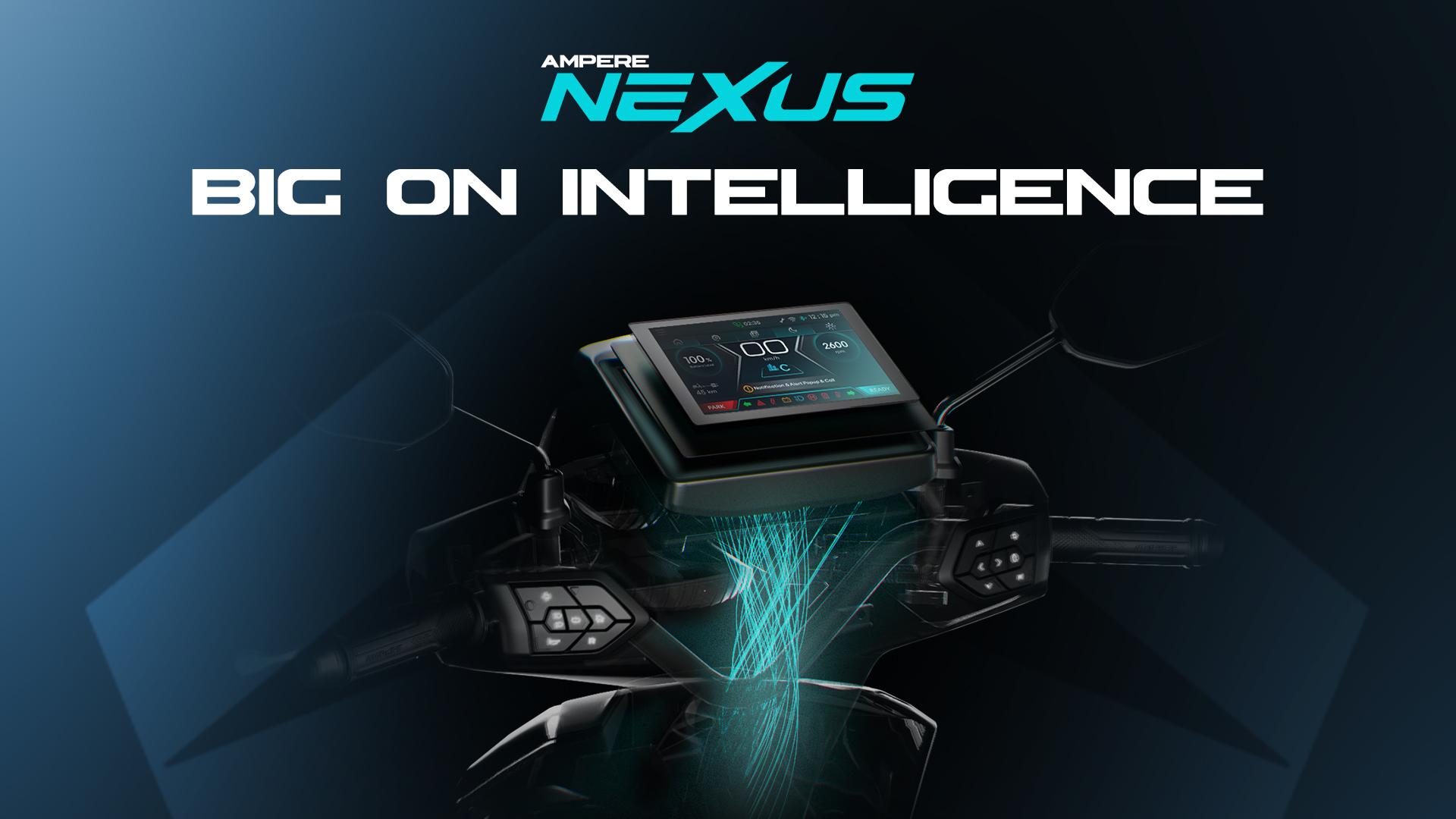
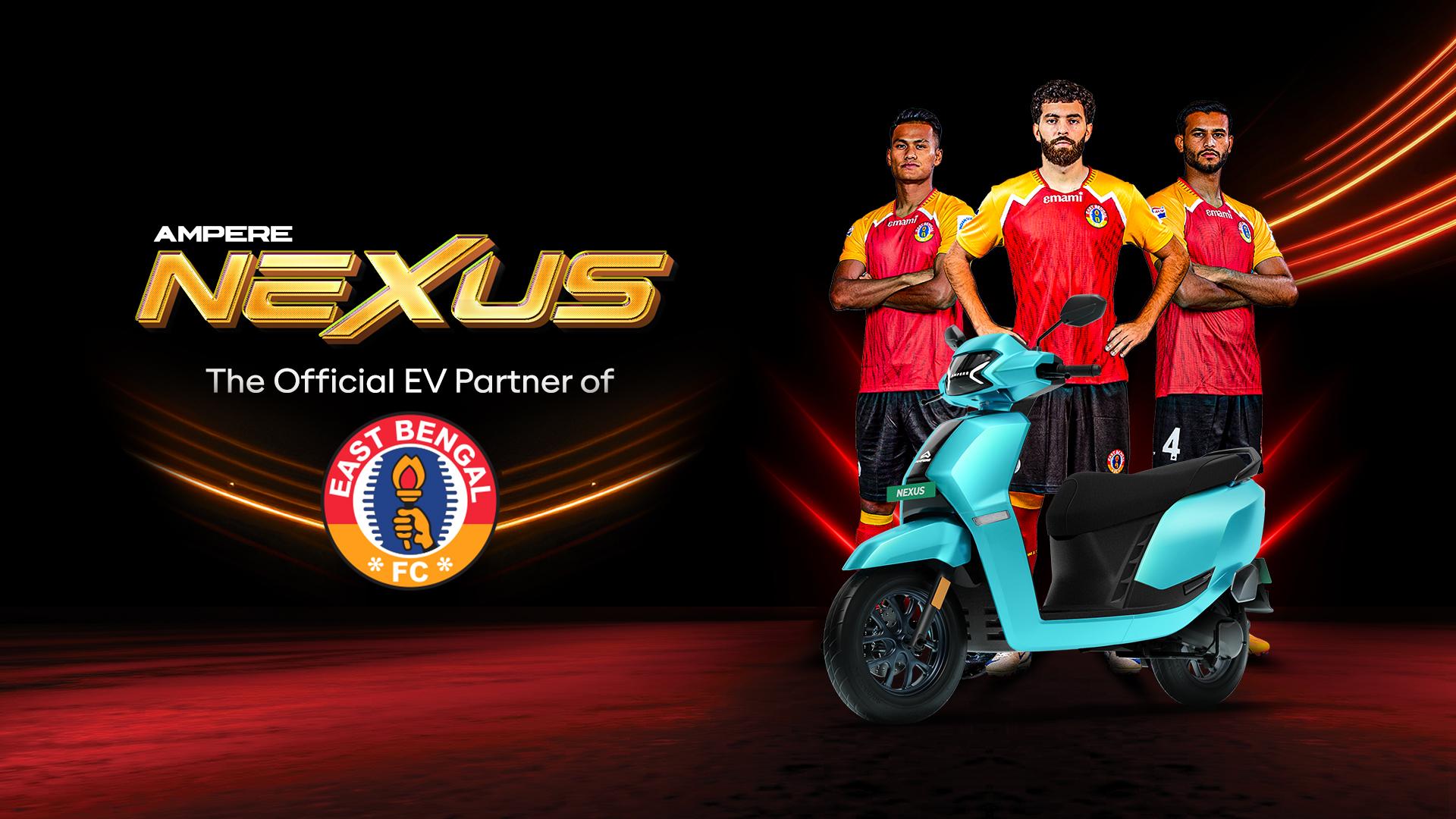
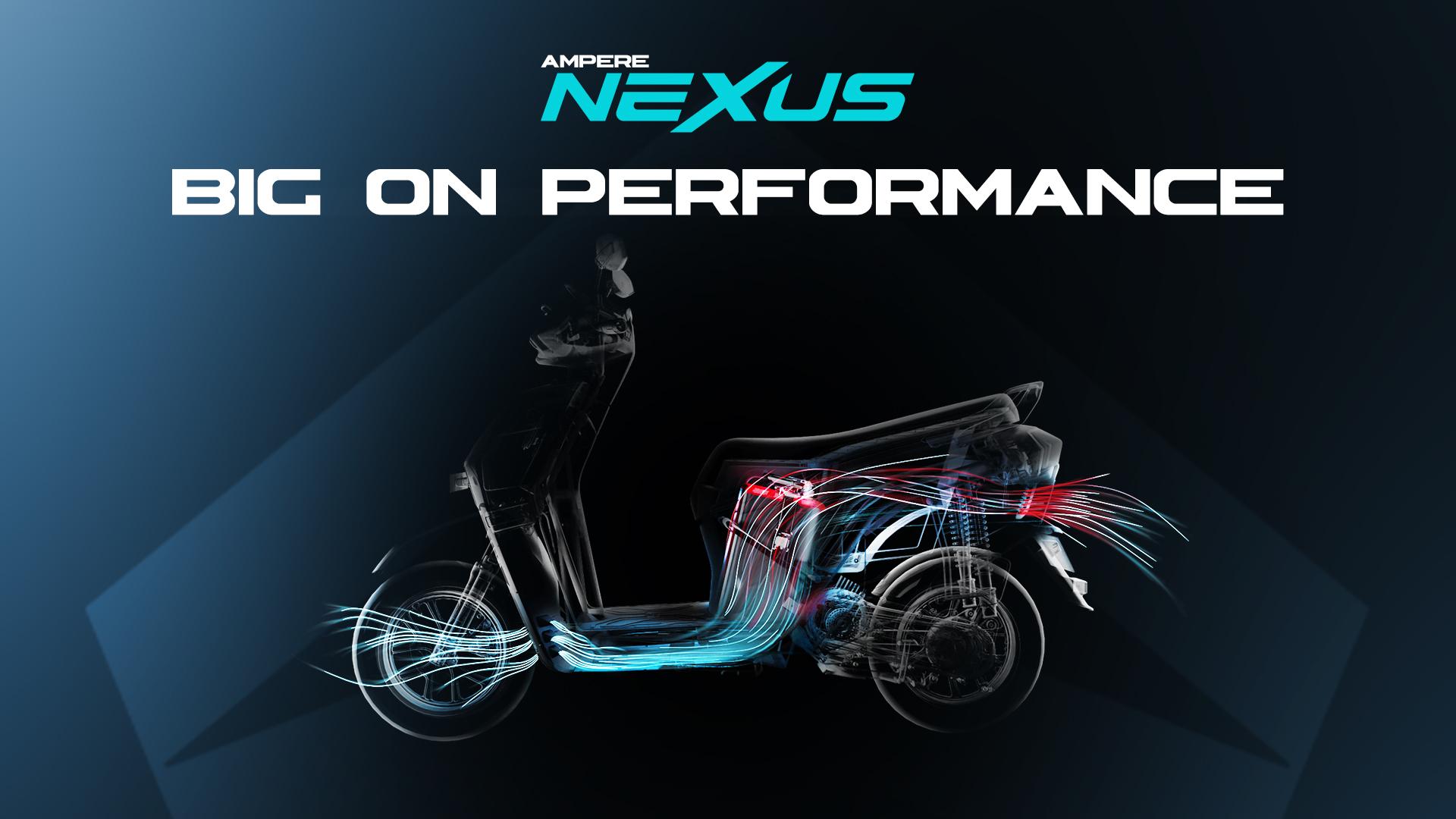
| 60 km+ or premium needs | Nexus | 136 km | ₹1,09,900+ | Yes |
Step 2: Setting Up Your Home Charging
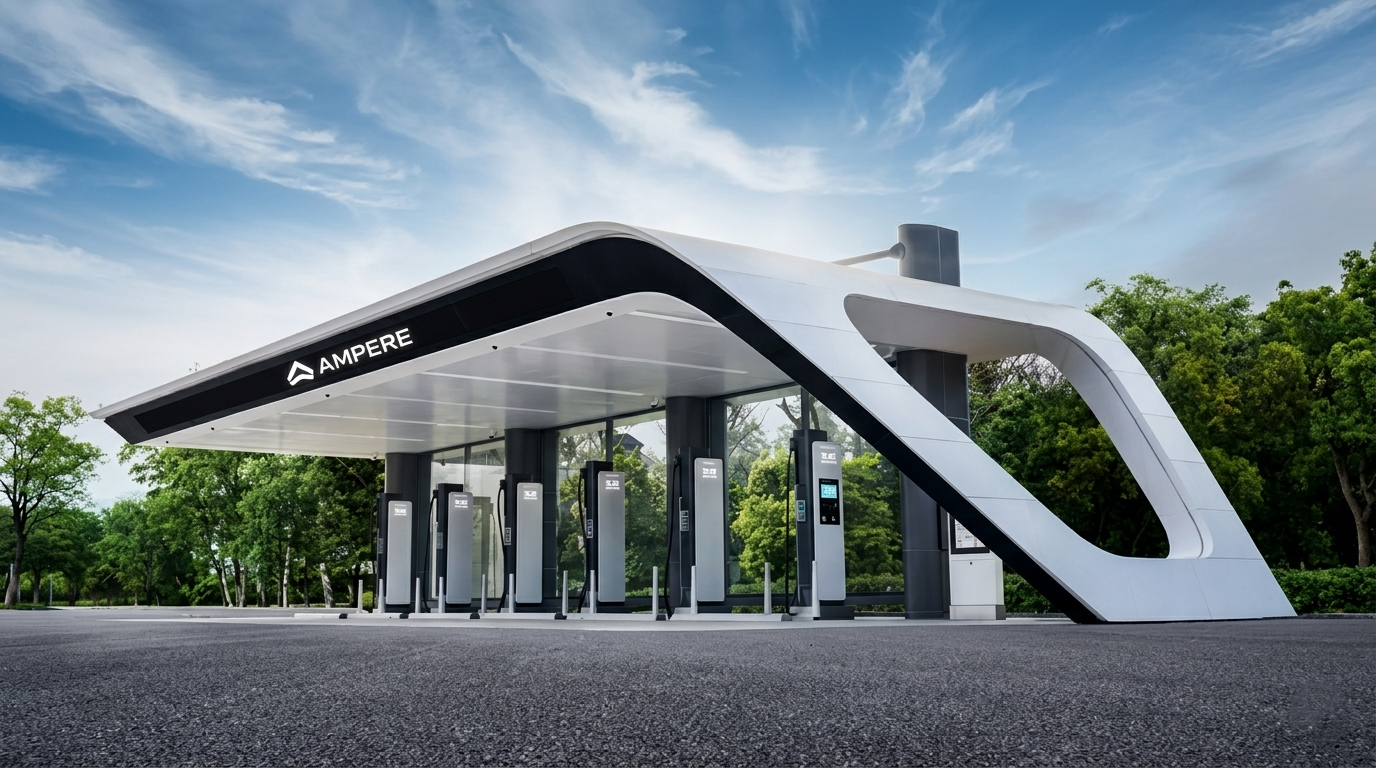
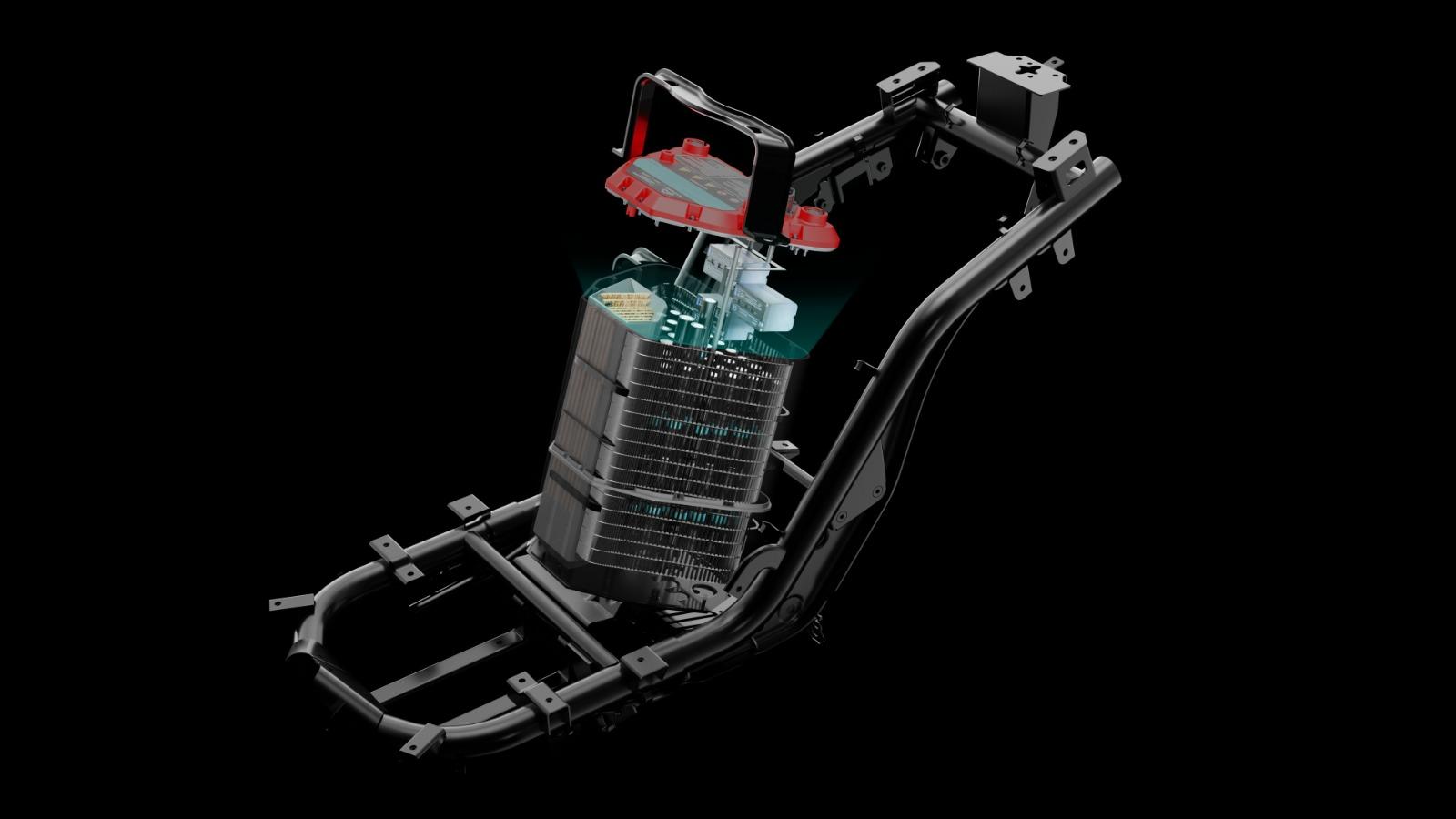
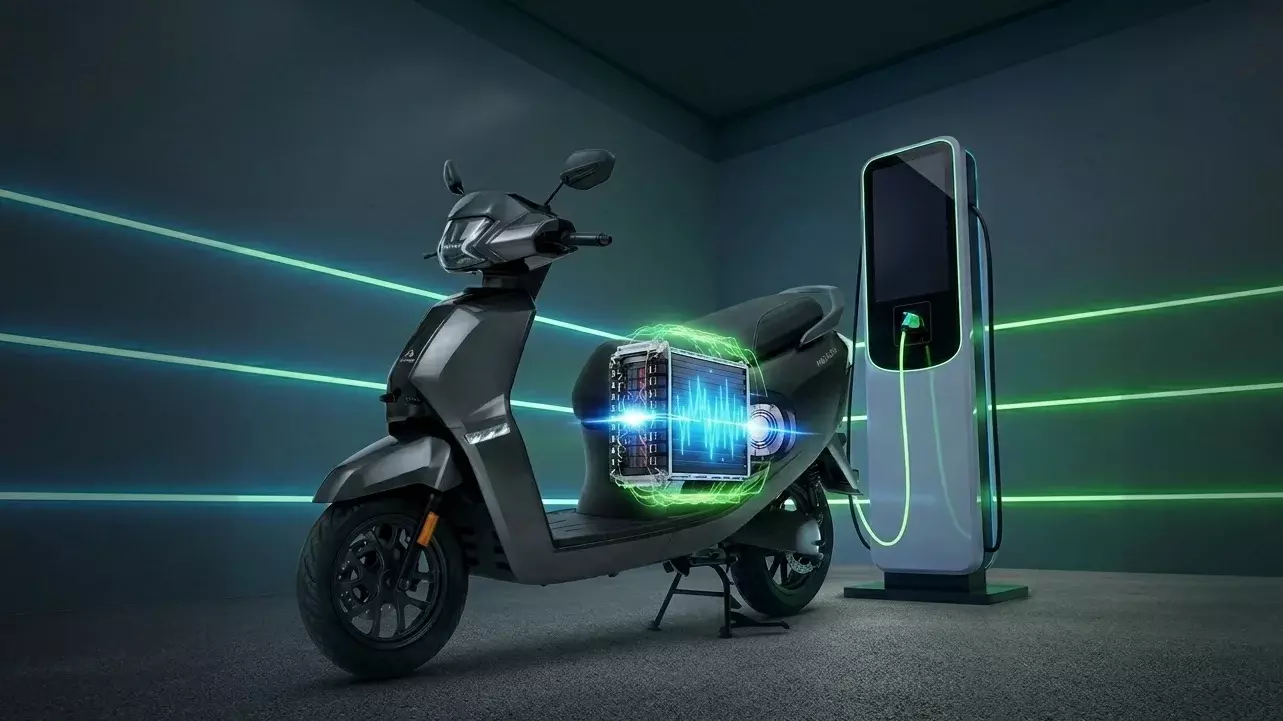
One of the biggest advantages of an electric scooter over a petrol vehicle is that your home is your fuel station. All Ampere models charge from standard household sockets. The Reo 80 uses a 5A / 3-pin socket. All other models use a standard 15A socket — the same type used for air conditioners and geysers.
Before delivery, identify a dedicated socket near your parking spot. Use a surge-protected socket wherever possible. Do not use extension cords longer than necessary. Charge overnight — you will wake up to a full battery every morning without planning around petrol stations.
| Charging Setup | What You Need | Cost Estimate |
|---|---|---|
| Basic home charging (Reo 80) | Standard 5A 3-pin socket | ₹0 (existing socket) |
| Home charging (other models) | Standard 15A socket + dedicated circuit | ₹500–₹2,000 (electrician) |
| Apartment without parking socket | Removable battery (Reo 80 only) | No additional cost |
| Office / public charging | Standard socket or 15A point at venue | Varies by operator |
Step 3: Understanding Range — The Realistic Version
IDC range (Indian Driving Cycle) is the certified range measured in controlled laboratory conditions. Real-world range is typically 70–80% of IDC range, depending on speed, rider weight, road conditions, temperature, and riding mode selected. Here is a practical planning guide:
| IDC Range | Expected Real-World Range | Suitable Daily Commute |
|---|---|---|
| 80 km (Reo 80) | 56–64 km | Up to 25–28 km one way |
| 118 km (Magnus Neo / Grand) | 83–95 km | Up to 35–40 km one way |
| 142 km (Magnus G Max) | 100–114 km | Up to 45–55 km one way |
| 136 km (Nexus) | 95–109 km | Up to 45–50 km one way |
Step 4: Maintenance — Far Simpler Than Petrol
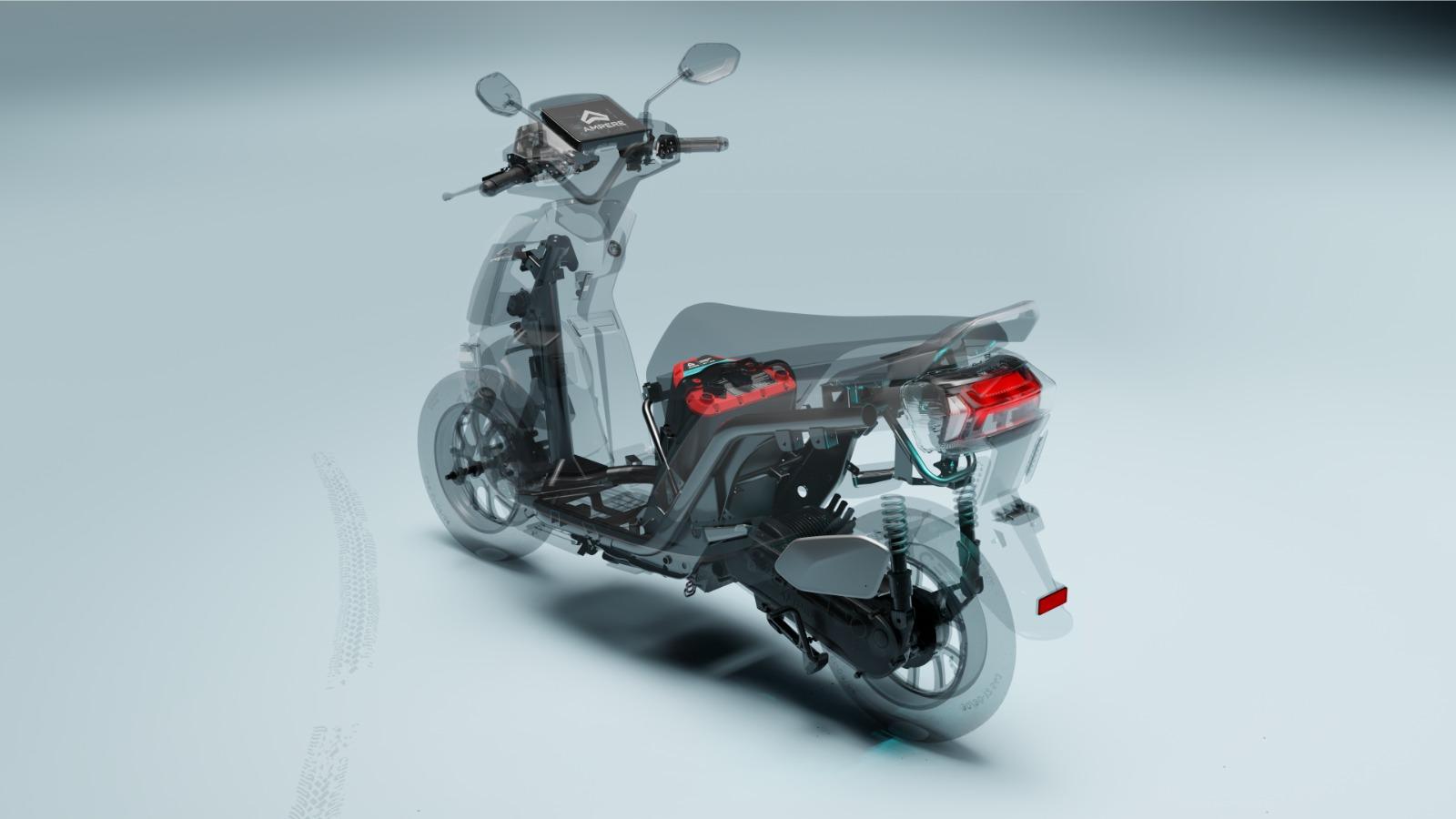
Electric scooters have dramatically fewer moving parts than petrol vehicles. There is no engine oil to change, no air filter to clean, no spark plugs to replace, and no clutch plates to adjust. The main maintenance items for an Ampere scooter are tyre pressure (weekly check), brake inspection (every 500 km), and a professional service visit every 6–9 months.
| Maintenance Task | Frequency | DIY or Service Centre |
|---|---|---|
| Tyre pressure check | Weekly | DIY |
| Cleaning (damp cloth, no pressure hose) | Weekly | DIY |
| Brake inspection | Every 500 km | DIY / Service centre |
| Battery casing check | Monthly | DIY |
| Professional servicing | Every 6–9 months | Ampere Service Centre |
| Structural frame check | Every 2–3 years | Ampere Service Centre |
Step 5: Safety Basics Every New Rider Should Know
Ampere scooters come with CBS (Combined Braking System) across the lineup, which automatically distributes braking force between front and rear wheels for stable stops. The Magnus Neo, Magnus Grand, and Magnus G Max feature drum + CBS braking. The Reo 80 and Nexus feature disc + CBS.
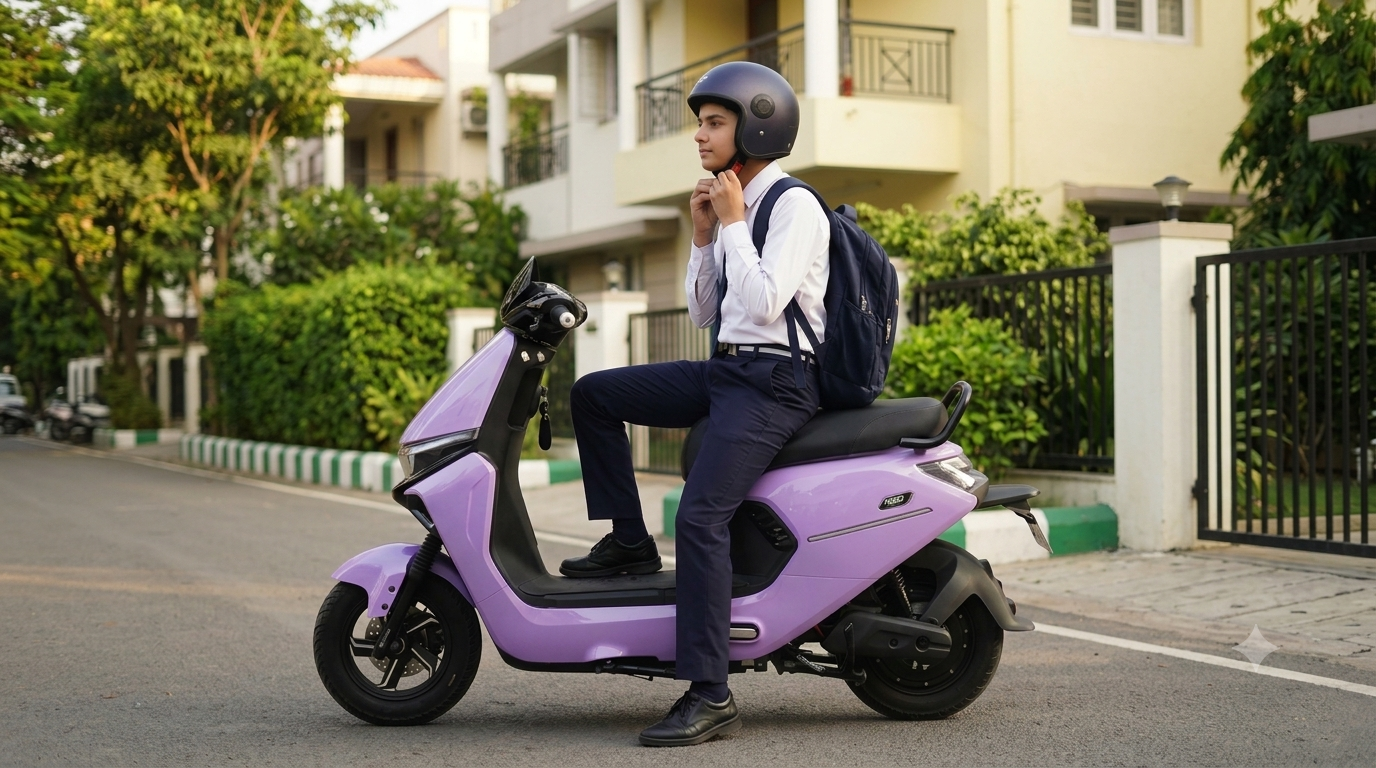
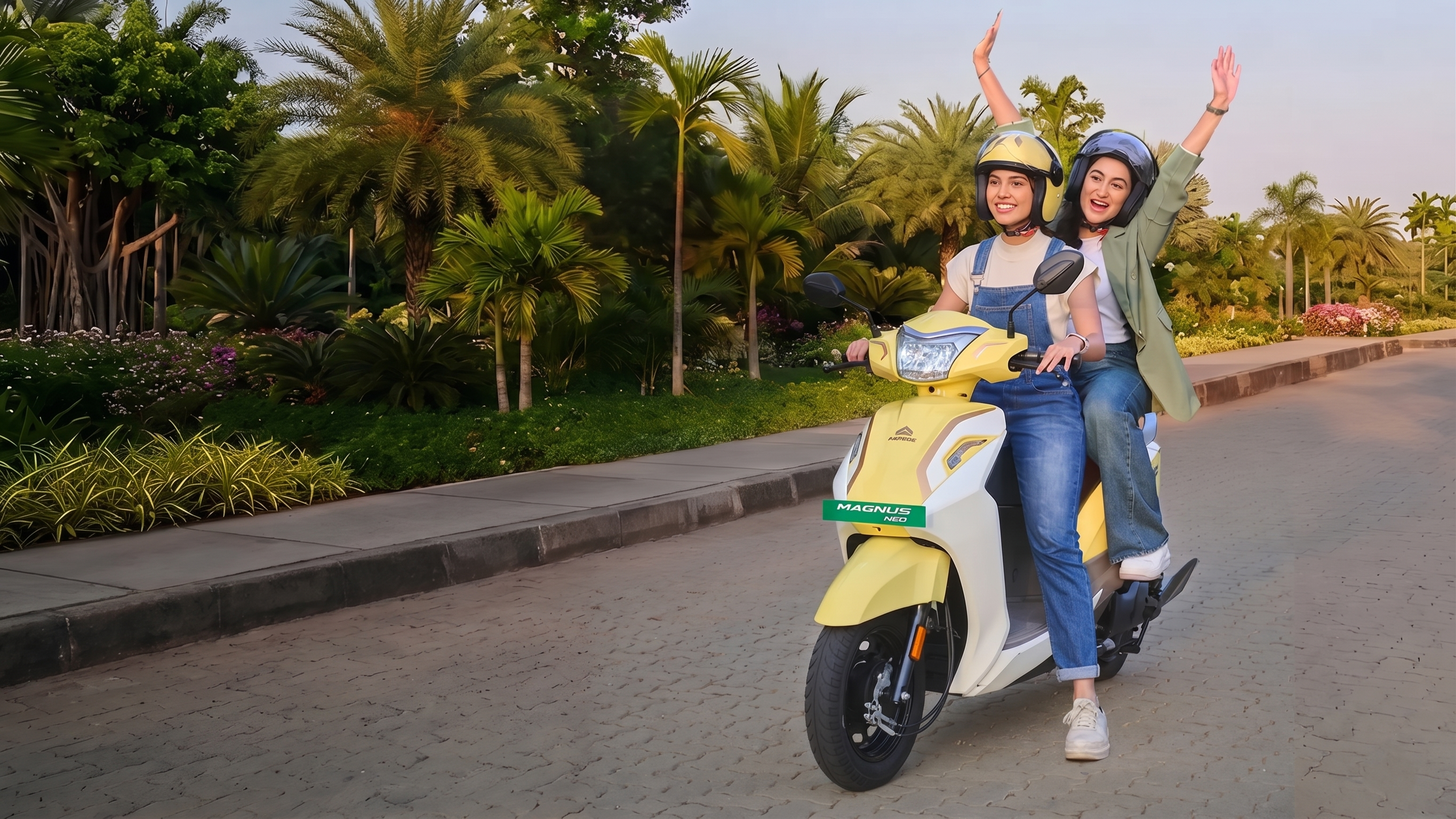
New EV riders should note that electric motors deliver instant torque — acceleration feels more immediate than a petrol scooter. Stay in Eco or City mode for your first few weeks until you are comfortable with throttle response. Always wear an ISI-certified helmet and appropriate riding gear regardless of distance.
Frequently Asked Questions
Do I need a licence to ride an Ampere electric scooter?
The Reo 80 operates at up to 25 km/h and qualifies as a low-speed electric vehicle — no licence required. All other Ampere models (Magnus Neo, Grand, G Max, Nexus) require a standard driving licence as they exceed 25 km/h.
What warranty do I get on the battery?
The Reo 80 carries a 3-year / 30,000 km battery warranty. The Magnus Neo, Magnus Grand, Magnus G Max, and Nexus all carry a 5-year / 75,000 km battery warranty — one of the strongest battery guarantees in the mid-range segment.
Can I ride in heavy rain?
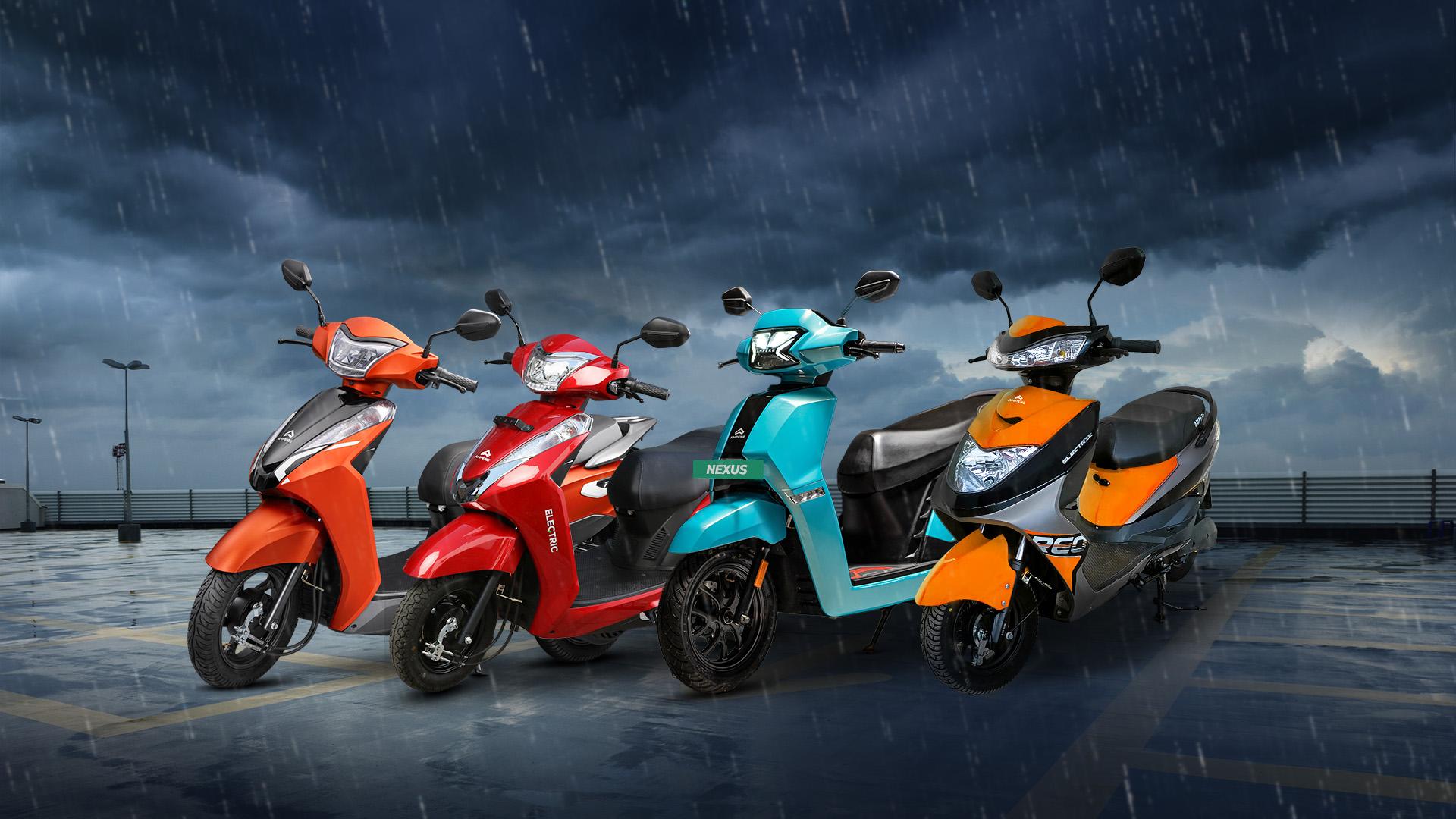
Yes. Ampere scooters are designed for Indian road conditions including monsoon. Ride gently in rain, avoid deep water, and charge only in sheltered areas after exposure to heavy rain. Standard precautions apply as with any two-wheeler in wet conditions.
How do I find the nearest Ampere service centre?
Ampere has 420+ service touchpoints across India. Use the store locator on the official Ampere website or contact customer support. Tier-2 and Tier-3 city coverage is a deliberate strength of the Ampere network — you are unlikely to be far from a trained technician.
Owning an electric scooter is genuinely simpler than most first-time buyers expect. There are fewer things to go wrong, fewer things to pay for, and a daily routine that replaces petrol anxiety with the quiet confidence of waking up to a full charge. Start with the right model for your commute, set up your home charging socket, and the rest follows naturally.