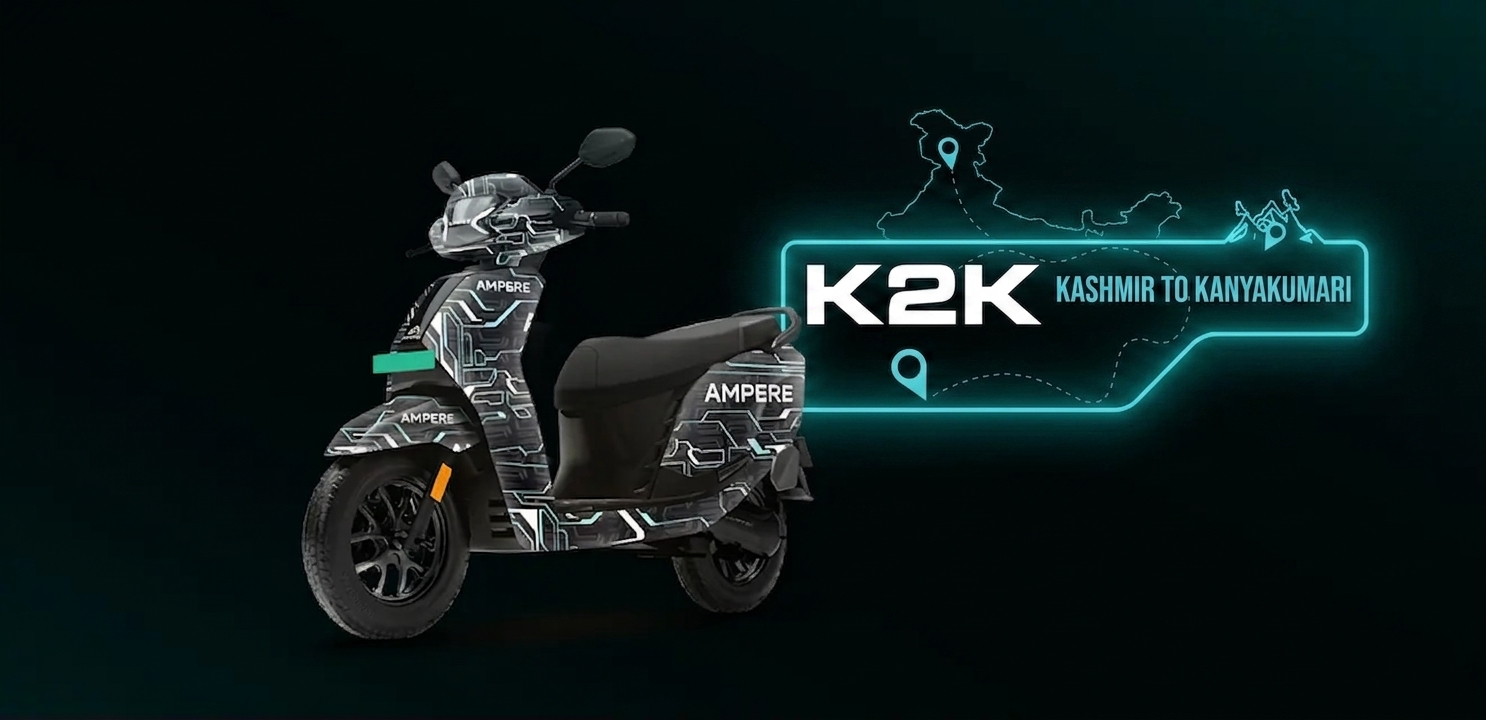
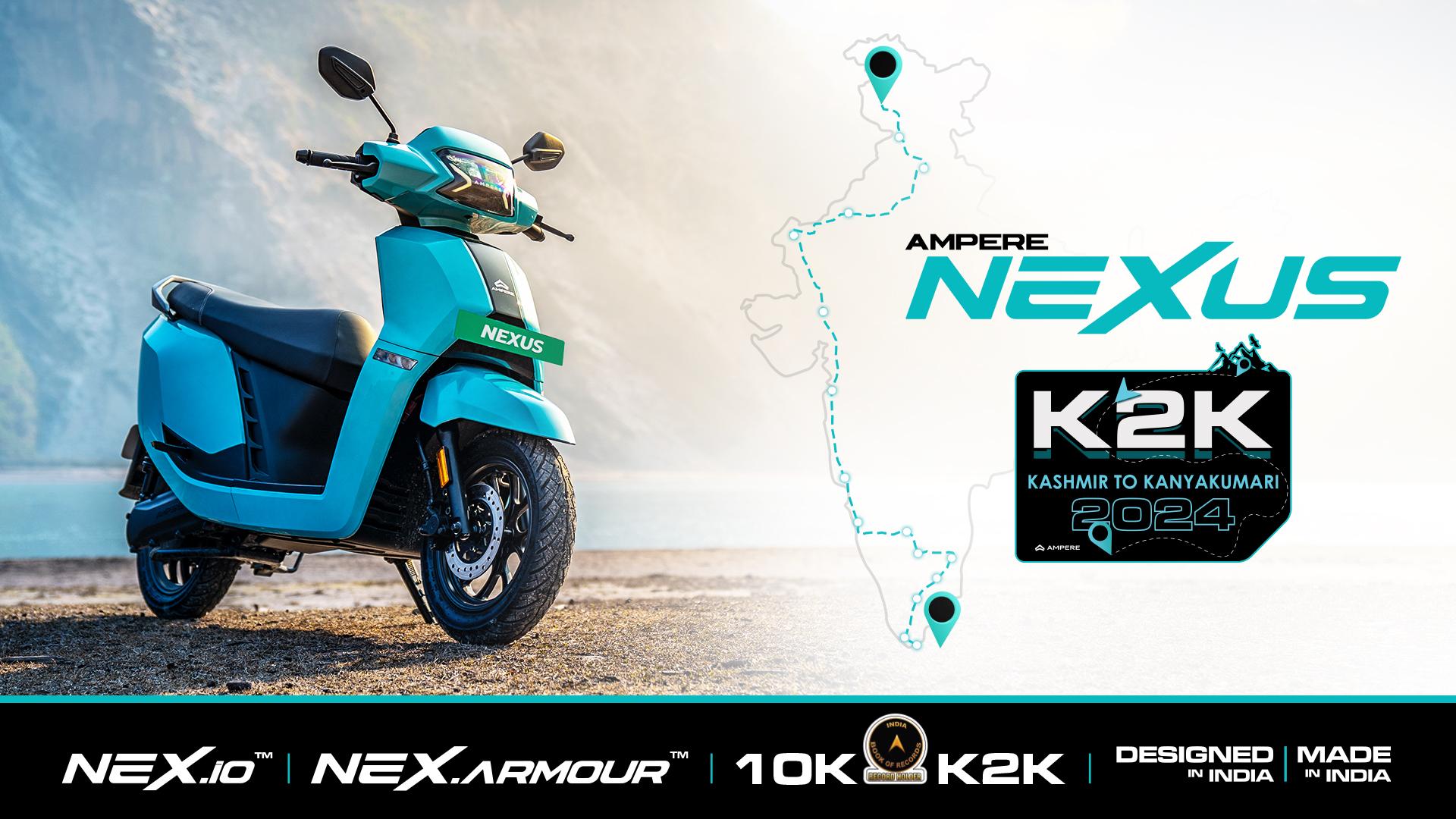
During the historic Kashmir to Kanyakumari expedition, the Ampere Nexus achieved one of its most visually striking certified records: the biggest electric scooter brand logo ever drawn on white sand. Measuring 179.8 ft × 95.2 ft and covering a total area of 17,100 square feet, the logo was inscribed near Kanyakumari — the southernmost tip of peninsular India — and was officially certified by the India Book of Records in March 2024.
The Record in Detail
| Specification | Detail |
|---|---|
| Logo Width | 179.8 feet (approx. 54.8 metres) |
| Logo Height | 95.2 feet (approx. 29 metres) |
| Total Area Covered | 17,100 square feet (approx. 1,588 sq. metres) |
| Surface | White sand, Kanyakumari region, Tamil Nadu |
| Method | Ampere Nexus ridden in precise pattern to trace logo outline |
| Certified By | India Book of Records |
| Date | March 2024 |
Where Was It Created?
Kanyakumari is India's most geographically significant point — the junction of the Arabian Sea, the Bay of Bengal, and the Indian Ocean. It is also the southernmost tip of peninsular India, making it the natural and symbolic finish line for any Kashmir-to-Kanyakumari expedition.
The white sand beaches near Kanyakumari provided the ideal canvas for the record — a surface where the tyre tracks of the Ampere Nexus could trace the brand logo precisely enough to be visible and measurable from an overhead perspective. The logo was traced at 17,100 sq. ft. — larger than the floor area of two Olympic-standard basketball courts.
The Significance of Precision Riding at This Scale
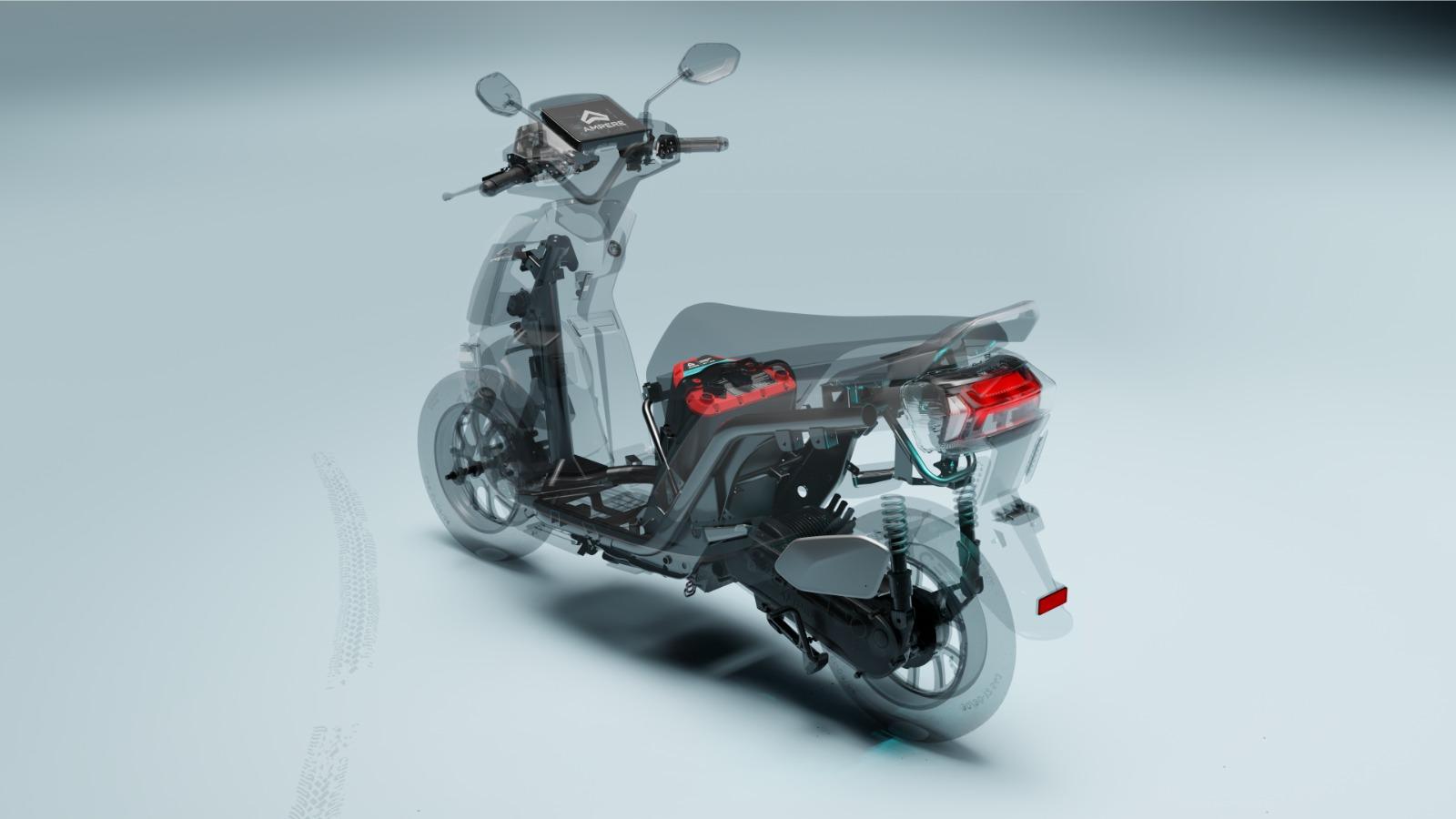
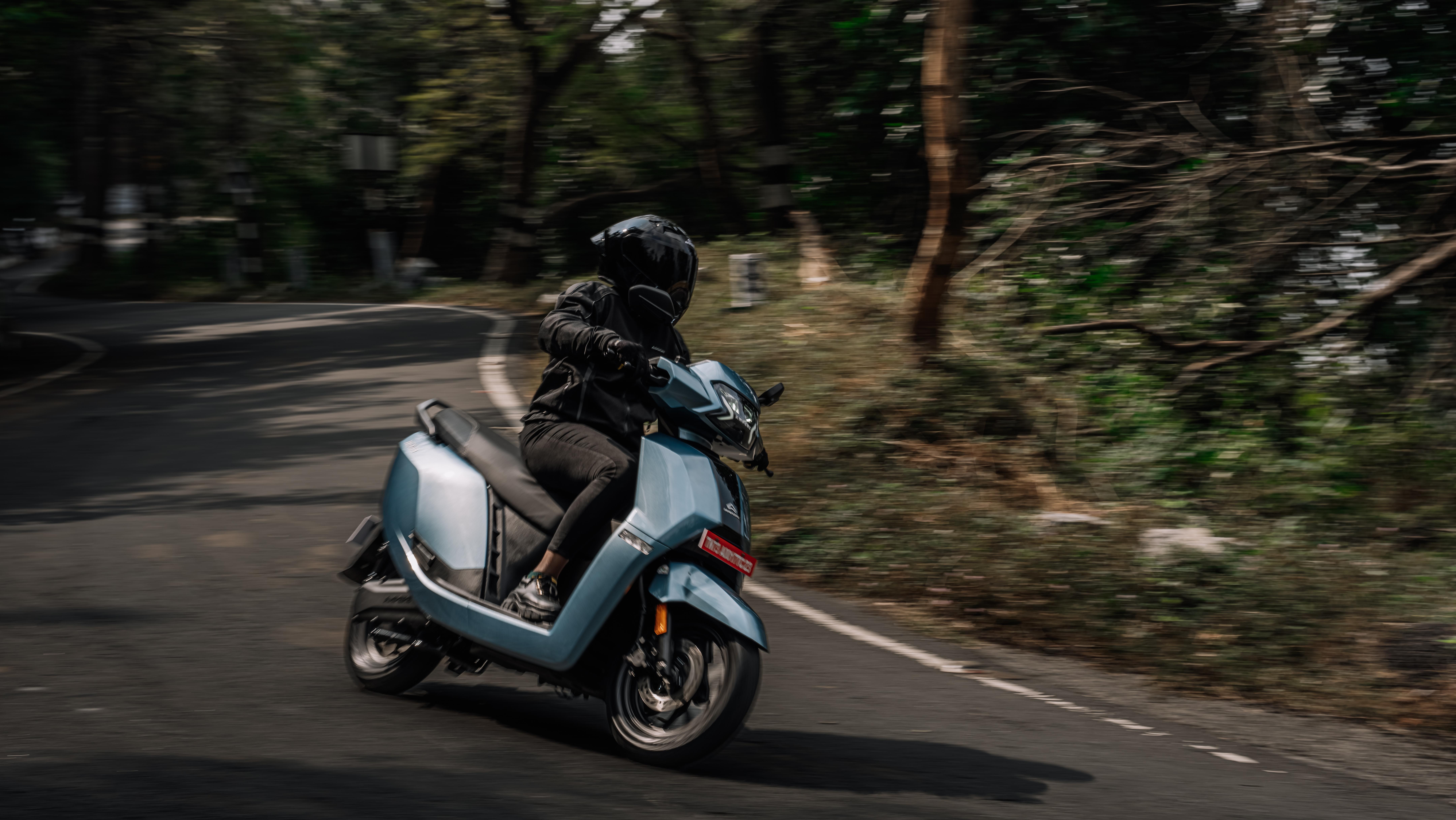
Creating an accurate brand logo at this scale is not simply a matter of size. It requires the rider to execute precise, repeated movements — curves, straight lines, turns — while maintaining consistent tyre pressure on a granular surface that shifts with weight. This demands exactly the kind of handling stability and chassis rigidity that the Ampere Nexus is engineered to deliver.
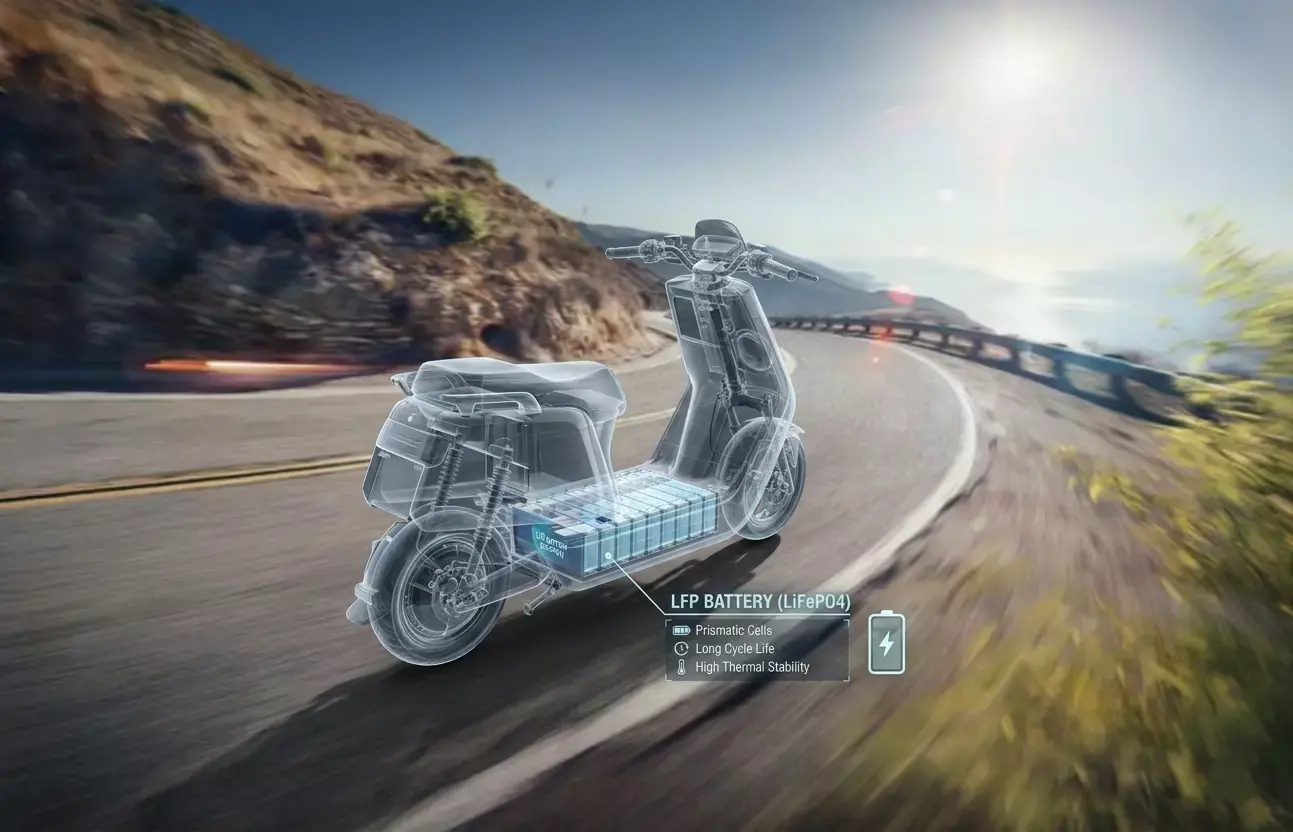

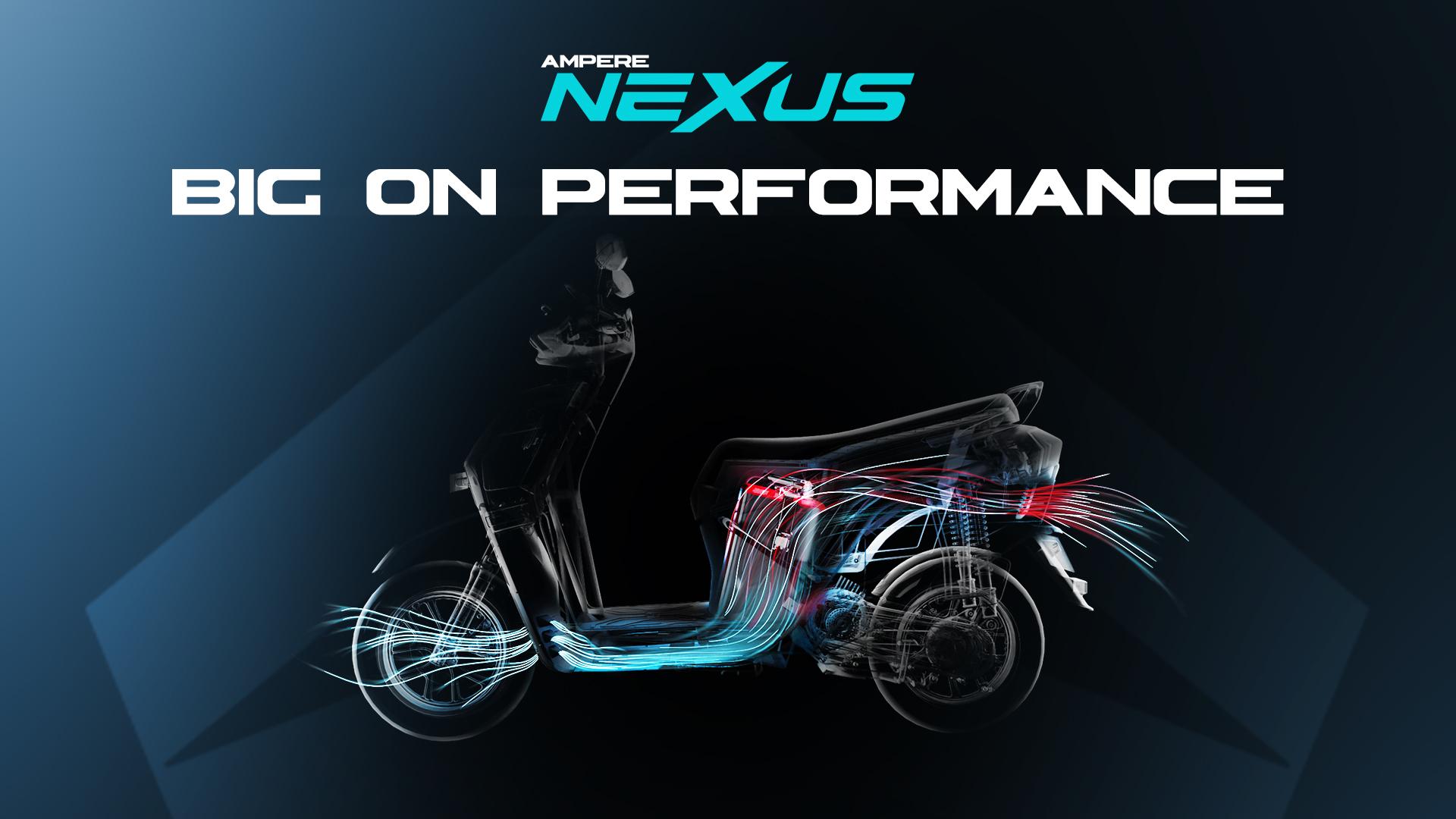
The Nexus's multi-patented twin-suspension hybrid swingarm keeps the scooter level and balanced across varied surface textures. The CBS (Combined Braking System) ensures controlled deceleration at slow speeds when the rider is executing tight pattern-work. And the 4x stronger exoskeleton chassis maintains structural rigidity, preventing the frame flex that would cause tyre tracking to drift off the intended line.
In short, this record is not just about ambition — it is a practical demonstration of handling precision.
All Four K2K Records: Context and Comparison
The white sand logo was one of four certified India Book of Records achievements from the K2K expedition. Together, they demonstrate four distinct dimensions of the Ampere Nexus's capability:
| Record | What It Proves |
|---|---|
| 10,000+ km longest single journey | Battery endurance and system reliability over time |
| 115 cities and towns covered | Real-world range and navigational capability across India |
| 1,860 kg pickup truck towed | Motor torque and drivetrain strength |
| 17,100 sq. ft. logo on white sand | Handling precision and chassis stability under controlled slow-speed manoeuvring |
The Campaign Message: Har Gully Electric
Ampere's brand mission is 'Har Gully Electric' — bringing electric mobility to every lane of India. Drawing the brand logo at the southernmost point of India, after touching 115 cities from the northernmost reachable highway, was a visual expression of that mission made literal.
The white sand record carried a secondary message as well: that the Nexus had arrived at Kanyakumari with enough performance left in its battery and chassis to execute a technically demanding record. It was the final act of a 10,000+ km journey — and it was precise, controlled, and flawlessly executed.
What Does This Mean for Everyday Riders?
For a buyer evaluating the Ampere Nexus as a daily commuter, the significance of the white sand record is not the record itself — it is what the underlying engineering says about the scooter you will own:
- A chassis stable enough to trace millimetre-precise lines on a shifting surface is a chassis that handles India's road cambers, ruts, and sudden surface changes with predictability
- Consistent slow-speed control demonstrated on sand translates to manoeuvrable handling in dense city traffic
- The fact that this precision was achieved at the end of a 10,000 km journey — not at the beginning — speaks to build quality that does not degrade over time
Frequently Asked Questions
What is the size of the Ampere Nexus brand logo drawn on white sand?
The Ampere Nexus brand logo measured 179.8 ft × 95.2 ft, covering a total area of 17,100 square feet. It was certified as the biggest electric scooter brand logo on white sand by the India Book of Records.
Where was the Ampere Nexus white sand logo record set?
The record was created near Kanyakumari, Tamil Nadu — the southernmost tip of peninsular India — at the conclusion of the K2K expedition in March 2024.
How did the Ampere Nexus draw the logo on sand?
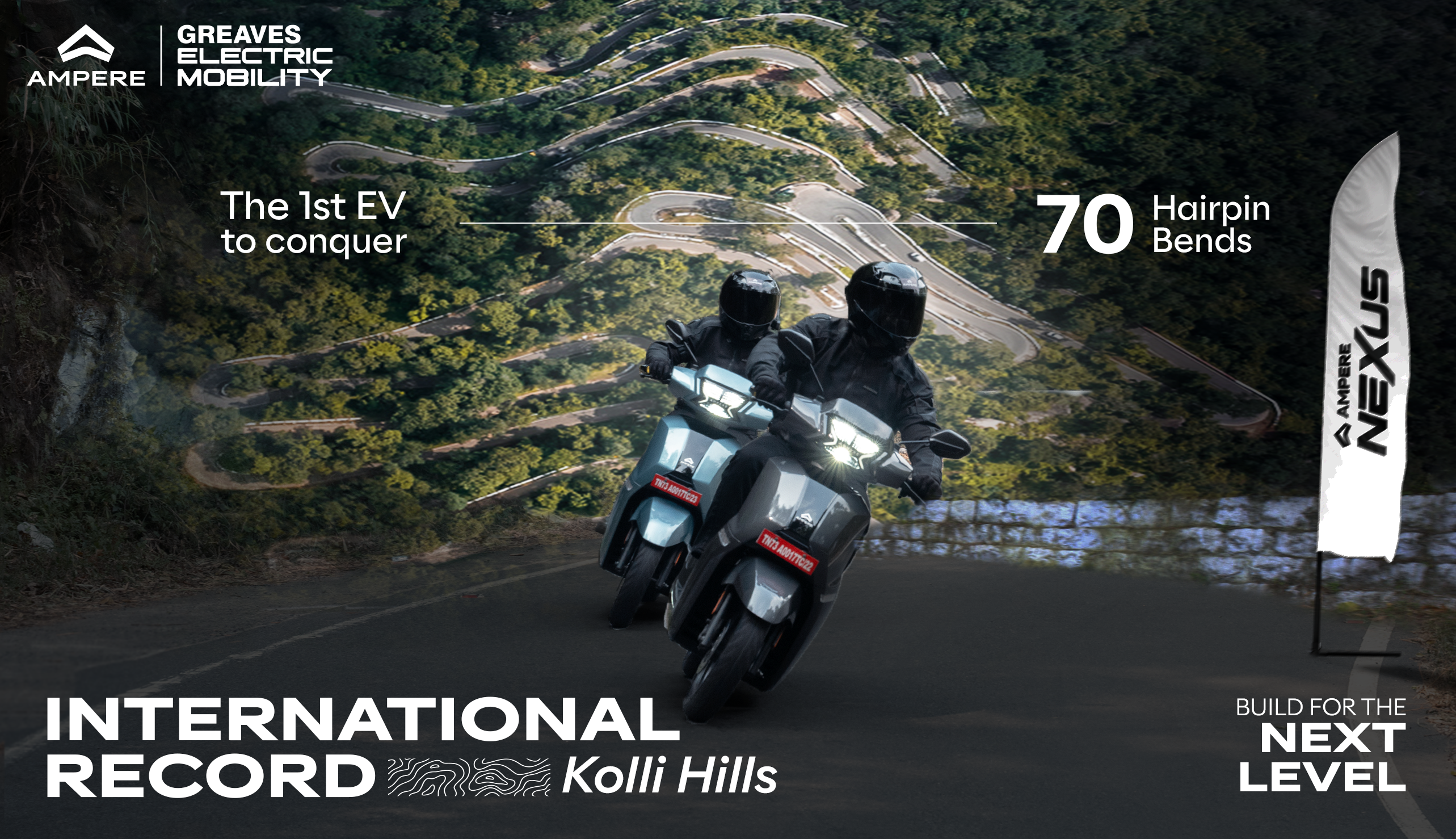
The rider traced the Ampere brand logo outline by precisely manoeuvring the Nexus across the white sand surface. The stable chassis, CBS braking, and twin-suspension swingarm enabled precise, consistent tyre tracking at slow speeds on a shifting surface.
How many records did the Ampere Nexus set at K2K?
The Ampere Nexus set four certified India Book of Records during the K2K expedition: 10,000+ km longest single journey, 115 cities covered, 1,860 kg towing record, and the 17,100 sq. ft. brand logo on white sand.
Is the Ampere Nexus good for city riding after proving itself on a 10,000 km journey?
Absolutely. Every feature that enabled the K2K journey — LFP battery stability, IP67 protection, precise handling, and robust chassis — directly benefits city riders dealing with traffic, potholes, monsoon roads, and daily parking.