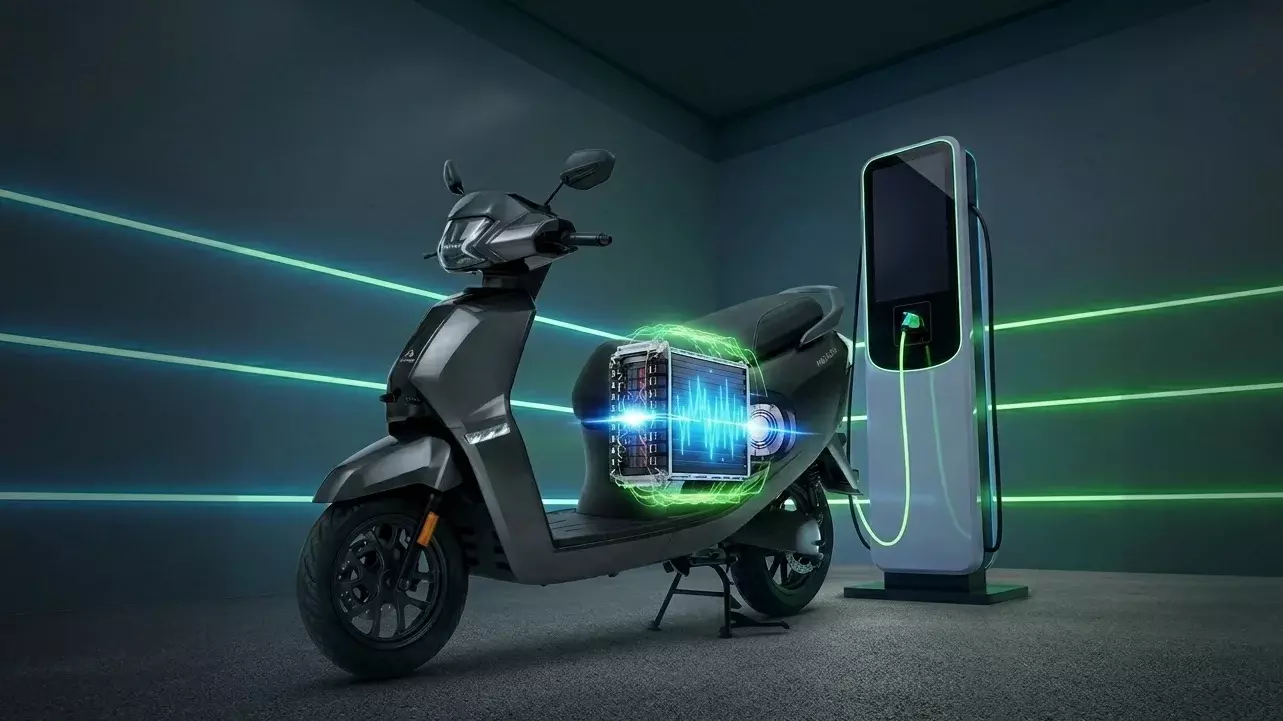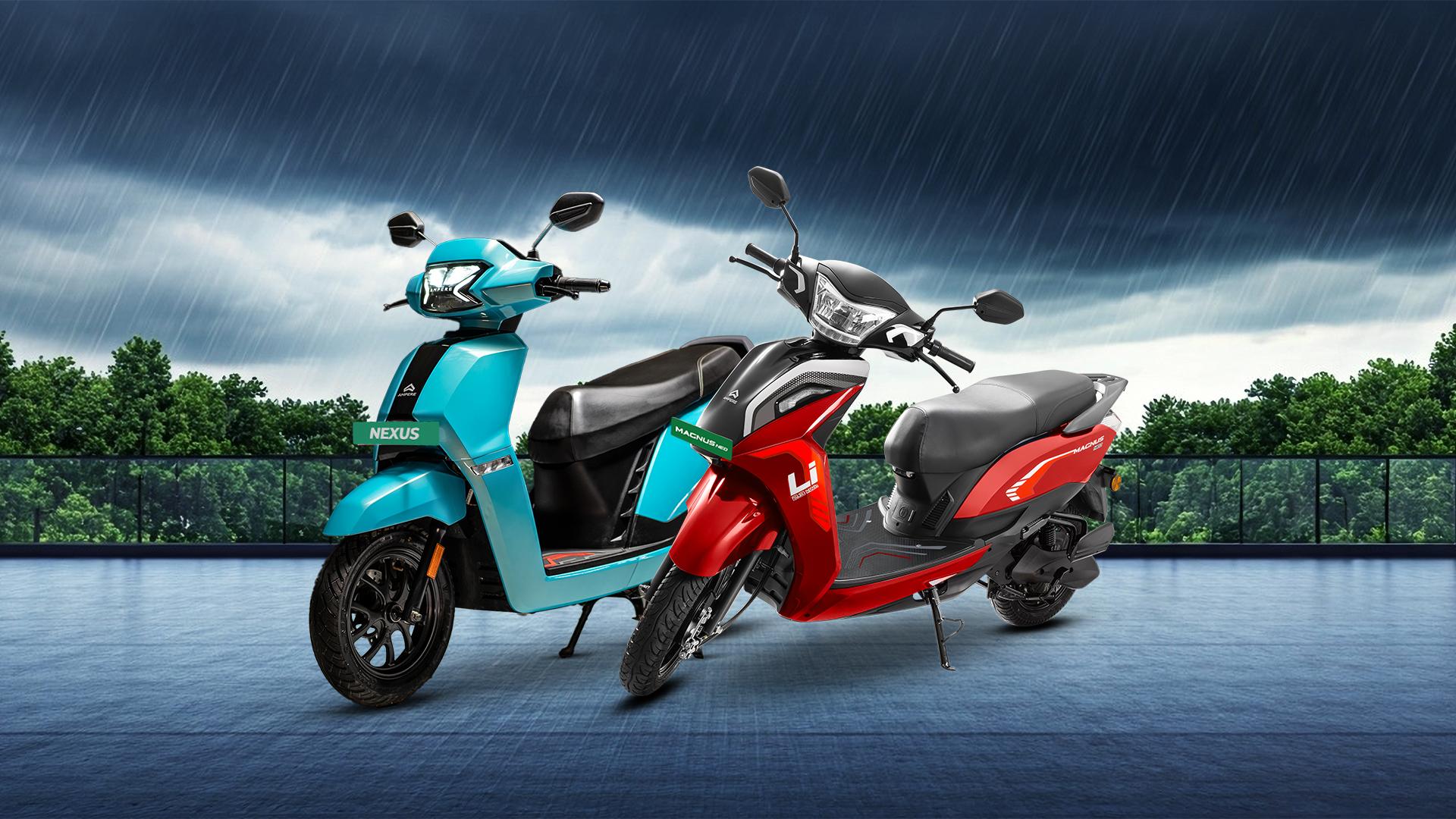
Imagine cruising through traffic when your motor suddenly cuts out. This mid-commute power failure is both frustrating and dangerous — and it often means your lithium-ion battery pack is no longer performing well. These cells are durable, but they still wear out over time with daily use, repeated charge cycles, and India’s harsh summer heat.
Spotting electric scooter battery replacement signs early helps you control running costs and avoid getting stranded. This guide explains how to tell if your electric scooter battery is bad before it fails completely — covering range loss, voltage sag, physical warnings, and charging irregularities. Heat, repeated fast charging, and deep discharges can all stress the pack. Ampere focuses on practical reliability and long-term service for daily riders, so monitoring your battery health early avoids the worst outcome — an electric scooter losing power quickly on a busy road. Let’s walk through the red flags.
Step 1: Significant Range Degradation and Capacity Loss
Identifying electric scooter battery replacement signs early is vital for any daily commuter. The single clearest warning is a drop in total travel distance. If your scooter used to cover your full daily route on one charge but now needs a mid-day top-up, the pack is likely ageing.
This pattern often worsens after long exposure to high heat. Hot weather speeds up chemical wear inside lithium-ion cells. You may also notice the issue on hills, flyovers, or while carrying a pillion — a weak battery shows strong voltage sag under load, causing the scooter to slow down quickly or struggle to climb.
| Warning Sign | What It Indicates | Severity |
|---|---|---|
| Reduced Travel Distance | Battery capacity degradation | High — book a check soon |
| Frequent Mid-Day Charging | Lower energy retention | High |
| Weak Hill Climbing | Voltage sag under load | Medium to High |
| Sudden Speed Drops | Struggling battery cells | High — safety risk |
| Faster Battery Drain | Increased internal resistance | Medium |
The 30% Rule for Battery State of Health (SoH)
Battery State of Health (SoH) compares present performance with the battery’s original condition. Many riders use a simple rule of thumb instead of lab tests: a permanent range loss of 30% or more usually signals end-of-life degradation. When your e-scooter battery health symptoms include frequent top-ups and shorter trips, replacement is likely near.
| Battery Condition | Typical SoH | Performance | Recommended Action |
|---|---|---|---|
| Healthy | 90–100% | Completes regular commute comfortably | Continue normal use |
| Ageing | 75–89% | Requires more frequent charging | Schedule a health check |
| Failing | Below 70% | Loses power quickly in traffic | Plan replacement |
Ampere focuses on predictable real-world range to help users spot these changes quickly. Tracking when an electric scooter battery not holding charge becomes routine is the easiest way to prevent breakdowns. Range issues are just the beginning — next, we examine how inconsistent power delivery affects safety.
Step 2: Sudden Power Loss and Voltage Sag Under Load
Notice a sudden drop in speed while climbing a flyover? This is voltage sag — one of the most reported electric scooter battery replacement signs. It happens when ageing cells cannot maintain steady output during high current draw. As your lithium-ion pack wears, internal resistance rises and voltage drops more sharply under stress.
You may feel the electric scooter losing power quickly when you accelerate hard. This is a classic e-scooter battery health symptom — the cells are struggling to supply enough energy for the demands of your ride.
| Symptom | Possible Cause | When It Usually Appears |
|---|---|---|
| Sudden Loss of Speed | Weak battery cells | During acceleration |
| Slow Acceleration | Increased internal resistance | From traffic signals |
| Power Drop on Flyovers | Voltage instability | Mid-climb on inclines |
| Weak Performance with Pillion | Reduced current delivery | Two-up riding |
Shutdowns During High-Demand Situations
Another reliable way of how to tell if your electric scooter battery is bad is sudden shutdown — even when the display still shows charge remaining. Modern packs use control electronics (BMS) that cut power if voltage falls below safe limits to protect the cells. Riders typically notice this during strong acceleration, long flyover climbs, or while riding into headwinds.
| Riding Condition | Battery Stress Level | Risk of Shutdown |
|---|---|---|
| Strong Acceleration | High | High on ageing packs |
| Long Flyover Climbs | High | High |
| Heavy Stop-and-Go Traffic | Moderate to High | Medium |
| Riding Against Headwinds | High | Medium to High |
If your scooter often slows or stops on mild inclines, book a professional battery health check. Repeated cut-outs under load suggest the pack can no longer support daily commuting safely.
Step 3: Physical Warnings — Battery Swelling and Excessive Heat
Physical changes to the battery pack are the most serious electric scooter battery replacement signs. A swollen or bloated battery casing means gases have built up inside the pack — if you notice any bulging, stop using the scooter immediately.
Excessive heat is the other major red flag. Batteries can get mildly warm in use, but they should never feel painfully hot. Strong heat during charging or normal riding points to internal stress and is often a sign the battery is nearing the end of its safe service life.
| Warning Sign | Why It Is Dangerous | Required Action |
|---|---|---|
| Battery Swelling / Bulging | Risk of internal damage and rupture | Stop use, call service immediately |
| Excessive Heat | Thermal stress — risk of fire | Stop charging, cool down, inspect |
| Burning Smell | Possible electrical fault inside cells | Disconnect, do not charge |
| Smoke or Leakage | Immediate safety hazard | Move to open area, call emergency |
The Impact of Indian Summer Temperatures
Peak summer heat in many Indian cities accelerates battery wear significantly. When ambient temperatures cross 40°C, lithium-ion cells find it harder to cool down between rides. This thermal strain leads to faster capacity loss — you may notice the electric scooter losing power quickly on familiar routes, or the electric scooter battery not holding charge as it did just months earlier.
| Preventive Action | Benefit | Difficulty |
|---|---|---|
| Avoid Parking in Direct Sunlight | Reduces overheating risk | Easy |
| Charge in Cool, Ventilated Areas | Improves battery stability | Easy |
| Let Battery Cool Before Charging | Slows degradation | Easy |
| Avoid Fast Charging in Peak Heat | Reduces thermal stress | Easy |
| Monitor Heat Build-Up During Use | Detects early issues | Medium |
Important safety reminders:
- Never leave the scooter or removable battery in direct sun for long periods
- Do not ignore strong heat, burning smells, smoke, or visible damage — ever
- Contact an authorised Ampere service centre at the first sign of these warnings
- Use only genuine OEM-supplied chargers and battery packs
Step 4: Charging Irregularities and Inconsistent Readings
Recognising electric scooter battery replacement signs early protects your wallet. Sometimes the scooter takes far longer to reach a full charge than it used to. Other times, the dashboard shows 100% but the percentage drops instantly the moment you start riding. Erratic State of Charge (SoC) readings are a major red flag — if your display jumps from 40% to 10% suddenly, the cells are likely imbalanced and voltage sag is masking the true state.
| Issue | Possible Reason | What To Try First |
|---|---|---|
| Battery Drops Quickly After Full Charge | Cell imbalance | Professional BMS check |
| Longer Charging Time | Battery degradation | Test with a known good charger |
| Dashboard % Fluctuation | Voltage instability | System reset, then diagnostic |
| Battery Drains Overnight | Internal leakage or weak cells | Authorised service inspection |
| Charger Stays Green When Battery Empty | Faulty charger or BMS | Swap charger to confirm |
When to Replace the Battery vs Just the Charger
Before buying a new battery pack, always check whether the charger is the real culprit. A faulty adapter often mimics a bad battery by refusing to deliver current. Use this troubleshooting checklist before assuming the worst:
| Diagnostic Step | What to Check | Points To |
|---|---|---|
| Test the Charger | Try another compatible OEM charger | If it works — charger fault |
| Inspect Connectors | Look for dust, corrosion, moisture | Often a quick fix |
| Observe Heat Levels | Failing batteries heat up excessively | Battery fault |
| Perform System Reset | Fixes temporary software glitches | Rules out BMS hiccups |
| Check Display Behaviour | Erratic % suggests cell imbalance | Battery fault |
Ampere’s wide service network supports transparent diagnostics — helping you decide when to replace your electric scooter battery without unnecessary costs.
Quick Summary: All 7 Battery Replacement Signs at a Glance
Use this master checklist as a quick reference. Two or more warning signs from this table usually mean it’s time for a professional diagnostic.
| # | Sign | Category | Urgency |
|---|---|---|---|
| 1 | Range dropped by 30% or more | Performance | High |
| 2 | Voltage sag on flyovers / with pillion | Performance | High |
| 3 | Sudden shutdowns with charge showing | Performance | High — safety |
| 4 | Visible battery swelling or bulging | Physical | Critical — stop use |
| 5 | Excessive heat, burning smell, smoke | Physical | Critical — stop use |
| 6 | Charge time significantly longer than before | Charging | Medium |
| 7 | Erratic % readings / overnight drain | Charging | Medium to High |
Frequently Asked Questions
How many years does an electric scooter battery typically last in India?
Most lithium-ion battery packs last 3 to 5 years, or about 500 to 1,000 full charge cycles. In hot Indian cities, extreme heat can shorten cycle life noticeably. Ampere’s LFP batteries are designed for better thermal stability and longer cycle life under real-world Indian conditions — many Ampere models carry a 5-year / 75,000 km battery warranty.
Can I repair a single cell inside my scooter battery pack?
No — never attempt a DIY cell replacement. Modern lithium-ion packs are sealed units with built-in BMS electronics. Opening them is dangerous, voids your warranty, and creates a serious fire risk. If you notice swelling, heat, or any of the other physical warning signs, visit an authorised Ampere service centre immediately.
Does frequent fast charging affect when I need a replacement?
Yes — frequent fast charging generates more heat and accelerates capacity loss compared to standard slow charging. For longer battery life, use slow charging for daily needs and reserve fast charging for occasional long trips when you really need it.
What should I do if my battery feels hot while charging?
Stop charging immediately. Move the scooter to a shaded, well-ventilated area and let it cool for at least an hour before inspecting. Excessive heat during charging can indicate a serious internal fault — always have a professional technician check the BMS before resuming use.
Is range drop in winter the same as battery failure?
Not necessarily. Lithium-ion batteries experience temporary voltage sag in cold weather, which is a normal chemical reaction to low temperatures. Range usually returns to normal once temperatures rise. However, a permanent range loss of 30% or more across all conditions is a clear sign of irreversible degradation.
How do I know if it's the charger or the battery that's faulty?
Test with a known-good OEM charger first. If charging behaviour improves, the charger was the issue. If problems persist — long charge times, fluctuating display readings, or the battery feeling hot — the battery itself is likely the culprit. An authorised service centre can confirm with a proper BMS diagnostic.
Conclusion
Recognising electric scooter battery replacement signs early keeps your daily commute safe and predictable. Watch for major range drops, an electric scooter losing power quickly under load, sudden shutdowns mid-ride, physical swelling, excessive heat, and erratic charging behaviour. If your travel distance has fallen by 30% or more — or if you spot any physical warnings like swelling or burning smells — act immediately and stop using the scooter.
Never attempt DIY repairs on a lithium-ion battery pack. Always use genuine OEM parts and chargers to maintain long-term value and safety. Ampere focuses on practical reliability for every Indian rider, and our 420+ authorised service network across 309 cities makes professional battery health checks easy to access — helping you decide when to replace your electric scooter battery without guesswork.
Monitoring these symptoms today helps you avoid getting stranded tomorrow. Visit your nearest authorised Ampere service centre for a professional health check, and keep your ride dependable for years to come.
This article is for general guidance only. Always consult an authorised Ampere service centre for diagnosis and replacement of your battery pack. Never attempt to open, modify, or repair a lithium-ion battery yourself.