
Why LFP Batteries Are Becoming Popular in Indian EV Scooters
PRESS RELEASE
India, May 14, 2026
Copied to your Clipboard!
https://ampere.greaveselectricmobility.com/press-releases/lfp-vs-nmc-batteries-electric-scooters-india
The Indian e-scooter market is growing rapidly as more riders go electric. People now want more than just speed — they look for safety, range, durability, and good long-term value. This shift has sparked one of the most important debates in the 2026 EV market: LFP vs NMC batteries for electric scooters in India.
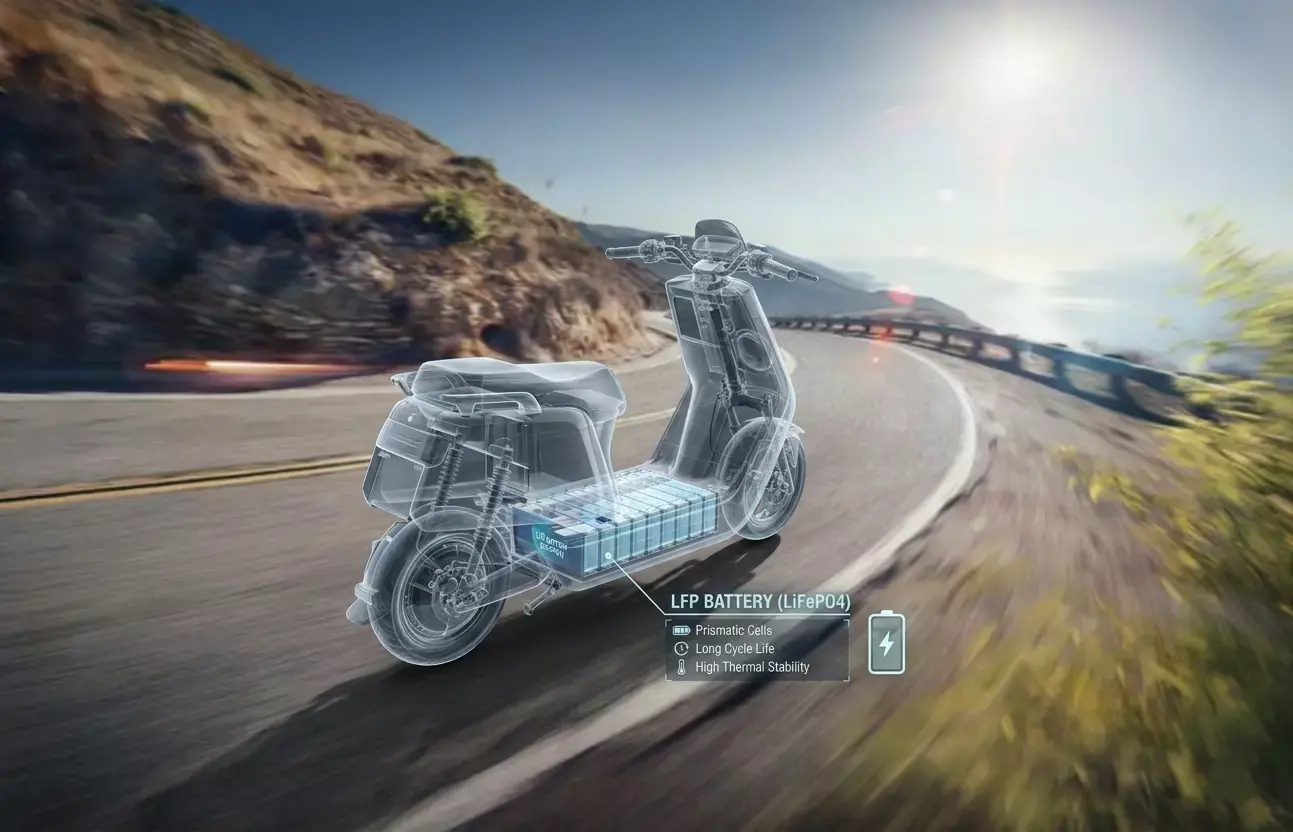
In a hot country like India, battery safety is a core need, not a luxury. Many riders worry about fire risks in dense traffic and tight parking spaces. This is a key reason why Indian EV makers are switching to LFP across the mass-market segment. The thermal stability of LFP batteries in the Indian climate is a major plus — these cells handle heat better and deliver steadier performance on local roads. Ampere, a brand under Greaves Electric Mobility, uses Lithium Iron Phosphate (LFP) batteries across all its scooters — from the entry-level Reo 80 to the flagship Nexus — for exactly this reason. This guide walks through the chemistry, safety, lifespan, and total cost of ownership behind LFP vs NMC, and what it means for your next purchase.
Step 1: Understanding the Chemistry — LFP vs NMC Explained
The debate of LFP vs NMC batteries for electric scooters defines the 2026 Indian EV market. NMC cells use Nickel, Manganese, and Cobalt, offering high energy density between 190 and 260 Wh/kg. This allows premium brands to build lightweight, fast scooters. However, NMC cells can be sensitive to extreme heat — a critical drawback in Indian summers where surface temperatures often cross 50°C.
LFP cells use Lithium Iron Phosphate. Their energy density is lower at 90 to 130 Wh/kg, which makes LFP packs slightly heavier for the same range. But what they lose in weight, they more than make up for in safety, cost, and cycle life — the three reasons Indian manufacturers are switching to LFP today.
| Feature | NMC Chemistry | LFP Chemistry | Winner for Indian Roads |
|---|---|---|---|
| Energy Density | 190–260 Wh/kg | 90–130 Wh/kg | NMC (lighter packs) |
| Cycle Life | 1,000–2,000 cycles | 2,000–4,000 cycles | LFP (2x lifespan) |
| Thermal Stability | Moderate | High | LFP (safer in 50°C+) |
| Fire/Runaway Risk | Higher | Significantly lower | LFP |
| Contains Cobalt | Yes | No — cobalt-free | LFP (ethical sourcing) |
| Cost per kWh | Higher | Lower & more stable | LFP |
| Fast Charging Tolerance | Wears faster with frequent fast charging | Handles repeated partial charges well | LFP |
The Rise of Cobalt-Free Battery Chemistry
LFP is a cobalt-free battery chemistry — one of its most underrated advantages. Avoiding cobalt removes the ethical sourcing concerns linked to mining in conflict zones and reduces exposure to the wild price swings that have hit cobalt markets repeatedly over the last five years. This stability in raw-material cost is one of the key benefits of LFP batteries in the Indian EV market, helping manufacturers keep scooter prices accessible for mass-market buyers.
Step 2: Why Indian EV Makers Are Switching to LFP
In 2026, the shift toward lithium iron phosphate batteries for electric two-wheelers is accelerating across India. This change is driven by the unique demands of the Indian environment. High temperatures in cities like Delhi, Ahmedabad, and Nagpur often push road surfaces above 50°C in summer — conditions where NMC chemistry can show accelerated degradation. LFP’s superior thermal stability in the Indian climate directly translates into longer real-world battery life.
Premium brands focus on high performance using NMC, but many buyers now prefer the reliability of LFP. The chemistry handles the intense heat of Chennai or Hyderabad summers without rapid capacity loss — making it ideal for delivery fleets, gig workers, and daily office commuters who can’t afford breakdowns.
Fire Safety and Peace of Mind
Safety is a major concern for families in dense cities like Mumbai, Bangalore, and Pune. Recent years have seen increased anxiety regarding electric scooter battery fire safety, with several widely reported incidents involving NMC-based packs. LFP chemistry is fundamentally more stable than NMC alternatives — significantly reducing the risk of thermal runaway in crowded urban areas, basement parking, and apartment buildings.
For joint families, first-time EV buyers, and parents handing their teenager a scooter, this safety-first mindset matters more than raw acceleration figures. LFP cells also support over 2,000 full charge cycles, which translates into excellent long-term value — riders in markets like Indore, Jaipur, and Lucknow save real money on fewer battery replacements over the scooter’s lifespan.
| Indian Riding Condition | How LFP Responds | Real-World Benefit |
|---|---|---|
| 50°C+ summer heat | Stays stable, resists thermal runaway | Lower fire risk |
| Frequent fast charging | Handles repeated partial top-ups well | Less long-term wear |
| Apartment / basement parking | Lower fire-risk profile | Safer for buildings & families |
| Long delivery shifts | Stable performance across cycles | Better for gig workers / fleets |
| Monsoon humidity | Robust with IP-rated packaging | Reliable through rainy season |
Step 3: Longevity and Total Cost of Ownership (TCO)
Longevity is a key factor in any Indian EV purchase decision, and it largely explains why Indian EV makers are switching to LFP for mass-market models. In the LFP vs NMC batteries for electric scooters debate, cycle life is central. Most lithium iron phosphate batteries for electric two-wheelers are rated for 2,000–4,000 charge cycles under standard test conditions. By comparison, common NMC packs typically deliver 1,000–2,000 full cycles before noticeable capacity loss — meaning an NMC-based scooter may need a battery replacement at the halfway point of an LFP-based scooter’s usable life.
Economic Benefits for Daily Commuters
This cost-effective EV battery technology lowers running expenses over the full ownership period. Longer LFP lifespan and stronger safety margins reduce the chance of a costly mid-life pack replacement — making LFP especially attractive for budget-conscious households and delivery fleets that clock heavy daily mileage.
| Cost Factor | NMC Pack | LFP Pack | Long-Term Saving |
|---|---|---|---|
| Pack Cost (₹/kWh) | Higher, more volatile | Lower, more stable | Lower upfront price |
| Mid-Life Replacement | Often needed at year 3–4 | Usually not required | ₹30,000–50,000 saved |
| Typical Warranty | 3 yrs / 30k–50k km | Up to 5 yrs / 75k km | Extended peace of mind |
| Daily Running Cost | ~₹0.18/km | ~₹0.18/km | Similar |
| Resale Value | Drops faster with age | Holds value longer | Better re-sale return |
For delivery fleets clocking 100–150 km daily, the cumulative TCO advantage of LFP can reach ₹40,000–60,000 per scooter over 5 years. For everyday commuters, the savings show up as fewer service visits, no mid-life pack swap, and consistent range performance well into year four and beyond.
Step 4: Market Comparison — How Ampere Stands Against Competitors
Understanding LFP vs NMC batteries for electric scooters helps Indian buyers choose wisely between safety, speed, and value. Ampere focuses squarely on mass-market accessibility across India, and this approach aligns with the broader industry shift toward LFP chemistry.
| Brand | Primary Focus | Battery Priority | Best Suited For |
|---|---|---|---|
| Ampere | Mass-market accessibility | Thermal safety & longevity | Daily commuters & families |
| Ather Energy | Tech-rich connected scooters | High energy density | Tech enthusiasts |
| Ola Electric | Premium specs & software | High performance | App-first young riders |
| TVS iQube | Premium urban product | Balanced performance | Brand-conscious metro buyers |
| Bajaj Chetak | Heritage scooter brand | Build quality | Traditional buyers |
| Simple Energy | Performance specifications | Top speed & range | Performance-first riders |
The Best Battery for Electric Scooters in India
For most Indian conditions, the best battery for electric scooters in India is LFP — provided range and weight requirements can be met. LFP’s superior thermal stability, longer cycle life, lower fire risk, and cost-effectiveness make it especially well-suited to the country’s climate and rider profile. NMC chemistry may still suit a small segment of riders who need maximum range in a compact, lightweight pack — typically performance-oriented urban users with garaged parking. For the everyday Indian commuter, LFP wins on almost every metric that matters.
Ampere's Complete LFP-Powered Lineup
Every Ampere scooter sold today uses LFP battery chemistry — reflecting the brand’s long-standing commitment to safety and durability over headline specs. Here’s how the lineup stacks up:
| Model | LFP Battery Capacity | Battery Warranty | Best Suited For |
|---|---|---|---|
| Reo 80 | 1.44 kWh | 3 yrs / 30,000 km | Short trips, students, seniors |
| Magnus Neo | 2.3 kWh | 5 yrs / 75,000 km | Daily office commute |
| Magnus Grand | 2.3 kWh | 5 yrs / 75,000 km | Family + city use |
| Magnus G Max | 3.0 kWh | 5 yrs / 75,000 km | Longer commutes, fleets |
| Nexus | 3.0 kWh | 5 yrs / 75,000 km | High-range premium rides |
Frequently Asked Questions
Is LFP better than NMC for Indian summers?
Yes — Lithium Iron Phosphate batteries have significantly stronger thermal stability in high heat. This is critical in Indian cities where road temperatures regularly cross 50°C in summer. In the LFP vs NMC debate, heat behaviour is one of the most important factors, and LFP chemistry handles harsh parking conditions and long summer rides far better than most NMC designs.
Does an LFP battery make the scooter heavier?
Slightly, yes. LFP packs typically have lower energy density than NMC cells, so you need a marginally larger pack to deliver the same range. For electric two-wheelers, this means a small trade-off in weight or storage space. Most Indian riders happily accept this for the safety, longevity, and cost benefits that LFP brings — especially when the kerb weight stays under 130 kg, as it does across the Ampere lineup.
How many years does an LFP battery last?
LFP batteries typically deliver 2,000–4,000 charge cycles — roughly double an NMC pack’s lifespan. For a typical city commuter charging 4–5 times per week, that translates to 6–8 years of useful life, with most Ampere models warranted for 5 years or 75,000 km. Real-world life depends on heat exposure, charging habits, and daily distance.
Can I fast charge LFP batteries frequently?
Yes — LFP chemistry handles frequent partial fast charging very well, much better than NMC. This is one of the practical reasons Indian EV makers are switching to LFP, especially for delivery fleets and gig workers who need quick top-ups multiple times a day. Always use the manufacturer-supplied charger and avoid charging immediately after a hot ride.
Is LFP safer in case of an accident or crash?
LFP is significantly more resistant to thermal runaway and fire compared to NMC. In the event of physical damage or short-circuit, LFP cells are less likely to ignite or release flammable gases. This is a crucial safety advantage in India’s dense traffic conditions and busy parking environments.
Why do premium brands still use NMC if LFP is better?
NMC offers higher energy density, which means a lighter, more compact pack for the same range — useful for performance-focused scooters chasing top speeds and quick acceleration. The trade-off is reduced thermal stability, shorter cycle life, higher cost, and cobalt-dependency. For mass-market Indian riders prioritising safety and value, LFP wins on the metrics that matter most.
Conclusion: Choosing the Right Ride for 2026
The LFP vs NMC batteries for electric scooters debate is no longer hypothetical — it’s shaping which scooters Indian families buy in 2026. While some brands prioritise speed and energy density with NMC, LFP offers unmatched safety, longer life, lower running costs, and better resilience in India’s extreme climate. The benefits of LFP batteries in the Indian EV market — from better heat tolerance to a longer warranty and lower total cost of ownership — make it the smart choice for the vast majority of riders.
Ampere has led this shift from the start, using LFP across the Reo 80, Magnus Neo, Magnus Grand, Magnus G Max, and Nexus — backed by a 5-year / 75,000 km battery warranty on the Magnus and Nexus range, and a 420+ service network across 309 Indian cities. If you want a durable, safe, and cost-effective electric scooter that’s built for Indian conditions, choose LFP technology and start your journey today.
Battery performance figures and warranty terms are based on Ampere’s 2026 specifications. Actual range and cycle life vary with riding conditions, ambient temperature, and charging habits. Verify the latest specifications and warranty terms with your nearest Ampere dealership.
Select product
Enter your mobile number
Enter OTP

All your personal data is secured within the Ampere by Greaves Ecosystem

Enter your name
Your details are safe with us
All your personal data is secured within the Ampere by Greaves Ecosystem
Enter pincode
Our nearest dealership will reach out to you
Almost done
Share your email to receive updates (Optional)
