
Best Electric Scooters in India: Top Picks by Price, Range, and Features
PRESS RELEASE
India, Apr 01, 2026
Copied to your Clipboard!
https://ampere.greaveselectricmobility.com/press-releases/best-electric-scooters-india-price-range-features
Best Electric Scooters in India: Top Picks by Price, Range, and Features
Rising fuel costs, evolving emission regulations, and growing awareness of monthly running costs are pushing more Indian riders to consider going electric. But the best electric scooters in India will still look different for every buyer. What works for you depends on your budget, daily range requirement, charging access, and the roads and traffic you deal with every day.
This guide compares options by price, range, and features across Ampere's full 2026 lineup to help everyday commuters find the most practical value for their specific situation.
Key Factors to Compare the Best Electric Scooters in India
There is no single universally best scooter. The right option varies by rider profile and usage pattern. When comparing models, focus on how well each one fits your budget, your real daily distance, your local traffic and road conditions, and where you can park and charge safely every night.
Price and Total Cost of Ownership
Always compare the ex-showroom price against the final on-road amount. The on-road figure reflects applicable taxes and mandatory charges in your region, which can add meaningfully to the initial number. Long-term ownership cost is shaped by energy use and your local electricity tariff, routine maintenance items like tyres and brake pads, and the battery warranty terms that apply to your specific model.
Range, Performance, and Real-World Conditions
IDC range figures are measured under standard test conditions and will differ from your daily experience in Indian traffic. For most commuters, consistent real-world performance and adequate range between charges matter far more than very high top speeds. Always add at least a 30 to 40 percent buffer above your measured daily distance when shortlisting models.
Ampere Electric Scooter Lineup: Full Model Comparison
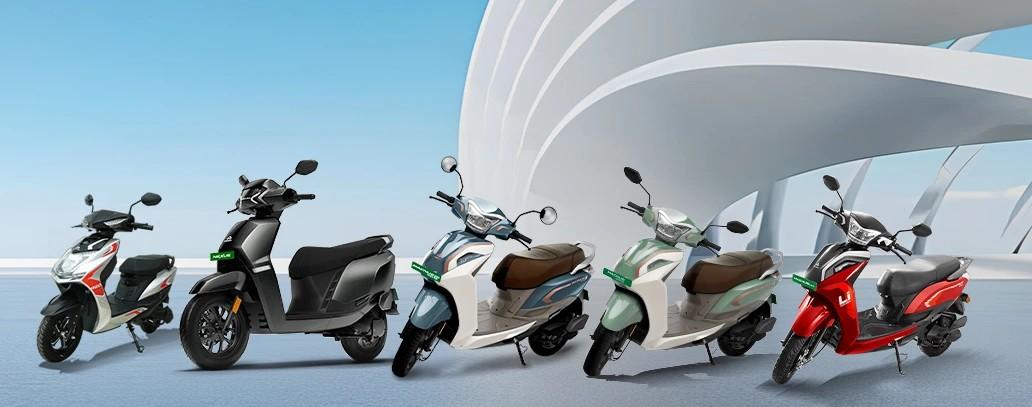
Ampere offers five models covering every budget segment and commute profile. All models across the full lineup use LFP (Lithium Iron Phosphate) battery chemistry — chosen specifically for superior thermal stability in India's heat, longer cycle life, and lower fire risk compared to other lithium chemistries. Here is the full current lineup compared across every key specification:
| Specification | Reo 80 | Magnus Neo | Magnus Grand | Magnus G Max | Nexus |
|---|---|---|---|---|---|
| Ex-Showroom Price | ₹59,900 | ₹86,999 | ₹89,999 | ₹94,999 | ₹1,09,900+ |
| IDC Range | 80 km | 118 km | 118 km | 142 km | 136 km |
| Top Speed | 25 km/h | 65 km/h | 65 km/h | 65 km/h | 93 km/h |
| Battery Capacity | 1.44 kWh | 2.4 kWh | 2.3 kWh | 3.0 kWh | 3.0 kWh |
| Battery Type | LFP | LFP | LFP | LFP | LFP |
| Removable Battery | Yes | No | No | No | No |
| Charging Time | 5.5 hrs | 5–6 hrs | 5–6 hrs | 7.5 hrs | 3.3 hrs |
| Ground Clearance | 135 mm | ~160 mm | 165 mm | 165 mm | ~170 mm |
| Front Brake | Drum + CBS | Drum + CBS | Drum + CBS | Drum + CBS | Disc + CBS |
| Under-seat Storage | ~18 L | ~22 L | ~22 L | 33 L | ~25 L |
| Display | Colour LCD | Digital | Digital | Digital | 7" TFT |
| Riding Modes | Single | Eco / City / Sport | Eco / City / Sport | Eco / City | 5 modes + Reverse |
| Battery Warranty | 3 yr / 30,000 km | 5 yr / 75,000 km | 5 yr / 75,000 km | 5 yr / 75,000 km | 5 yr / 75,000 km |
| Licence Required | No | Yes | Yes | Yes | Yes |
| Running Cost/km | ₹0.12 | ₹0.18 | ₹0.18 | ₹0.18 | ₹0.18 |
Source: ampere.greaveselectricmobility.com | Prices ex-showroom Delhi, April 2026 | IDC range under standard test conditions; real-world range varies with traffic, load, and ambient temperature
Price-Wise Guide: Best Electric Scooters in India by Budget
Entry-Level: The Ampere Reo 80
The Reo 80 is positioned as India's ultra-budget city commuter and one of the most accessible electric scooters available today. At ₹59,900 ex-showroom and a running cost of just ₹0.12 per km, it is among the most affordable options in the country by total ownership cost.
Its removable 1.44 kWh LFP battery charges from a standard 3-pin socket without any special wiring. Critically, the Reo 80 requires no driving licence or vehicle registration under current Indian transport rules — making it a genuinely practical, paperwork-free option for students, senior citizens, and riders who only need short local errands covered every day.
Mid-Range: Magnus Neo and Magnus Grand
The Magnus Neo at ₹86,999 brings full city speed of 65 km/h, a 2.4 kWh LFP battery, CBS braking, 12-inch alloy wheels, and Eco, City, and Sport riding modes across five vibrant dual-tone colour options. It also carries a class-leading 5-year or 75,000 km battery warranty — strong reassurance at this price point.
The Magnus Grand at ₹89,999 steps up to 118 km IDC range with a 2.3 kWh LFP pack and the same 5-year or 75,000 km battery warranty. It is ideal for families who need meaningfully more range on a similar budget without crossing into premium pricing territory.
Mid-Premium: Ampere Magnus G Max
The Magnus G Max at ₹94,999 is the range leader of the Magnus family at 142 km IDC range with a 3.0 kWh LFP battery. It features the largest under-seat storage in the lineup at 33 litres and the full 5-year or 75,000 km battery warranty — all delivered under ₹1 lakh on-road in most states. It is the strongest choice for long daily commuters who want maximum range without stepping into premium pricing.
Premium Flagship: Ampere Nexus
The Nexus, starting from ₹1,09,900, is Ampere's most feature-complete scooter. It offers a 93 km/h top speed, a front disc brake for stronger stopping performance, and a 7-inch TFT touchscreen running the Nex.io intelligent mobility platform with navigation, music control, call alerts, and over-the-air software updates. Bluetooth and WiFi connectivity are built in as standard, and it charges to full in just 3.3 hours — the fastest in the entire Ampere range by a significant margin.
Which Ampere Model Is Right for You?
| Buyer Profile | Recommended Model | Key Reason |
|---|---|---|
| Student or senior citizen doing short daily trips | Reo 80 | No licence needed, removable battery, ₹0.12/km running cost |
| Daily office commuter covering 15–35 km | Magnus Neo | 65 km/h city speed, LFP safety, 5-year / 75,000 km battery warranty |
| Family rider wanting longer daily range | Magnus Grand | 118 km IDC range, 5-year battery warranty |
| Long commuter wanting maximum range under ₹1 lakh | Magnus G Max | 142 km IDC range, 33 L under-seat boot, 5-year battery warranty |
| Premium buyer or tech-first rider | Nexus | 93 km/h top speed, 7" TFT Nex.io, disc brake, 3.3 hr fast charge |
Source: ampere.greaveselectricmobility.com
Charging, Infrastructure, and Ownership Experience in India
For most buyers, home charging convenience defines day-to-day practicality more than any other single factor. Most Ampere scooters charge comfortably overnight from a standard 15A socket without any special installation required. Only the Reo 80 in the current lineup has a removable battery — particularly useful for riders without a dedicated charging point near their parking spot, allowing the pack to be carried indoors to any convenient socket.
Ampere operates across 420 or more dealerships in over 309 cities across India, giving buyers strong after-sales support including in tier 2 and tier 3 cities where EV service networks can otherwise feel limited for daily riders.
Frequently Asked Questions
Which is the best electric scooter in India for daily city commuting in 2026?
It depends on your budget, daily distance, and charging access. For most daily city riders, the Magnus Neo at ₹86,999 or the Magnus Grand at ₹89,999 offer the best overall balance of range, LFP battery safety, and long-term value. For very short trips or strictly budget-first buyers, the Reo 80 at ₹59,900 with no licence requirement is a compelling standalone choice at its price point.
How much range is enough for an electric scooter in Indian conditions?
Estimate your longest typical riding day accurately, then add a 30 to 40 percent buffer for heat, traffic density, pillion weight, and gradual battery ageing over time. For most city riders covering 25 to 40 km per day, the Magnus Neo at 85 km IDC range or the Magnus Grand at 118 km comfortably cover daily needs with meaningful headroom to spare on even the most demanding days.
Are electric scooters really cheaper than petrol scooters to run in India?
Yes, clearly so on running costs. Ampere scooters cost ₹0.12 to ₹0.18 per km versus ₹2 to ₹2.50 per km for a typical petrol scooter at current fuel prices. For a rider covering typical city distances, this difference translates to a saving of approximately ₹1,500 to ₹2,500 every single month on fuel cost alone — making the payback period on the higher upfront price quite manageable for regular daily commuters.
Do Ampere scooters require a driving licence?
The Reo 80, with its 25 km/h top speed and 250W motor, is exempt from driving licence and vehicle registration requirements under current Indian transport rules. All other Ampere models — the Magnus Neo, Grand, G Max, and Nexus — require standard RTO registration and a valid two-wheeler driving licence, as with any regular motor scooter on Indian roads.
What battery type do all Ampere scooters use?
Every model in the current Ampere lineup uses LFP (Lithium Iron Phosphate) batteries — chosen for superior thermal stability in India's high ambient temperatures, longer useful cycle life, and lower fire risk compared to NMC lithium ion alternatives. All models except the Reo 80 carry a 5-year or 75,000 km battery warranty. The Reo 80 carries a 3-year or 30,000 km battery warranty.
Conclusion
Choosing the best electric scooter in India in 2026 is about matching the right model to your real daily life — not just picking the longest range or the most features on a spec sheet. Ampere's five-model range covers every practical need, from the no-licence Reo 80 for short local trips to the connected, fast-charging Nexus for premium daily commuters. All five models share LFP batteries, CBS braking, and LED headlamps as standard across the full lineup.
Map your daily rides honestly, decide a clear budget after checking applicable subsidies in your state, and shortlist scooters that offer realistic real-world range and solid after-sales support through Ampere's 420-plus dealership network before booking your test ride.
Select product
Enter your mobile number
Enter OTP

All your personal data is secured within the Ampere by Greaves Ecosystem

Enter your name
Your details are safe with us
All your personal data is secured within the Ampere by Greaves Ecosystem
Enter pincode
Our nearest dealership will reach out to you
Almost done
Share your email to receive updates (Optional)
