
Best EV Scooters for Bangalore’s Stop-and-Go Commute
PRESS RELEASE
India, May 11, 2026
Copied to your Clipboard!
https://ampere.greaveselectricmobility.com/press-releases/best-electric-scooter-for-bangalore-traffic-2026
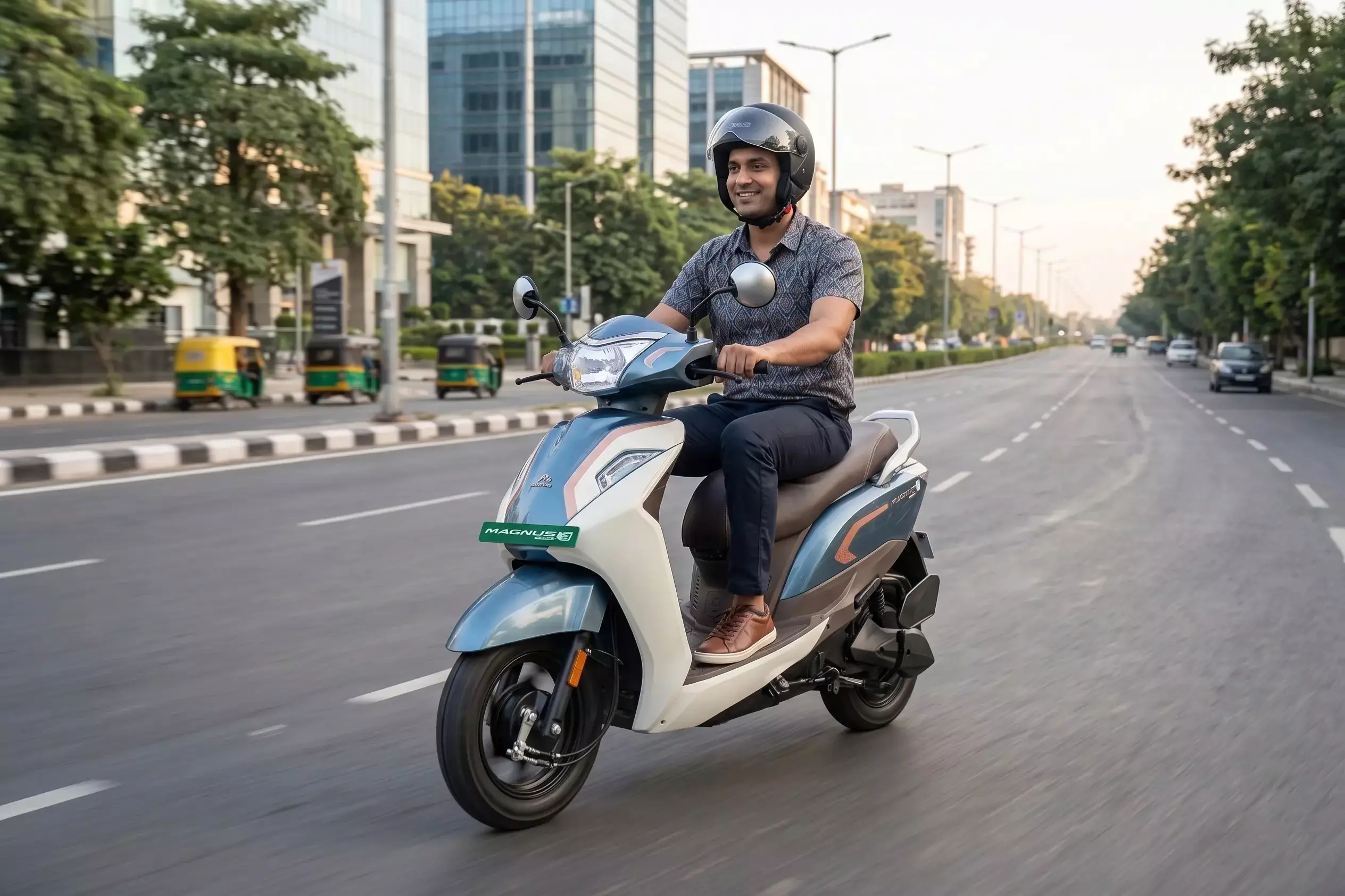
Navigating Bangalore in 2026 can test any commuter’s patience. Slow-moving traffic is now common on major routes like the Outer Ring Road, Silk Board, and Whitefield corridors. Finding the best electric scooter for Bangalore traffic has shifted from a lifestyle upgrade to a survival strategy for daily riders.
Across India, interest in top EV scooters for city commute India has grown sharply over the past two years. More riders are switching to electric for daily use, and for many, choosing an electric model is a practical way to cut fuel costs by ₹2,000–3,000 per month. This guide breaks down what makes a scooter truly “Bangalore-ready” in 2026 — from low-speed torque and real-world range to monsoon resilience, charging access, and total cost of ownership.
Step 1: What Makes a Scooter 'Bangalore-Ready' in 2026?
For Bangalore traffic, a city-ready electric scooter must feel quick off the line. Strong low-speed torque helps with frequent starts at signals and junctions. Fast 0 to 40 km/h acceleration also gives you safer gaps in moving traffic.
Maneuverability is the next vital factor for dense city roads. Lighter scooters are easier to steer through narrow lanes and packed streets like those in Indiranagar, Jayanagar, or HSR Layout. Heavy bodies can feel stable on highways, but they often need more effort to handle in slow city stretches.
Bangalore roads also demand a rugged build. Tall speed breakers and broken patches can scrape low parts — especially on routes near tech parks and older residential pockets. Here is a quick checklist of the hardware features that matter most:
| Feature | Why It Matters in Bangalore | Recommended Spec |
|---|---|---|
| Low-Speed Torque | Smooth acceleration at signals and in stop-go traffic | 50 Nm or higher |
| Lightweight Body | Easier maneuvering in tight lanes and U-turns | Under 115 kg kerb weight |
| Telescopic Suspension | Absorbs shocks from potholes and uneven surfaces | Telescopic front + dual rear shocks |
| Ground Clearance | Prevents scraping on tall speed breakers | 160 mm or higher |
| Combined Braking System | Safer stopping on wet or dusty roads | CBS standard, disc front preferred |
| Practical Range | Reduces charging anxiety on longer commutes | 70–100 km real-world |
| IP-Rated Components | Handles waterlogged roads during monsoon | IP67 battery and motor |
Step 2: Real-World Range vs. ARAI Claims
Finding top EV scooters for city commute India means reading test data with care. Certified ARAI range figures come from controlled test cycles. Real-world range in Bangalore traffic is usually 20–30 per cent lower due to slow speeds, frequent stops, and quick bursts of acceleration to clear junctions.
For most office riders, a practical range of 70 to 90 km works well. This can cover a typical two-way commute — for example, Koramangala to Whitefield and back — with a safety buffer. Frequent braking, AC-less riding in summer heat, and pillion load all use extra energy.
| Daily Round-Trip in Bangalore | Recommended Real-World Range | Suitable Ampere Models | Typical Route Example |
|---|---|---|---|
| Up to 30 km | 40–45 km | Reo 80, Magnus Neo | Jayanagar to MG Road |
| 30–55 km | 70–80 km | Magnus Neo, Magnus Grand | HSR Layout to Manyata |
| 55–80 km | 90–110 km | Magnus Grand, Magnus G Max | Koramangala to Whitefield |
| 80–100 km+ | 110–140 km | Magnus G Max, Nexus | Yelahanka to Electronic City |
*Real-world range varies with rider weight, traffic density, and ambient temperature. The figures above reflect average Bangalore commuting conditions.
The best electric scooter for Bangalore traffic should also manage energy in a predictable way. A good battery management system keeps performance stable as charge drops. This helps avoid sudden range loss near the end of the day — especially during late-evening rides home from work.
Step 3: Top Contenders for the Bangalore Commute
Choosing an electric scooter for Bangalore means balancing tech and daily use. Some premium models focus on higher top speeds and connected features. These can feel lively in short city runs and quick overtakes. Many buyers also look for comfort, proven brand backing, and a strong dealer presence in Bangalore.
Recent listings from major auto portals show a wide mix of options — from mid-mounted motors to hub motors and varied battery sizes. Most mainstream models are built to handle typical city slopes and flyovers like Hebbal and Silk Board.
The Ampere Advantage: Practicality Over Hype
Ampere is an Indian electric two-wheeler brand under Greaves Electric Mobility that focuses on everyday commuting. It sells multiple low- and mid-speed scooters aimed at city riders, with public price lists placing most Ampere models in the budget to mid range. This positions them as practical options for value-driven buyers in Bangalore.
Key benefits often linked with commuter-focused Ampere scooters include:
- Low Running Costs: Electricity costs roughly ₹0.18 per km vs ₹3–4 per km on petrol
- Maneuverability: Short wheelbases and moderate weight help in tight Bangalore lanes
- Simple Charging: Most models charge from standard home sockets — ideal for apartment users
- Service Reach: Ampere operates 420+ service points across India, including strong Bangalore coverage
- LFP Battery Safety: Lithium Iron Phosphate chemistry handles Bangalore summer heat better than standard Li-ion
Performance Comparison Across Ampere Models
Here is how the Ampere range compares on the specifications that matter most for Bangalore commuting:
| Specification | Magnus Neo | Magnus Grand | Magnus G Max | Nexus |
|---|---|---|---|---|
| Ex-showroom Price | ₹86,999 | ₹89,999 | ₹94,999 | ₹1,09,900+ |
| Real-World Range | ~75–85 km | ~80–95 km | ~95–105 km | ~100–110 km |
| Top Speed | 65 km/h | 65 km/h | 65 km/h | 93 km/h |
| Torque | ~50 Nm | ~50 Nm | ~50 Nm | ~125 Nm |
| 0–40 km/h | ~7 sec | ~6.5 sec | ~6.5 sec | ~4.8 sec |
| Hill Climb Ability | ~10° | ~12° | ~12° | ~15° |
| Ground Clearance | ~160 mm | 165 mm | 165 mm | ~170 mm |
| Kerb Weight | 108 kg | 108 kg | ~110 kg | ~130 kg |
| Battery Warranty | 5 yr / 75k km | 5 yr / 75k km | 5 yr / 75k km | 5 yr / 75k km |
Step 4: Charging Infrastructure in the IT Hubs
Finding the best electric scooter for Bangalore traffic involves looking beyond the vehicle itself. You must consider where you will power up during your daily grind. In 2026, public charging networks have matured across major tech corridors.
Manyata Tech Park, Electronic City, and the Outer Ring Road now host extensive charging plazas. These hubs let you top up while finishing shifts. However, apartment dwellers in areas like Marathahalli or Bellandur still face unique hurdles with fixed battery systems.
Portable batteries and home charging compatibility have become vital game-changers. Ampere scooters offer practical setups for high-rise living — you can often charge from standard 15A sockets in most parking lots. Workplace charging is also surging within startups in Koramangala and HSR Layout. Many offices now provide dedicated EV zones to encourage green commuting.
| Charging Location | Where to Find It in Bangalore | Typical Charge Time | Best For |
|---|---|---|---|
| Public Hubs | Manyata, Electronic City, malls in Whitefield | 2–4 hrs | Top-ups during office hours |
| Office Zones | Tech parks, IT campuses, co-working spaces | 5–7 hrs | Full workday charging |
| Residential Setups | 15A home sockets, apartment EV docks | 5–7.5 hrs | Overnight full charging |
| Removable Battery Docks | In-flat charging (Reo 80) | 5.5 hrs | Apartment users with no parking outlets |
While some brands focus on proprietary fast grids, Ampere emphasises broader accessibility — ideal for the busy Bangalore professional whose office and home may not have specialised wall boxes.
Step 5: Monsoon Resilience and Safety Features
Navigating Bangalore traffic requires durability during heavy rains. The city’s monsoon often leads to flooded stretches in areas like Silk Board, KR Puram, and parts of the Outer Ring Road. The right scooter should feature IP67-rated components to protect the battery and motor — ensuring reliable performance through deep puddles.
Safety is equally vital in unpredictable weather. Look for these essential systems on any shortlisted model:
- Regenerative Braking: Captures energy while slowing down in dense congestion
- Combined Braking System (CBS): Provides balanced stopping power for sudden, slippery halts
- Anti-Skid Tyres: Enhanced grip helps manage oily surfaces on wet city asphalt
- LED Headlamps: Improve visibility during early-morning rain and foggy December mornings
- High Ground Clearance: Helps wade through ankle-deep waterlogging without underbody damage
All Ampere models come with CBS as standard, LED headlamps, and ground clearance between 135–170 mm — with the Magnus Grand, G Max, and Nexus offering the best monsoon-ready specs in the lineup.
Step 6: Total Cost of Ownership in Bangalore
Upfront price is only one part of the story. Long-term running and maintenance costs matter more for daily commuters who ride 30–60 km every day across Bangalore.
| Cost Factor | Magnus Neo | Magnus Grand | Magnus G Max | Nexus |
|---|---|---|---|---|
| Est. On-road (Bangalore) | ~₹93,000 | ~₹96,000 | ~₹1,02,000 | ~₹1,22,000+ |
| Running Cost/km | ~₹0.18 | ~₹0.18 | ~₹0.18 | ~₹0.18 |
| Full Charge Cost | ~₹18–20 | ~₹17–19 | ~₹22–25 | ~₹22–25 |
| Petrol Savings / Month* | ~₹1,500–2,000 | ~₹1,500–2,000 | ~₹2,000–2,500 | ~₹2,000–2,500 |
| Annual Maintenance | ~₹1,500–2,000 | ~₹1,500–2,000 | ~₹1,800–2,200 | ~₹2,000–2,500 |
*Petrol savings estimate based on 40 km/day, 25 days/month, at ₹105/litre and 45 km/l petrol scooter average. Actual savings depend on local power tariffs and usage patterns.
Karnataka also offers EV registration benefits — check with your nearest Ampere dealership in Bangalore for the latest state-level incentives and on-road pricing.
Which Ampere Model is Right for Your Bangalore Commute?
This quick-reference table maps each model to the buyer profile it suits best. Use it alongside your daily distance and charging access to narrow down your choice.
| Model | Best Suited For Bangalore Riders Who… |
|---|---|
| Ampere Reo 80 | Are students, senior citizens, or first-time EV users with very short trips (up to 25–30 km one way). No licence or registration needed — ideal for campus, gated communities, and short errands within Jayanagar, Basavanagudi, or Malleshwaram. |
| Ampere Magnus Neo | Want the lowest-cost full-speed EV for a 15–35 km one-way commute. Great for office-goers travelling within central Bangalore or short-distance tech park routes. |
| Ampere Magnus Grand | Need a slightly premium feel with 80–95 km of real-world range. Ideal for medium-distance commutes like HSR Layout to Manyata, with the 5-year LFP battery warranty for peace of mind. |
| Ampere Magnus G Max | Travel up to 50 km one way and want 100+ km real range, the largest boot in the Magnus series (33 L), and a reverse mode for tight tech park parking — all under ₹1 lakh. |
| Ampere Nexus | Need the highest range, 93 km/h top speed, and TFT navigation in the Ampere lineup. Suits 40–60 km one-way commutes (e.g. Yelahanka to Electronic City) or occasional inter-city trips to Mysuru. |
Frequently Asked Questions
Which electric scooter is best for climbing flyovers with a pillion in Bangalore?
For steep flyovers like Hebbal or Silk Board, focus on scooters with strong rated motor power and high torque. The Ampere Nexus, with ~125 Nm torque and a 15° gradeability rating, handles loaded flyover climbs better than most mid-range options. Always take a test ride on an actual flyover with a pillion before deciding.
How does Bangalore traffic affect the actual range of an EV scooter?
Heavy traffic usually reduces practical range by 20–30 per cent compared with brochure figures. Frequent starts, stops, and speed changes use more energy than steady riding. Using Eco mode and gentle throttle inputs helps. Regenerative braking on top EV scooters for city commute India can recover some energy — but cannot fully offset waste from hard acceleration.
Are there enough fast charging stations in Whitefield and Electronic City?
Public charging options in major Bangalore hubs are growing each year. Many tech parks and malls in Whitefield and Electronic City now host shared charging points. Availability and speed vary by operator and location. Home or workplace charging usually remains the most predictable option for the best electric scooter for daily commute in Bangalore.
Is an electric scooter safe to ride during Bangalore heavy rains?
Most modern electric scooters use IP-rated battery packs and motors for protection. Ampere’s LFP-based scooters are well suited to monsoon conditions. Riders should still avoid deep waterlogged stretches, drop speeds on wet roads, and dry the scooter before charging in sheltered areas after heavy showers.
How much can I save by switching from a petrol scooter in Bangalore?
Running cost on Ampere scooters is roughly ₹0.18 per km vs ₹3–4 per km on petrol. Most Bangalore commuters save ₹2,000–2,500 per month on fuel alone, plus lower maintenance costs due to fewer moving parts. Over five years, total savings can exceed ₹1.2 lakh — often covering the entire cost of the scooter.
What warranty does Ampere offer on batteries?
The Magnus Neo, Magnus Grand, Magnus G Max, and Nexus all carry a 5-year / 75,000 km battery warranty — among the best in the segment. The Reo 80 comes with a 3-year / 30,000 km battery warranty. All models also include a 3-year vehicle warranty.
Conclusion: Choosing Your Ride for a Smarter Bangalore
Selecting the best electric scooter for Bangalore traffic requires balancing range, weight, monsoon resilience, and service access. Premium brands offer high-tech features, but they often carry heavier frames that struggle in the stop-and-go reality of 2026.
Ampere’s lineup — Reo 80, Magnus Neo, Magnus Grand, Magnus G Max, and Nexus — provides the most logical ROI for daily Bangalore riders. Their lightweight designs handle potholes and narrow lanes better than heavier competitors. LFP batteries cope with the city’s summer heat, IP-rated components survive monsoon downpours, and a 420+ service network keeps long-term ownership stress-free.
Shortlist two or three models that fit your daily distance, check the latest Karnataka EV incentives, and test ride before you decide. The right Ampere scooter will deliver years of low-cost, low-stress daily commuting — whether your route runs from Jayanagar to MG Road or Yelahanka to Electronic City.
Prices shown are ex-showroom Delhi as of 2026. On-road prices in Bangalore vary based on state incentives and registration charges. Always verify current pricing and specifications with your nearest Ampere dealership before purchase.
Select product
Enter your mobile number
Enter OTP

All your personal data is secured within the Ampere by Greaves Ecosystem

Enter your name
Your details are safe with us
All your personal data is secured within the Ampere by Greaves Ecosystem
Enter pincode
Our nearest dealership will reach out to you
Almost done
Share your email to receive updates (Optional)
